Vintage Glass & Porcelain Insulators
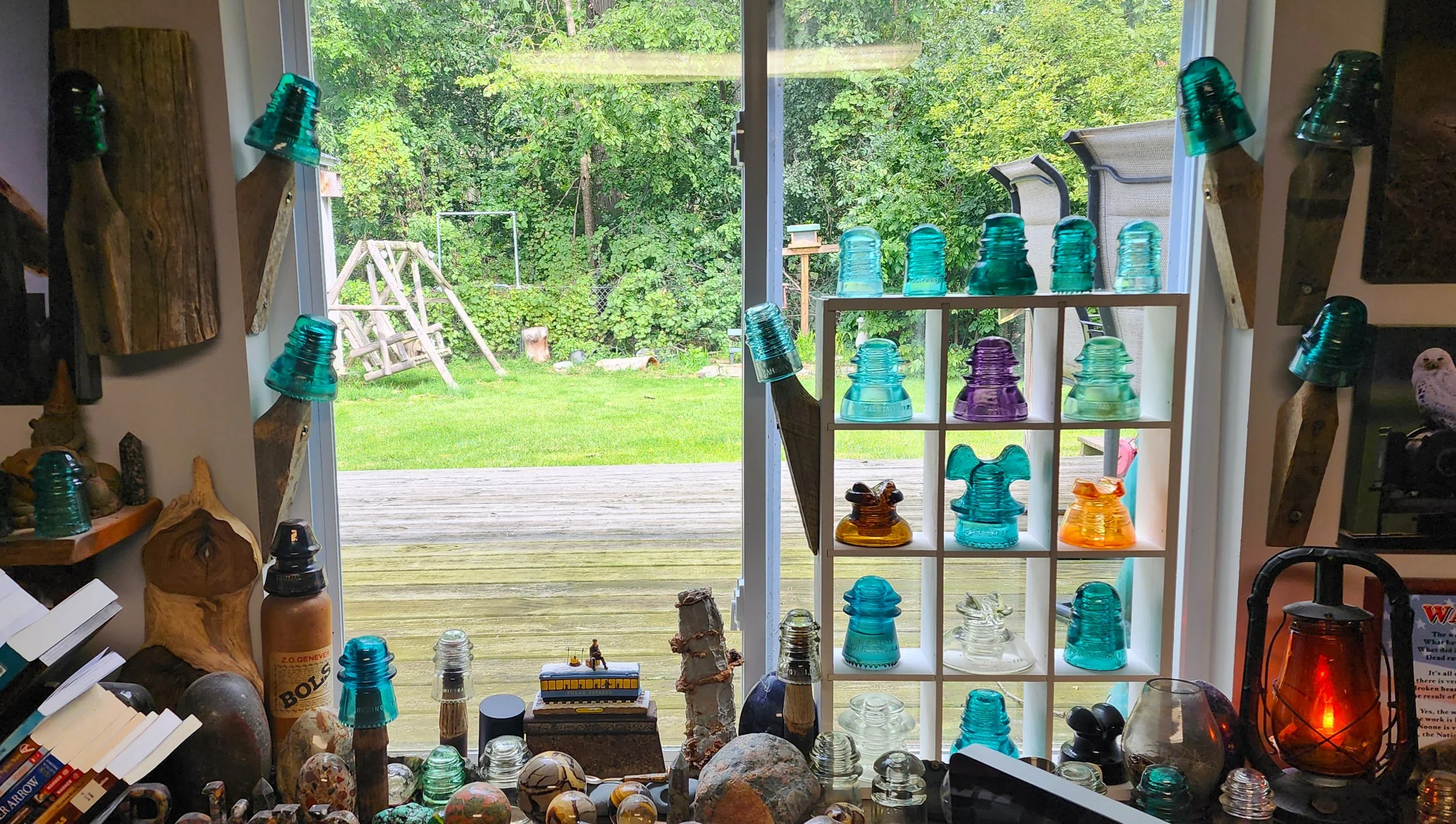
View from my Studio
You either love them
or maybe you just don’t understand them.
But if you do love them it seems that you can’t get enough of them.
From the days of the telegraph and telephone to helping power the country, insulators have played a very important role in our history. What makes them so fascinating? Is it their history, their unique designs, or the beauty of old glass and porcelain?
“For me, it’s all of the above.”
I never intended to become a collector. One day, I picked up a couple of insulators at an antique store to display alongside the lanterns and rocks I collect. They fit right in, and before long I found myself wanting to learn more about them. The deeper I dug into their history, the more interesting they became.
Fortunately, many insulators are still affordable, and some can even be found in the wild if you know where to look. However, there are a select few that are quite rare, and collectors are willing to pay a pretty penny to add them to their collections.
I hope you enjoy browsing my ever-growing collection as much as I enjoy collecting it.
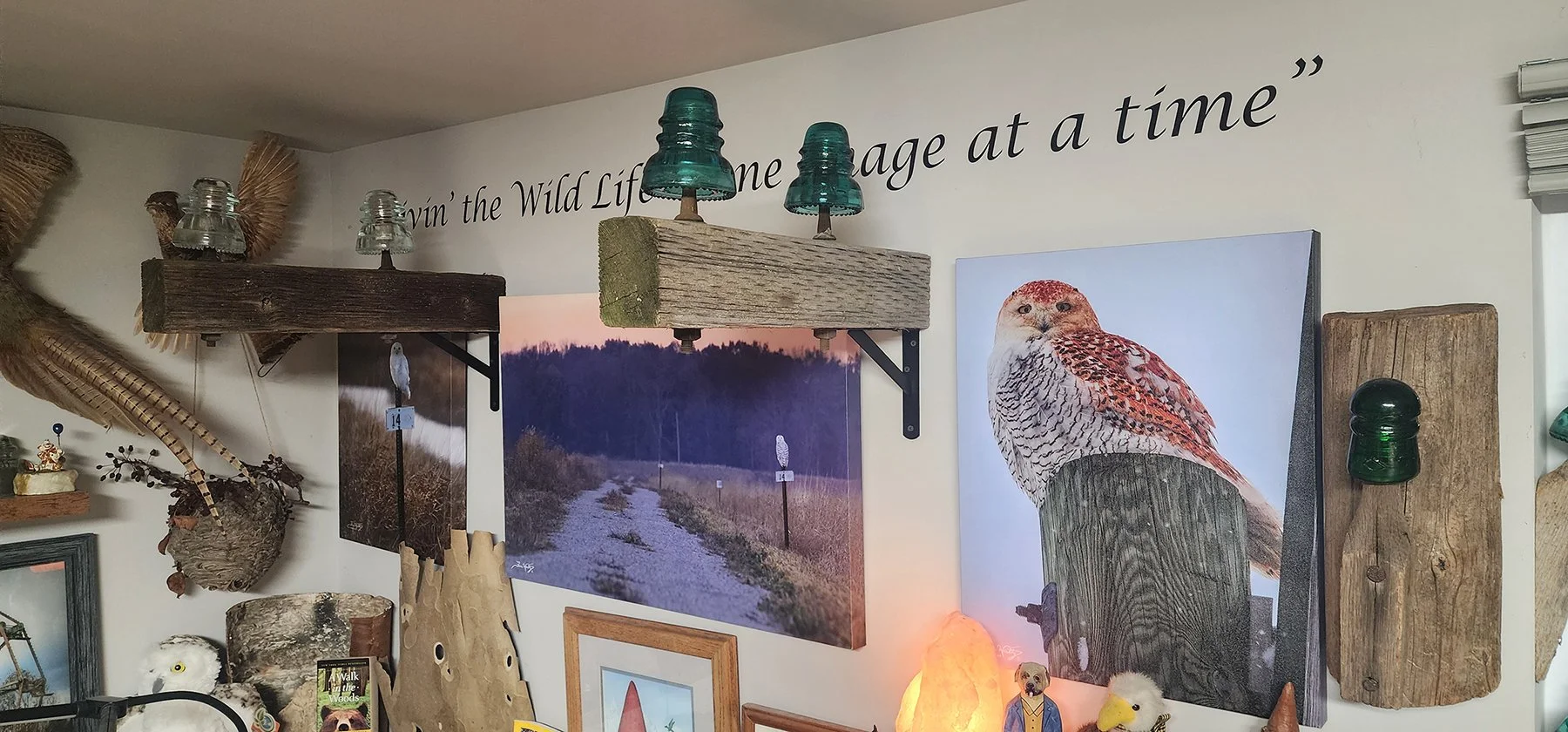
Found these broken cross-arms in a ditch along the old Pere Marquette tracks in Grand Blanc, MI. The pins where intact with pieces of smashed insulators (not salvageable) I squared off the broken ends and mounted them to my studio wall. A great piece of early telegraph communication history along the rails. Gives a very nice 3-dimensional look.
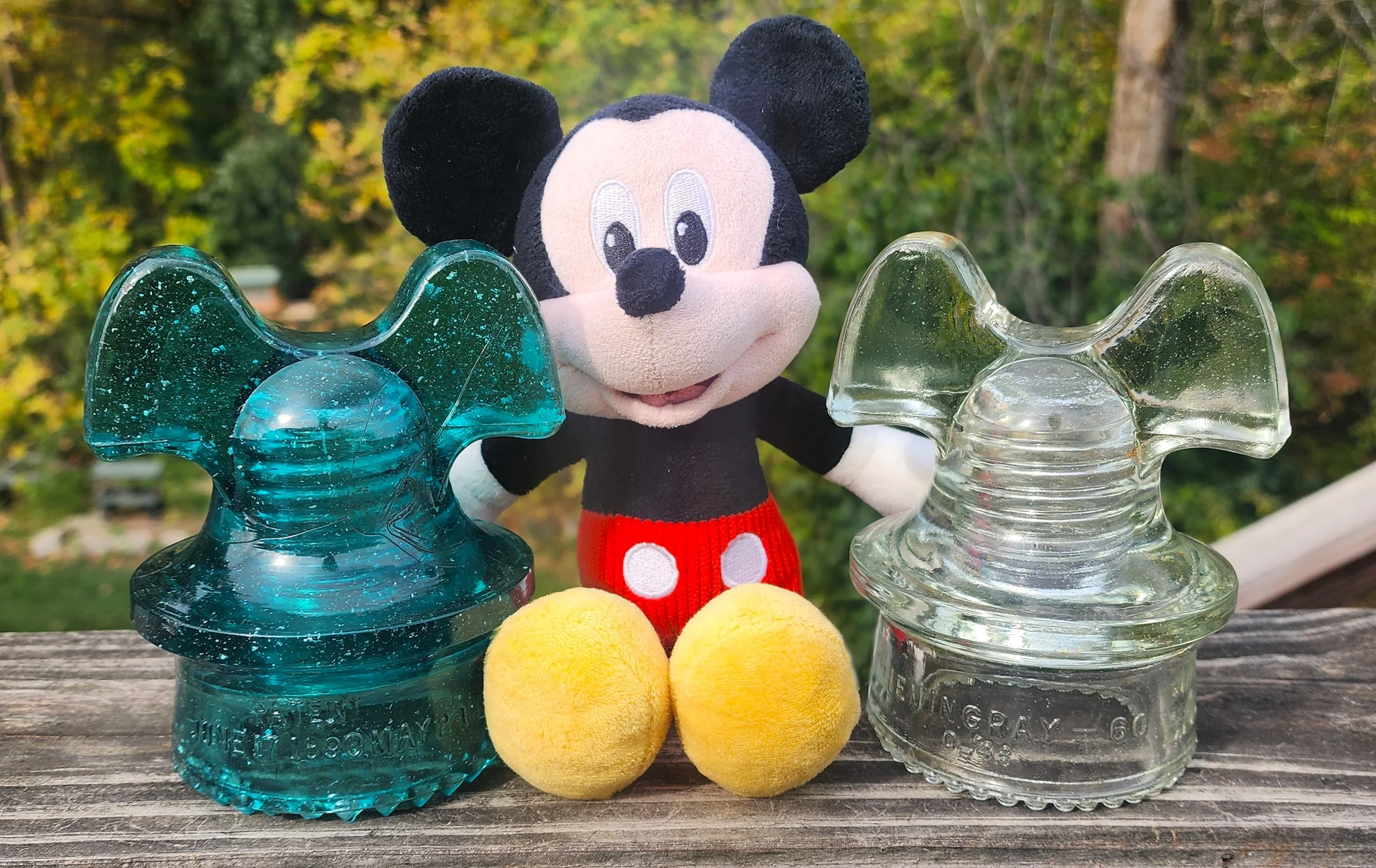
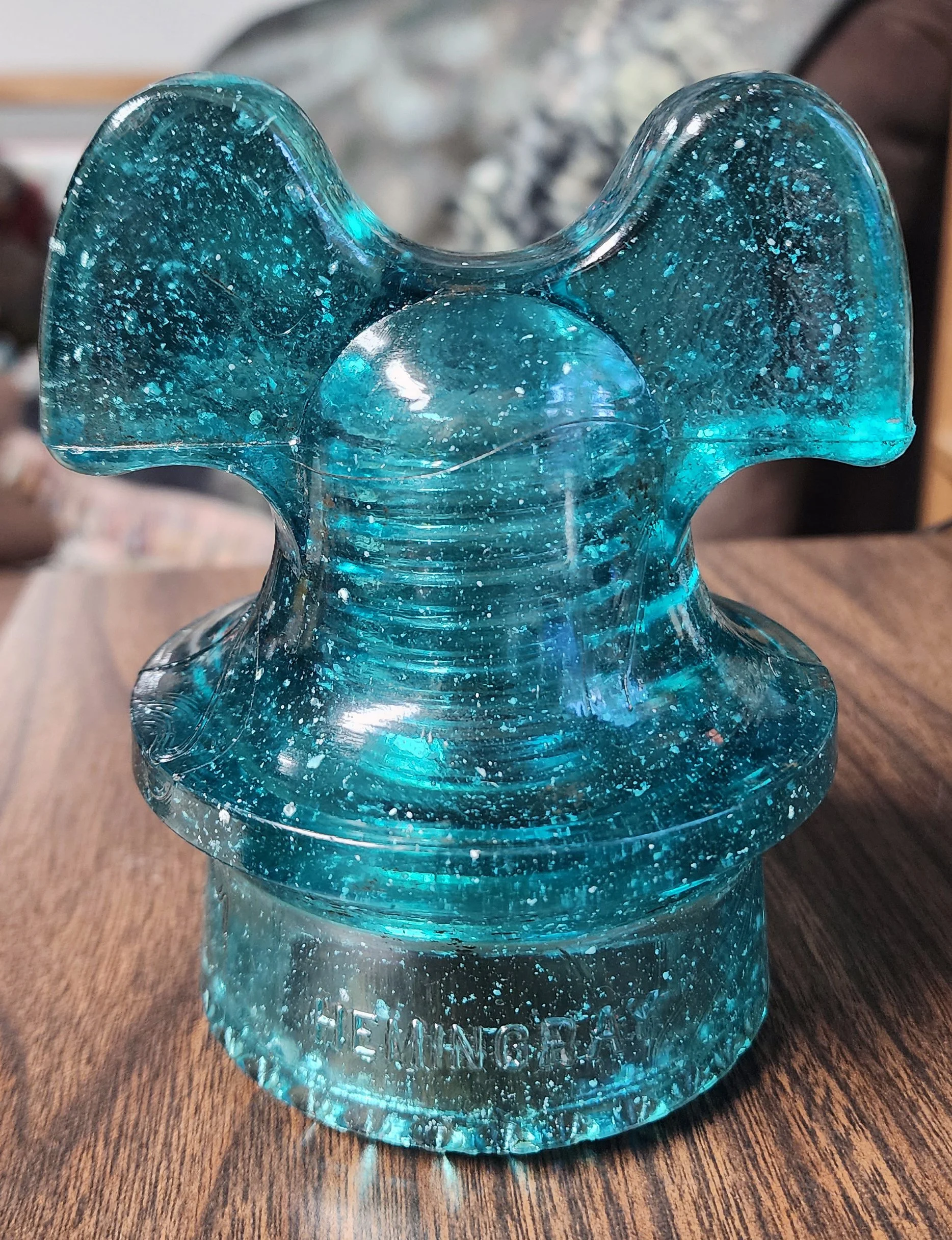
One of the most popular to collect is the one referred to as “Mickey” and it’s very easy to tell why. There is a slight resemblance don’t you think?
Love those ears and all the bubbles in that old glass. The one on the left Patent dates June 17, 1890 & May 2, 1893. Are you a member of the Mickey Mouse Club!
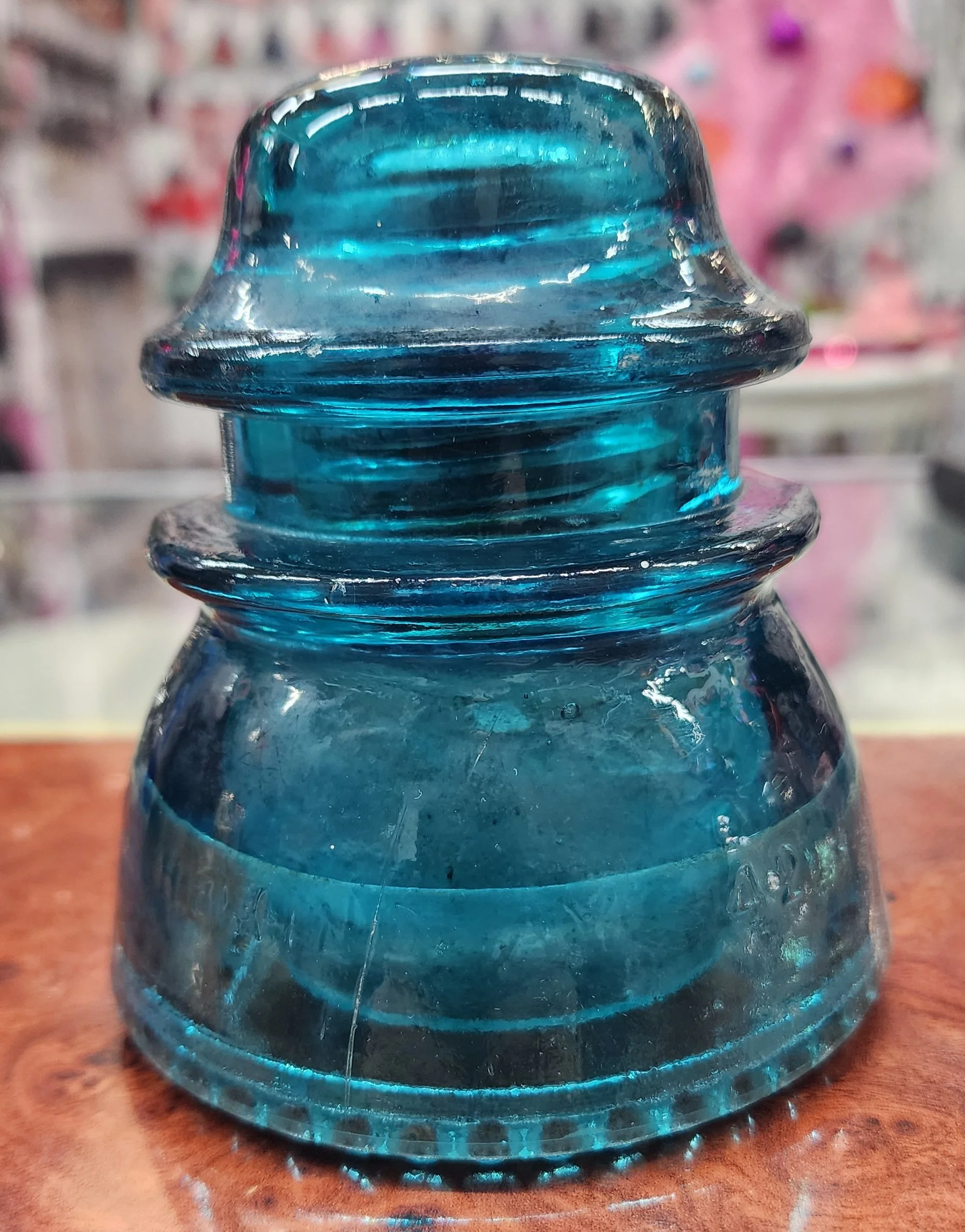
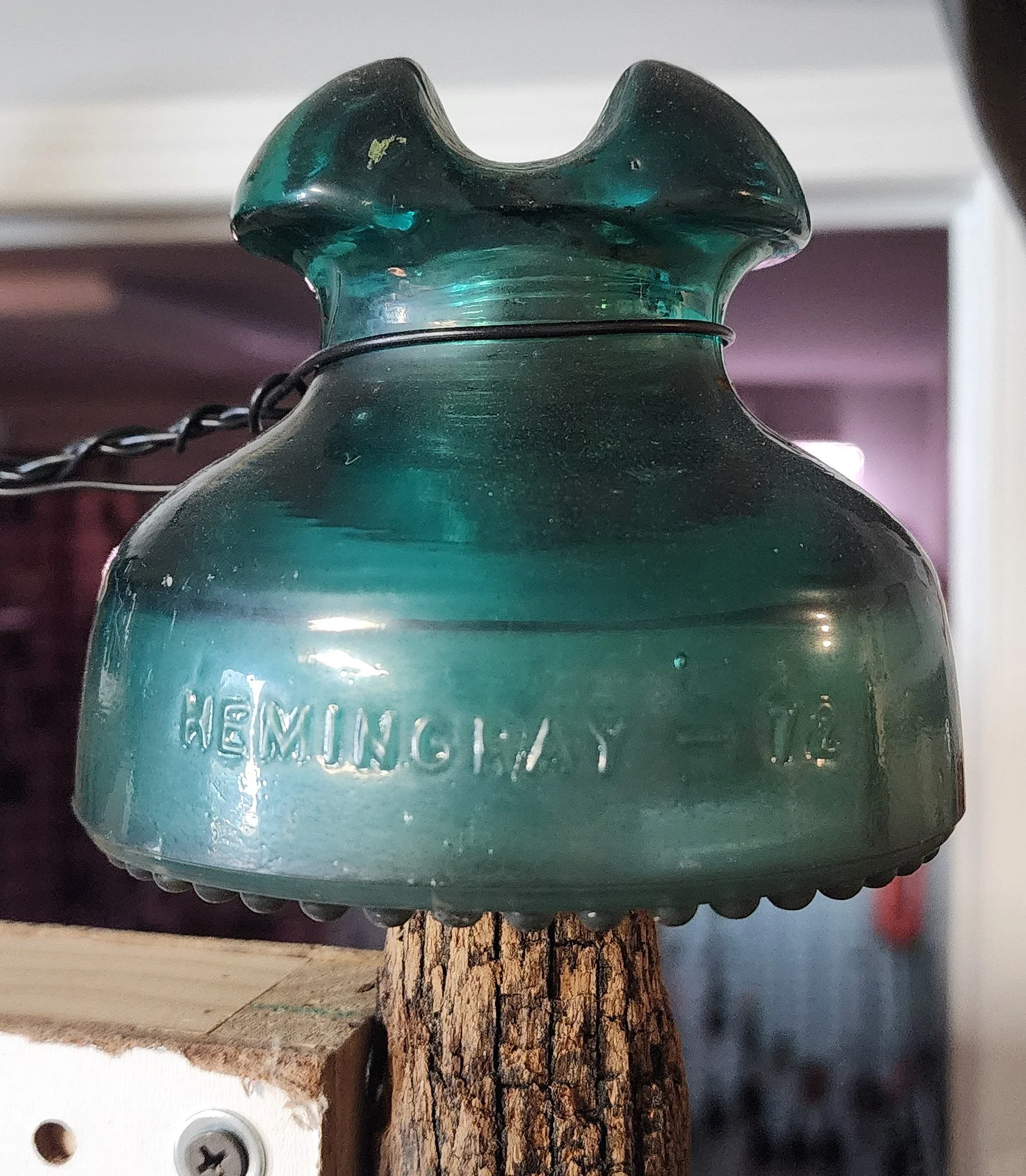
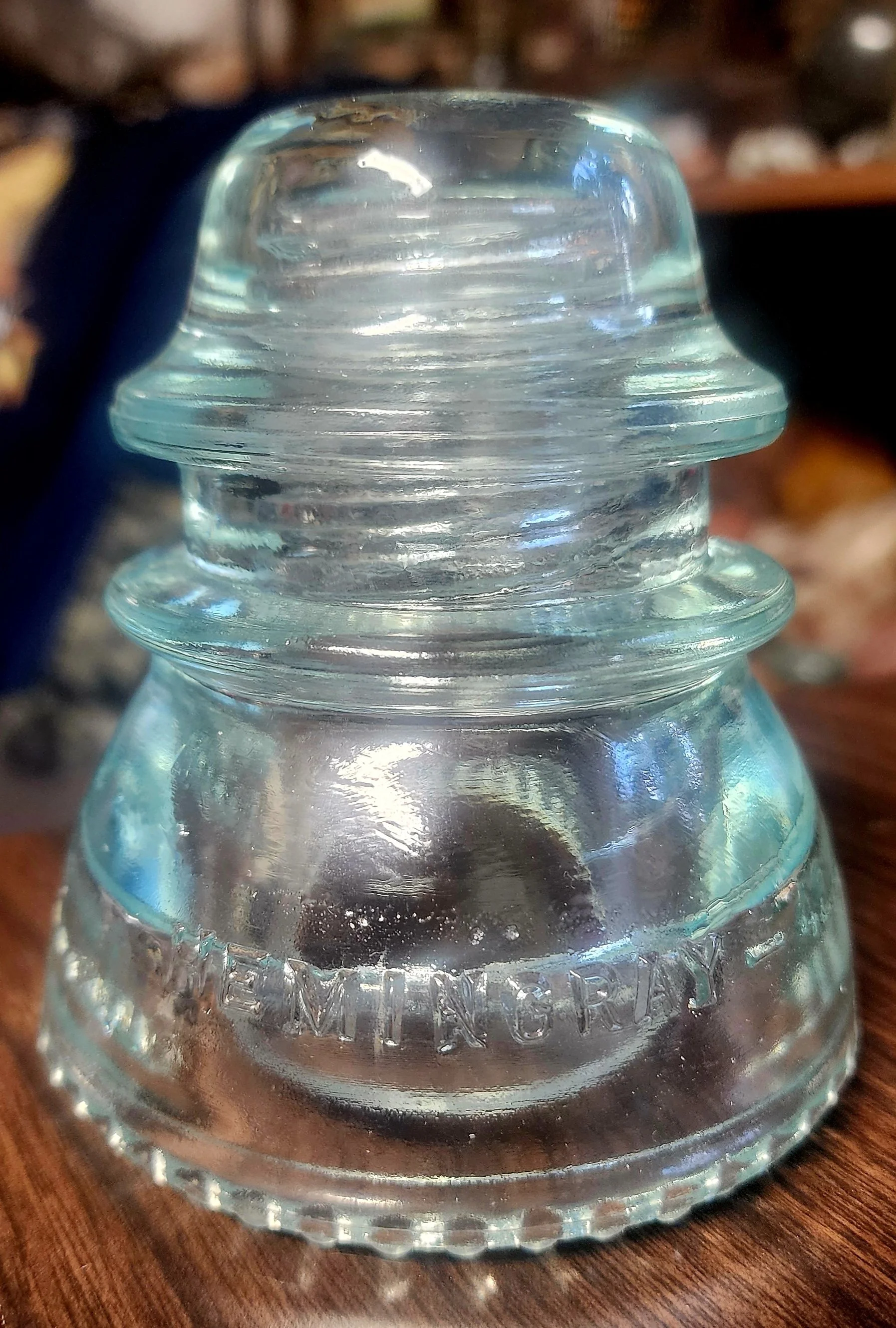
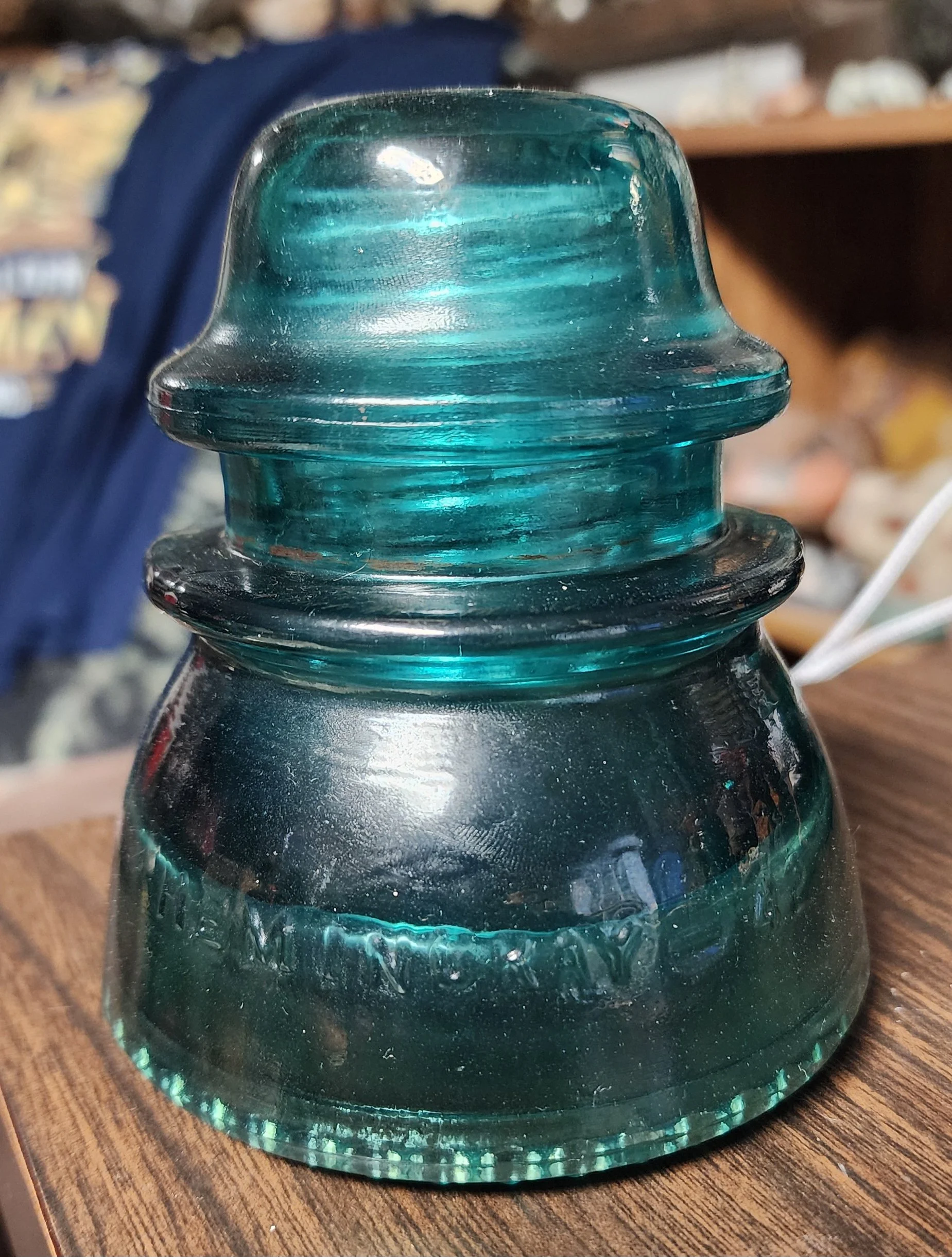
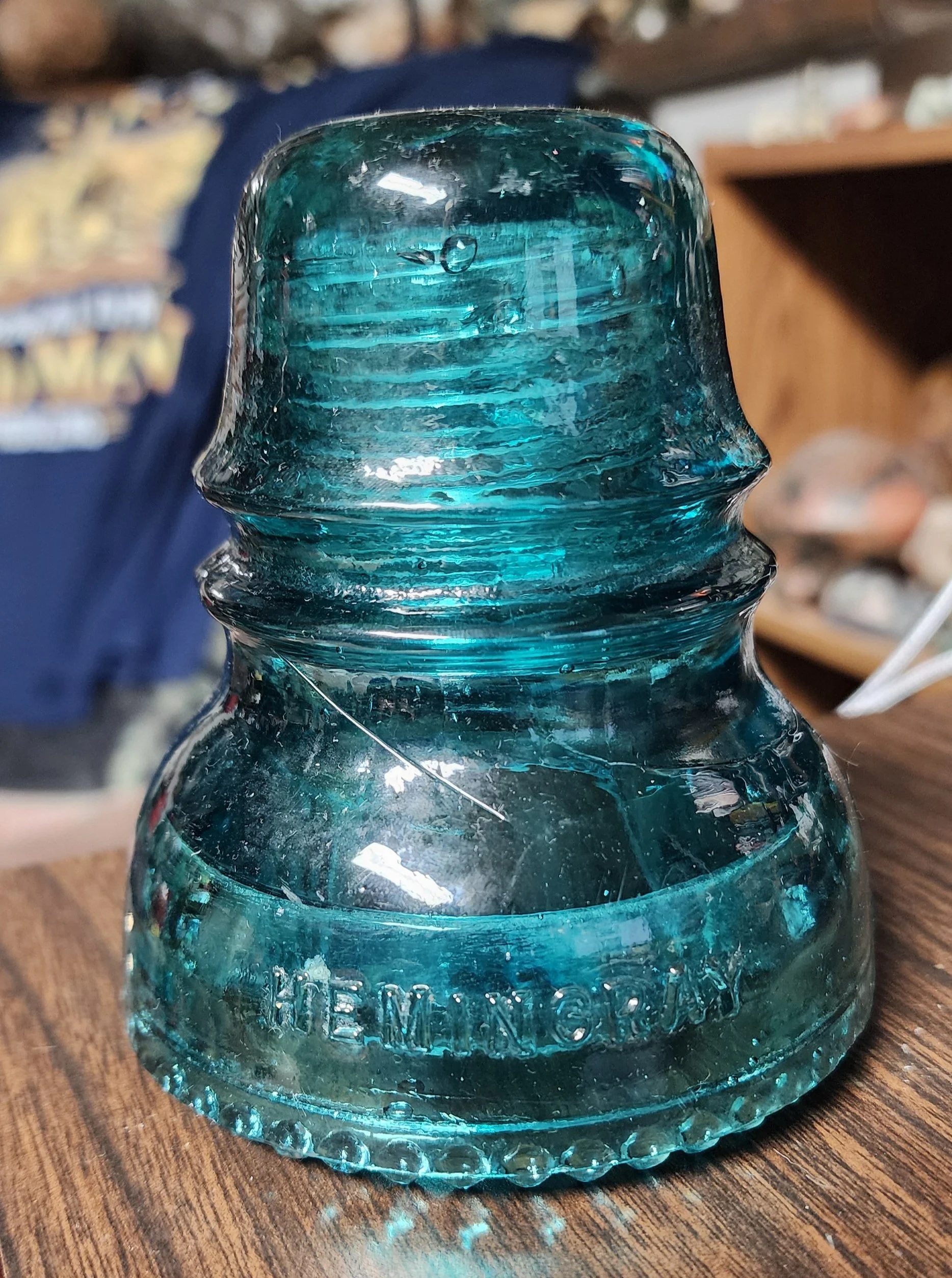
Hemingray 42
Very nice Blue Hemingray 42
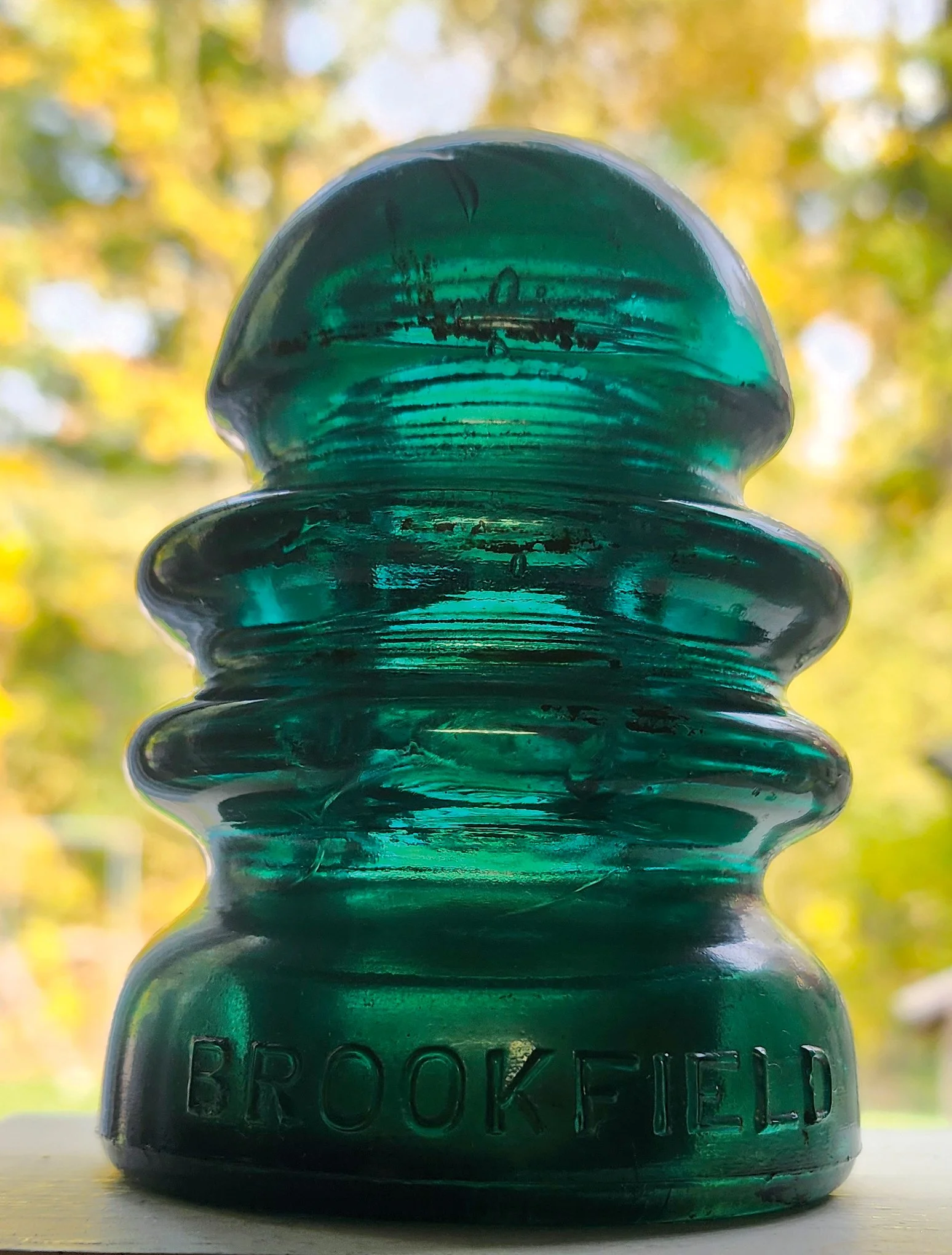
Brookfield Trans #2
Beautiful emboss. Emerald Green. Multi-Groove. CD205
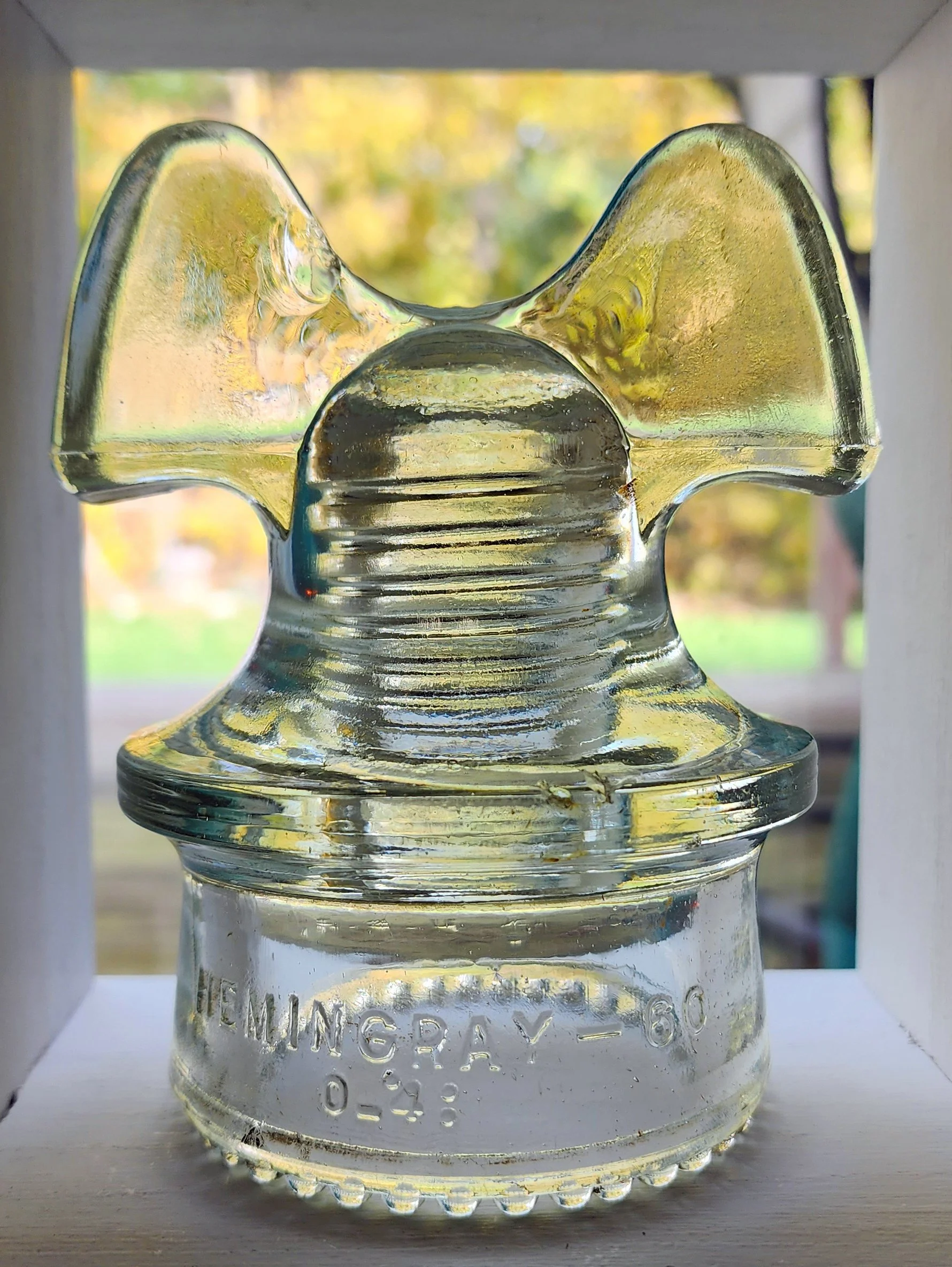
Mickey Mouse Hemingray #60
Thrilled to find this at the Davisburg Antique Festival today (10/10/26).
CD257 Date code reads 1937
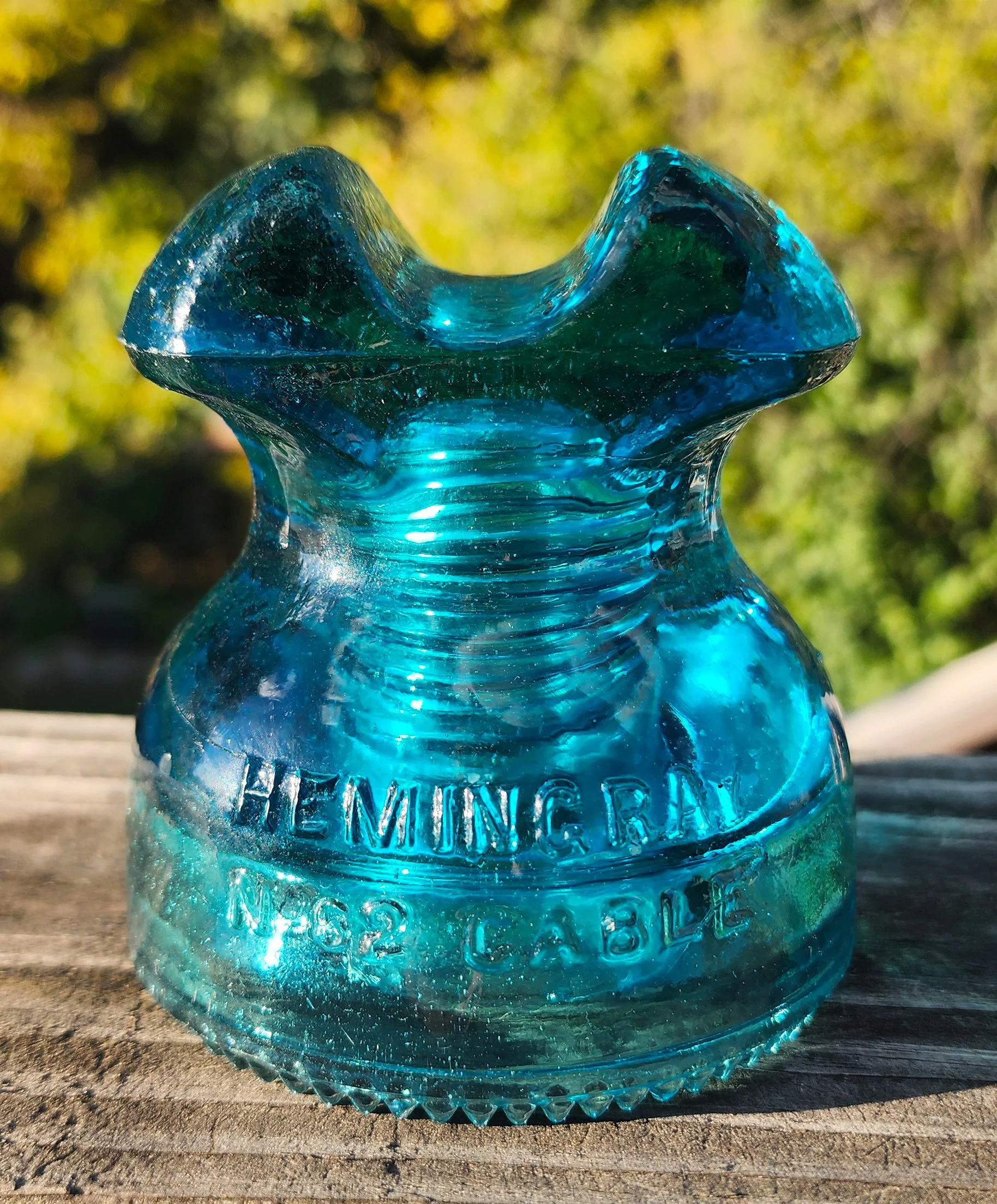
Hemingray #62 Cable
Beautiful Hemingray Blue. This one really stands out in my window display.
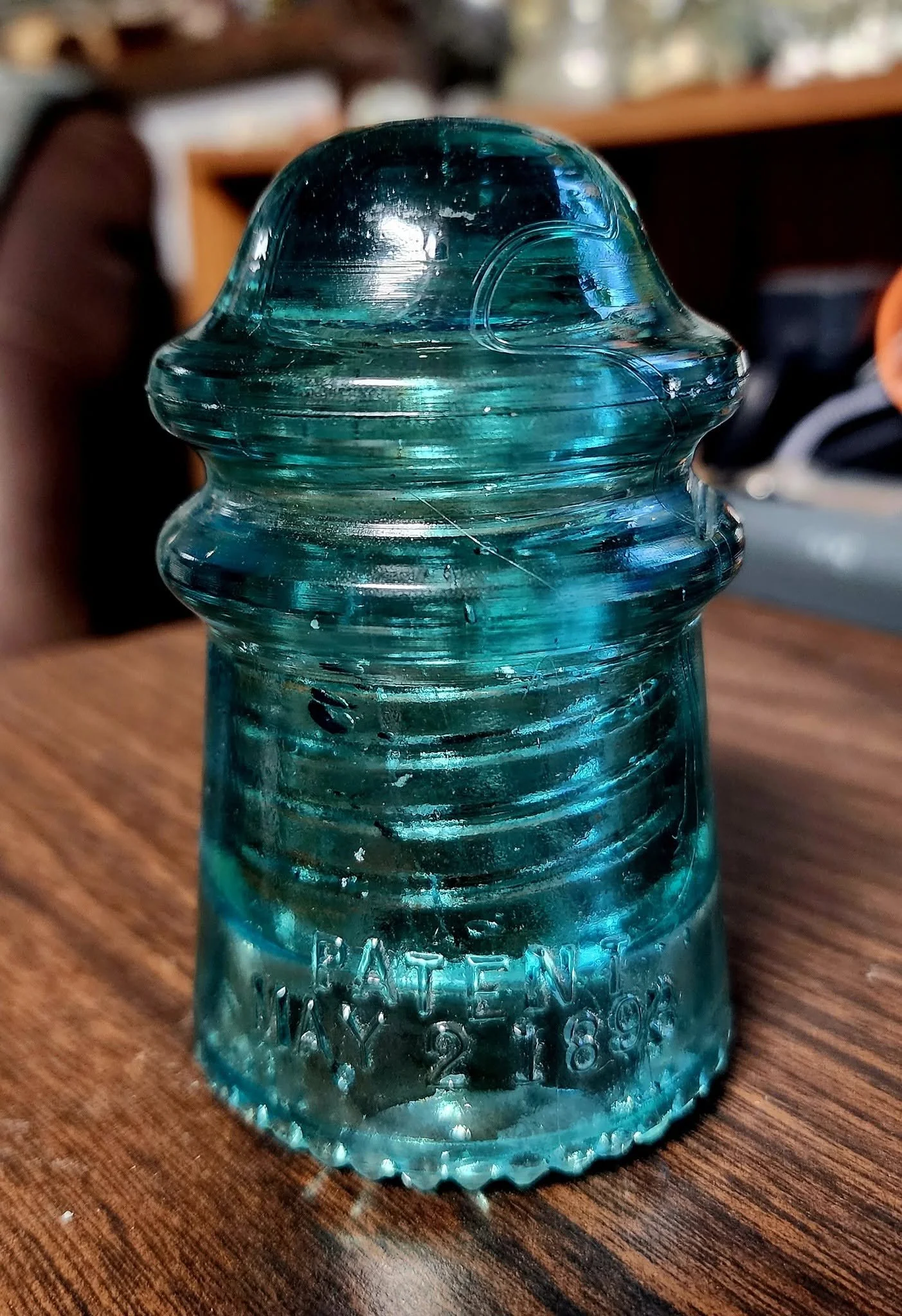
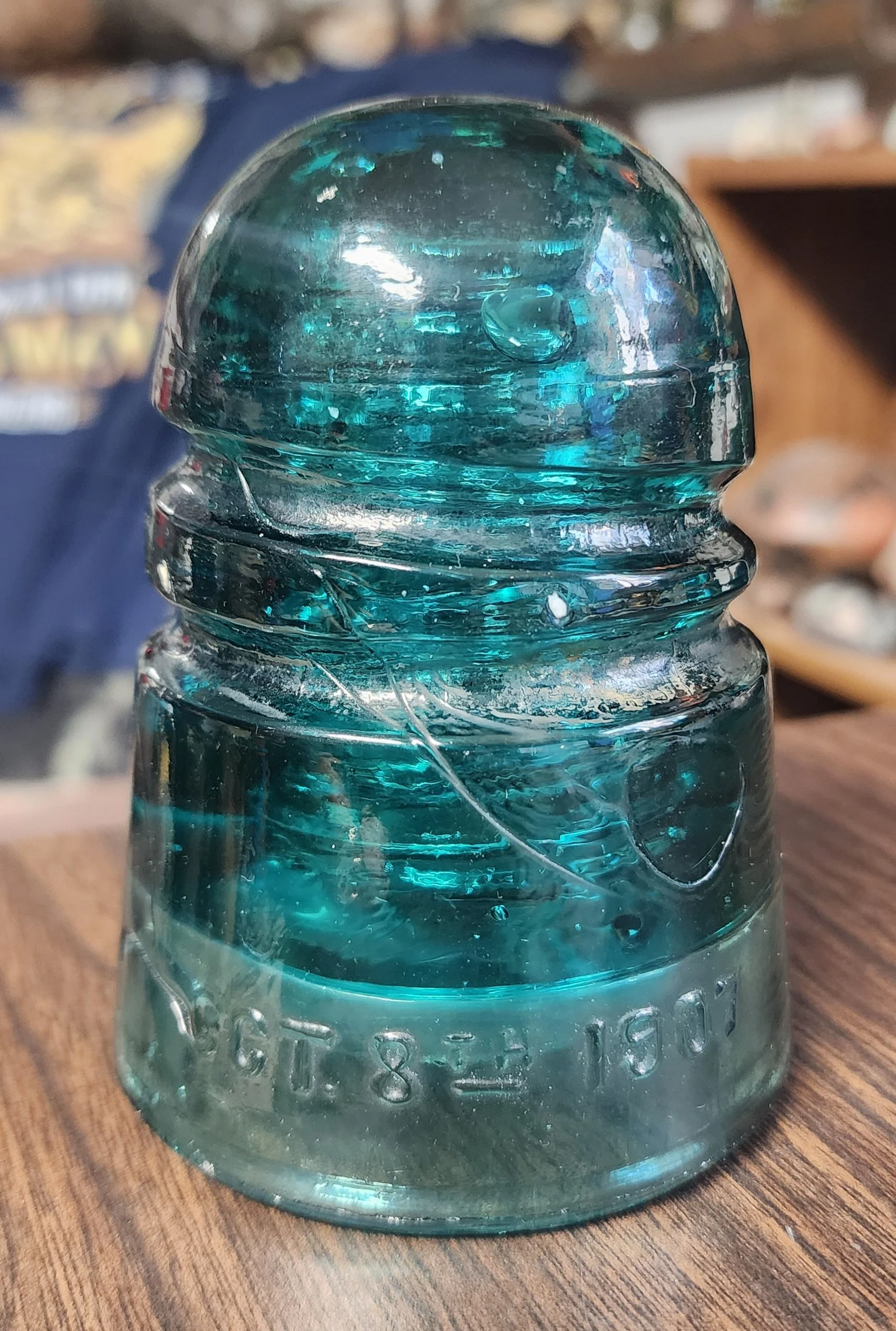
Patent Date May 2nd 1893, CD252
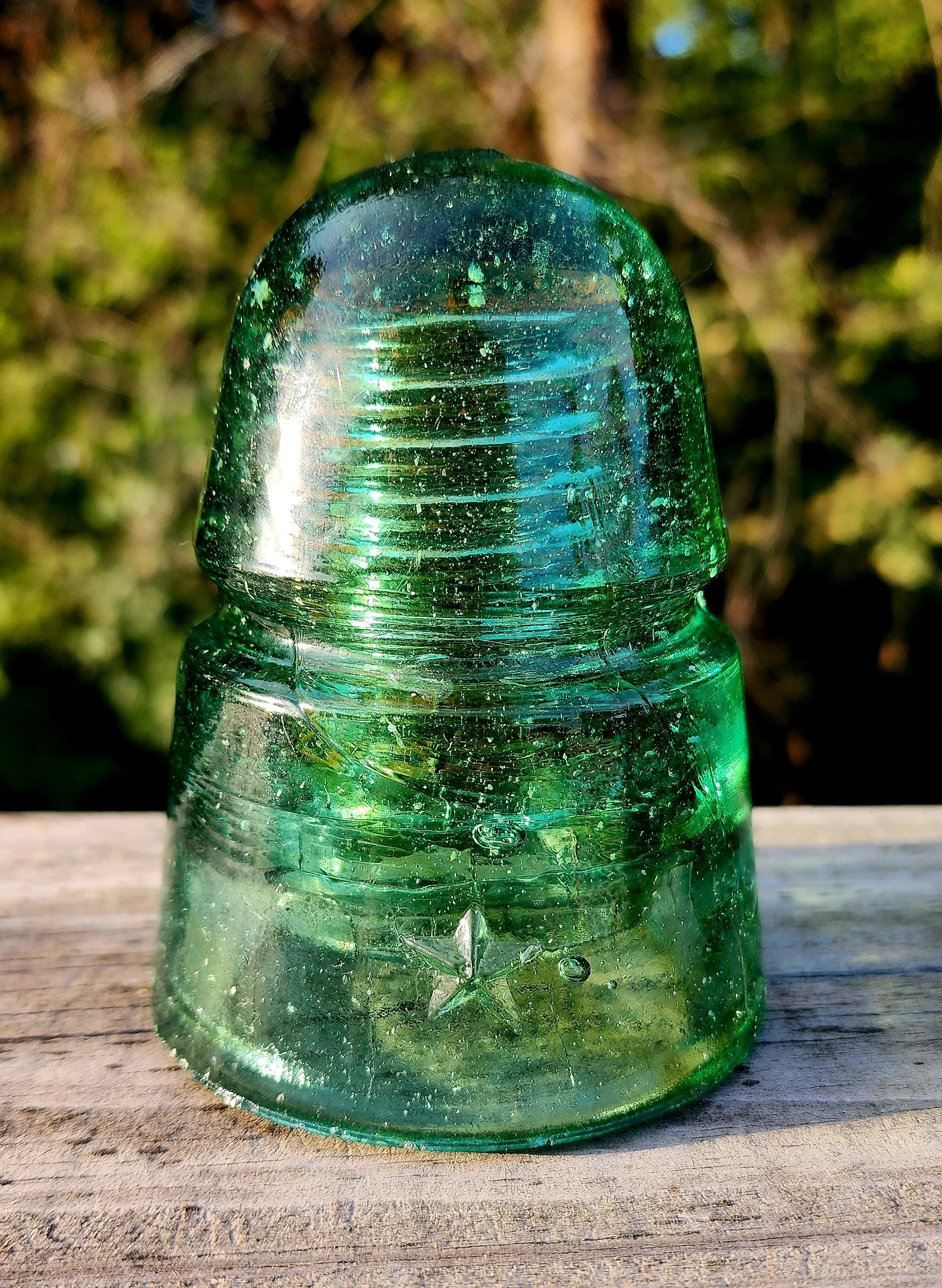
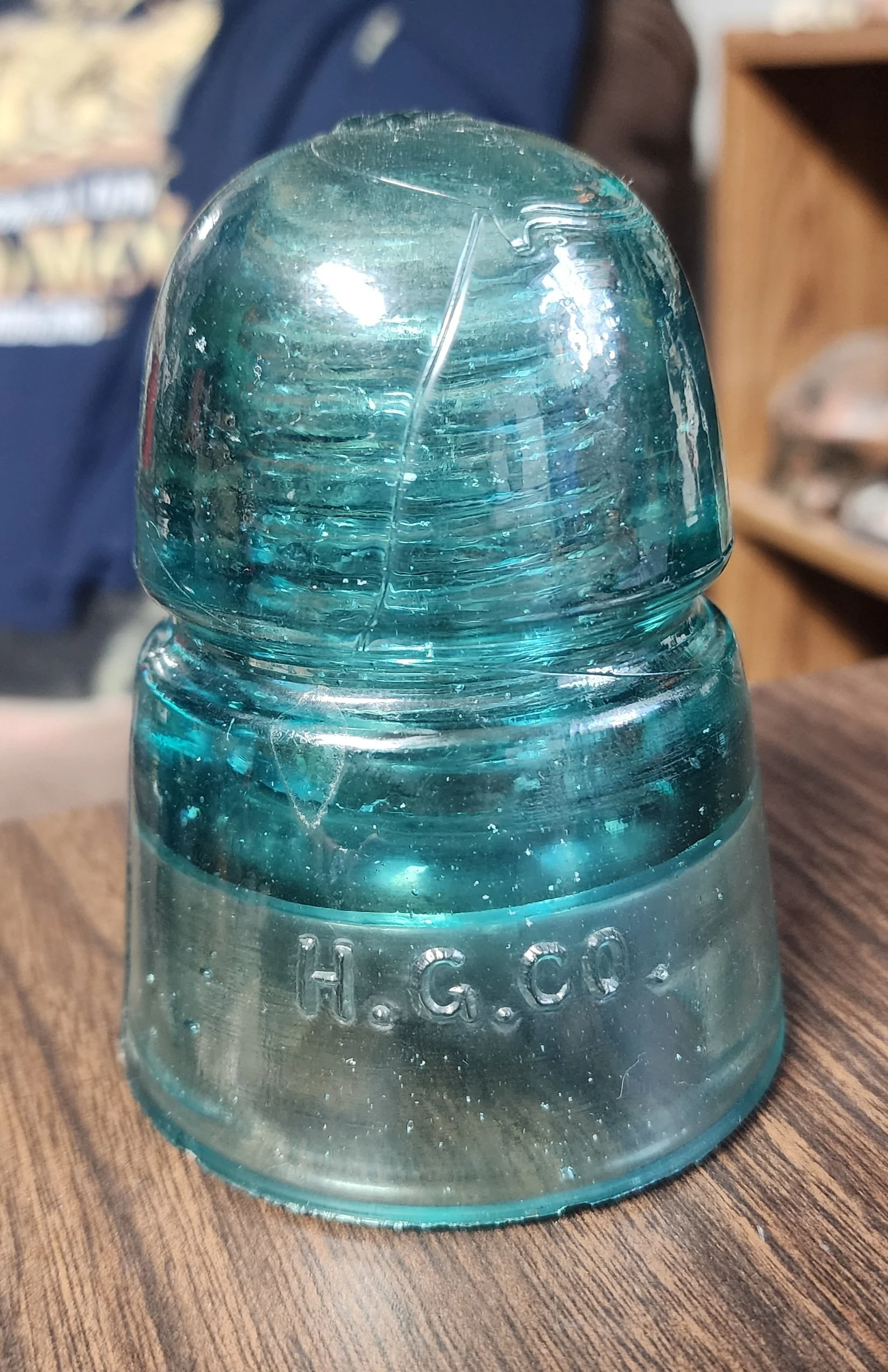
Star Beehive
Beautiful Apple green Start Insulator CD145 with lots of fizzy bubbles.
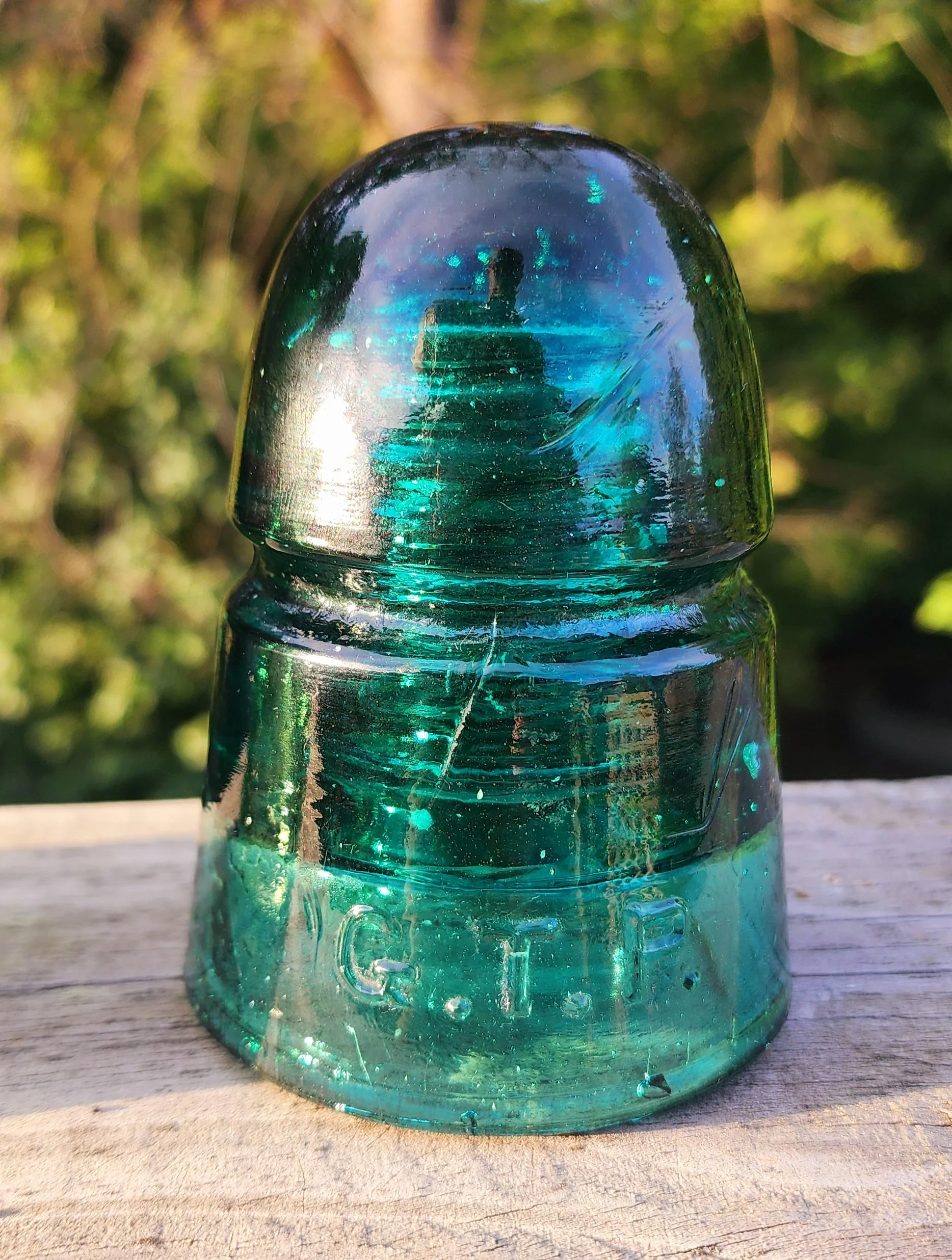
G.T.P. Grand Trunk Pacific
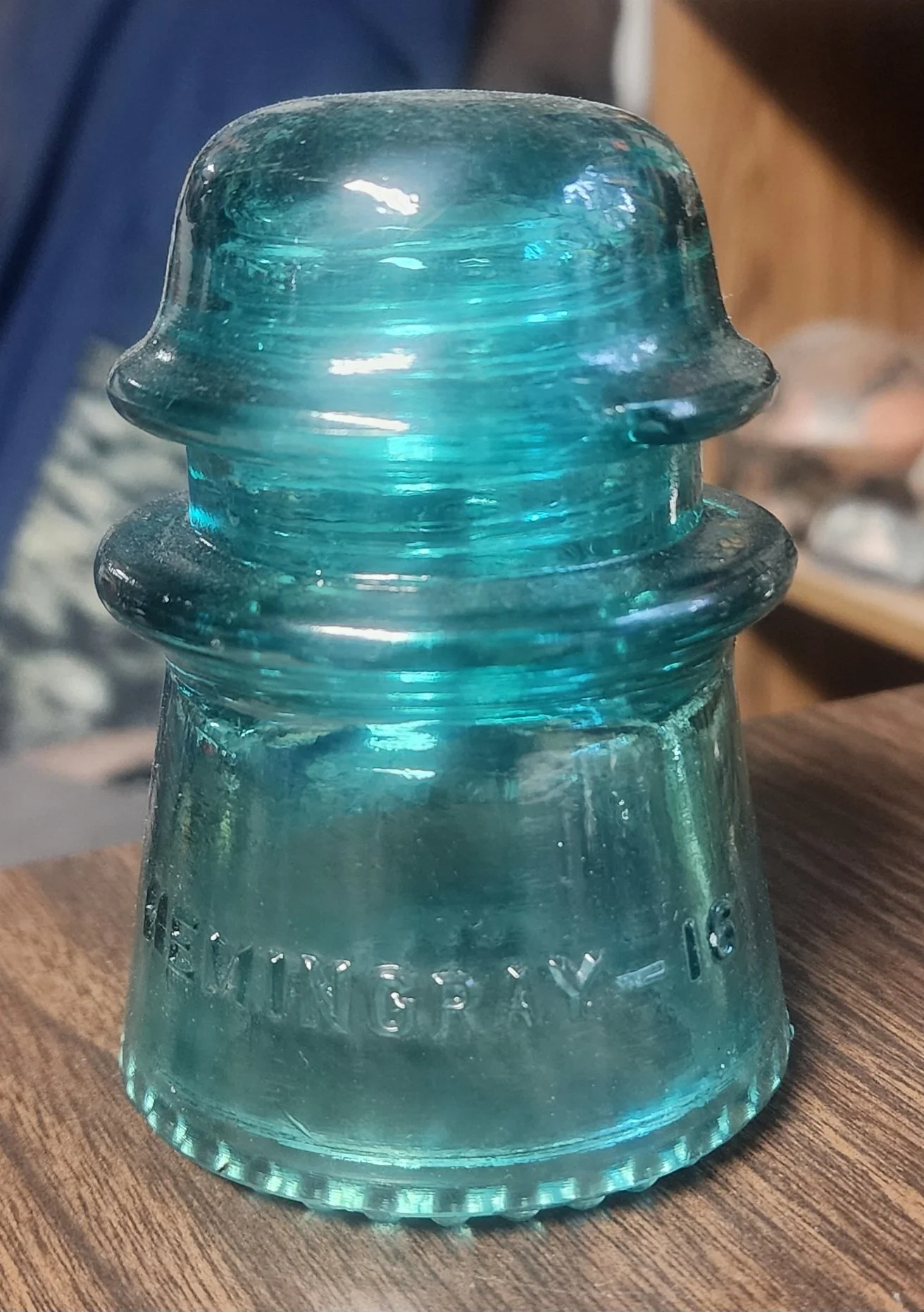
Early 1900’s the track started above the big lake called Gitchi-Gami and led all the way over to the Pacific. Beehive CD145 Dk. Green Brookfield
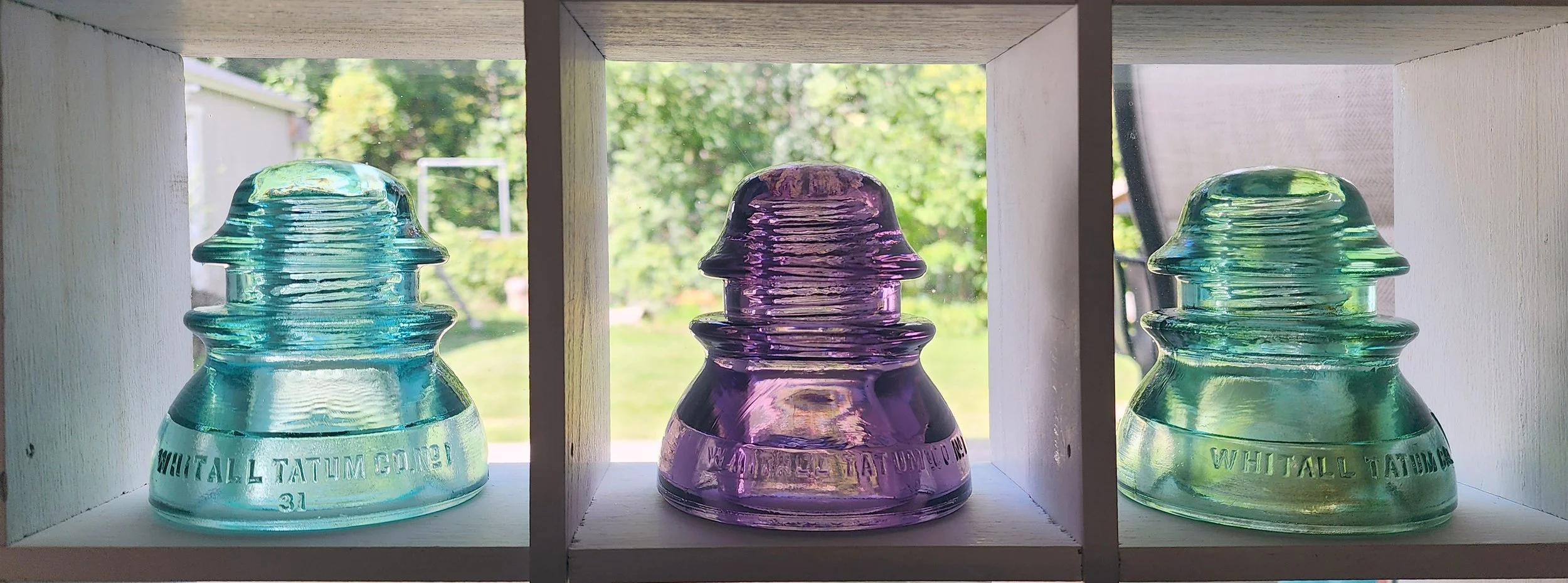
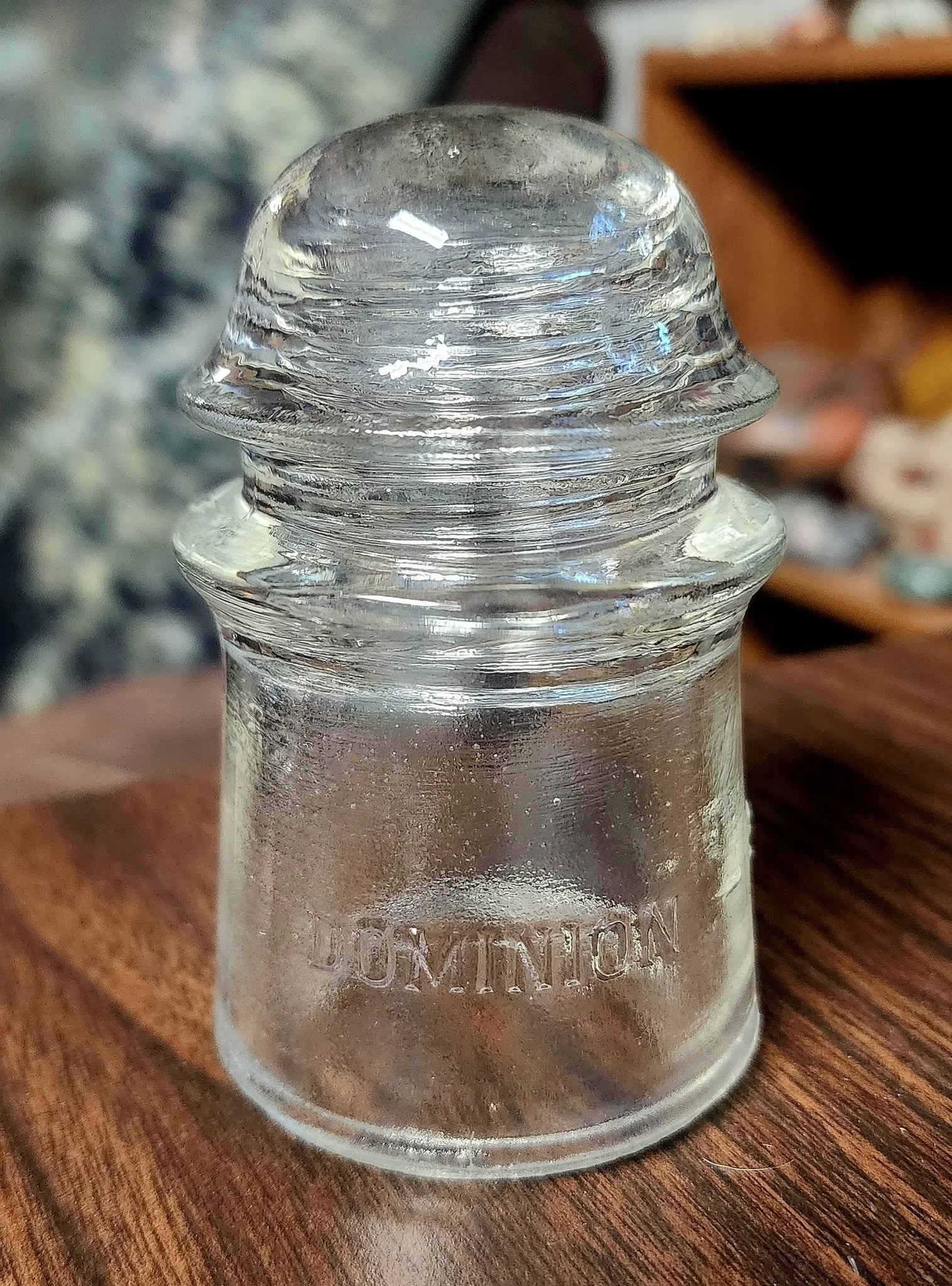
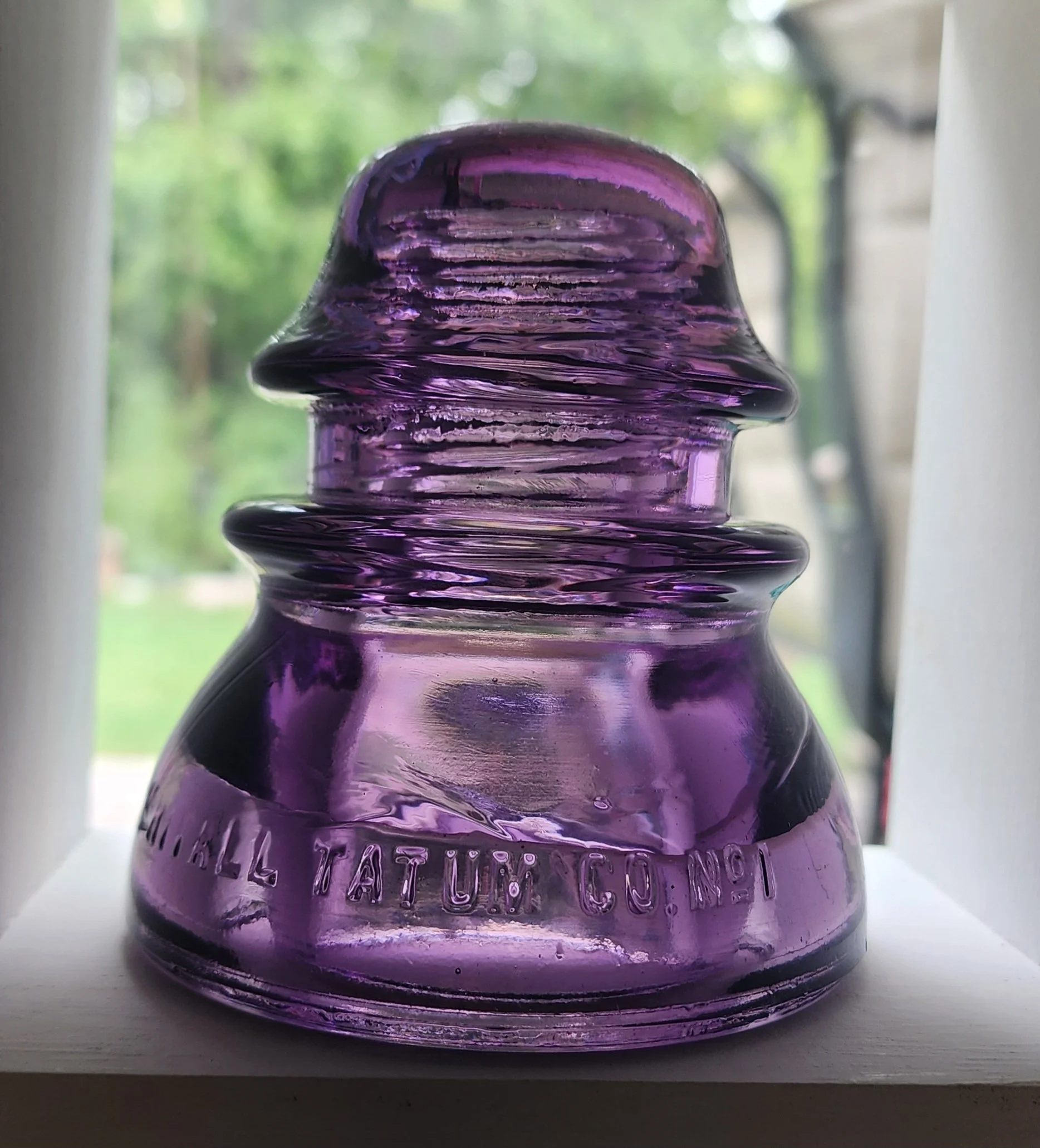
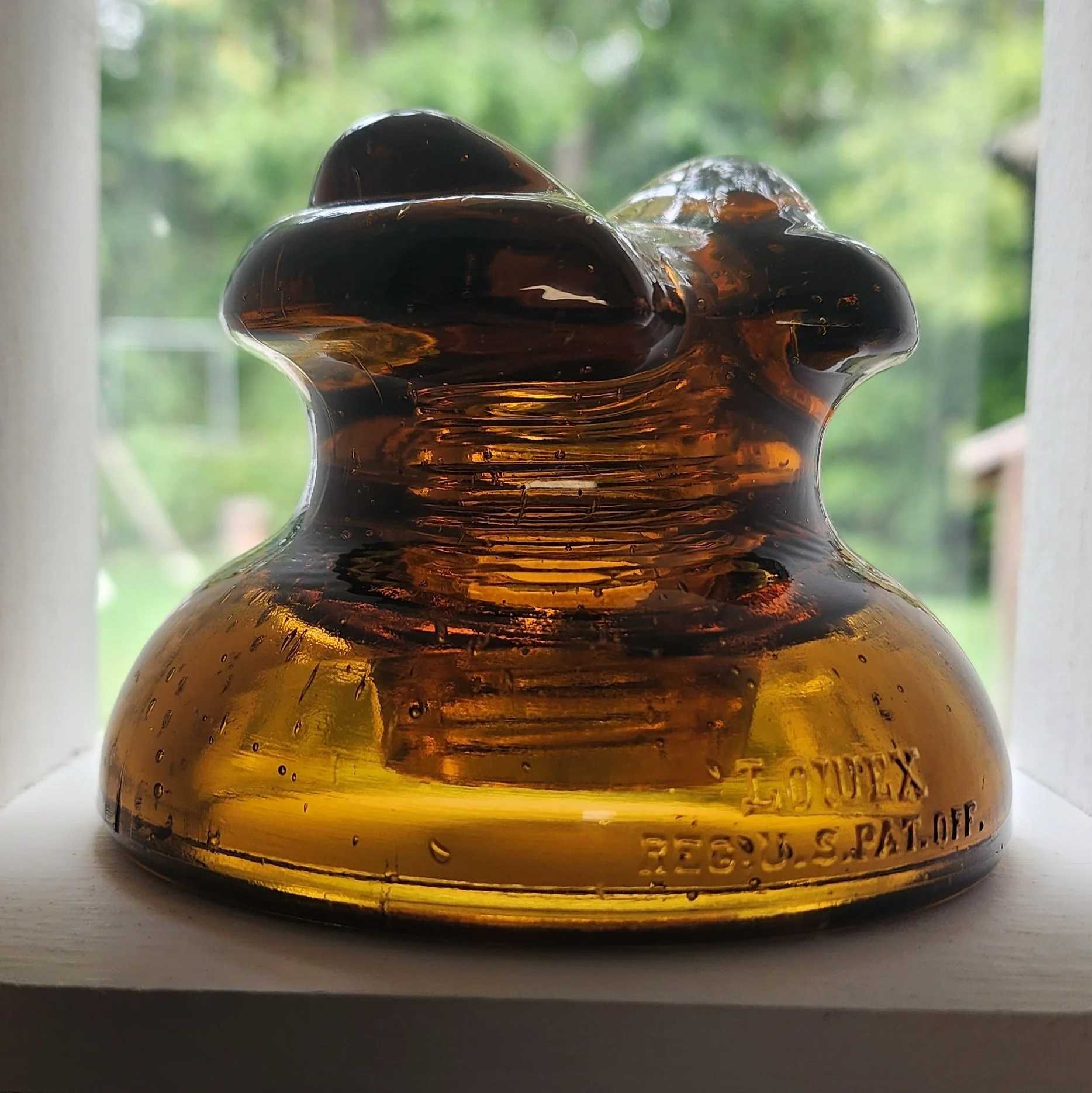
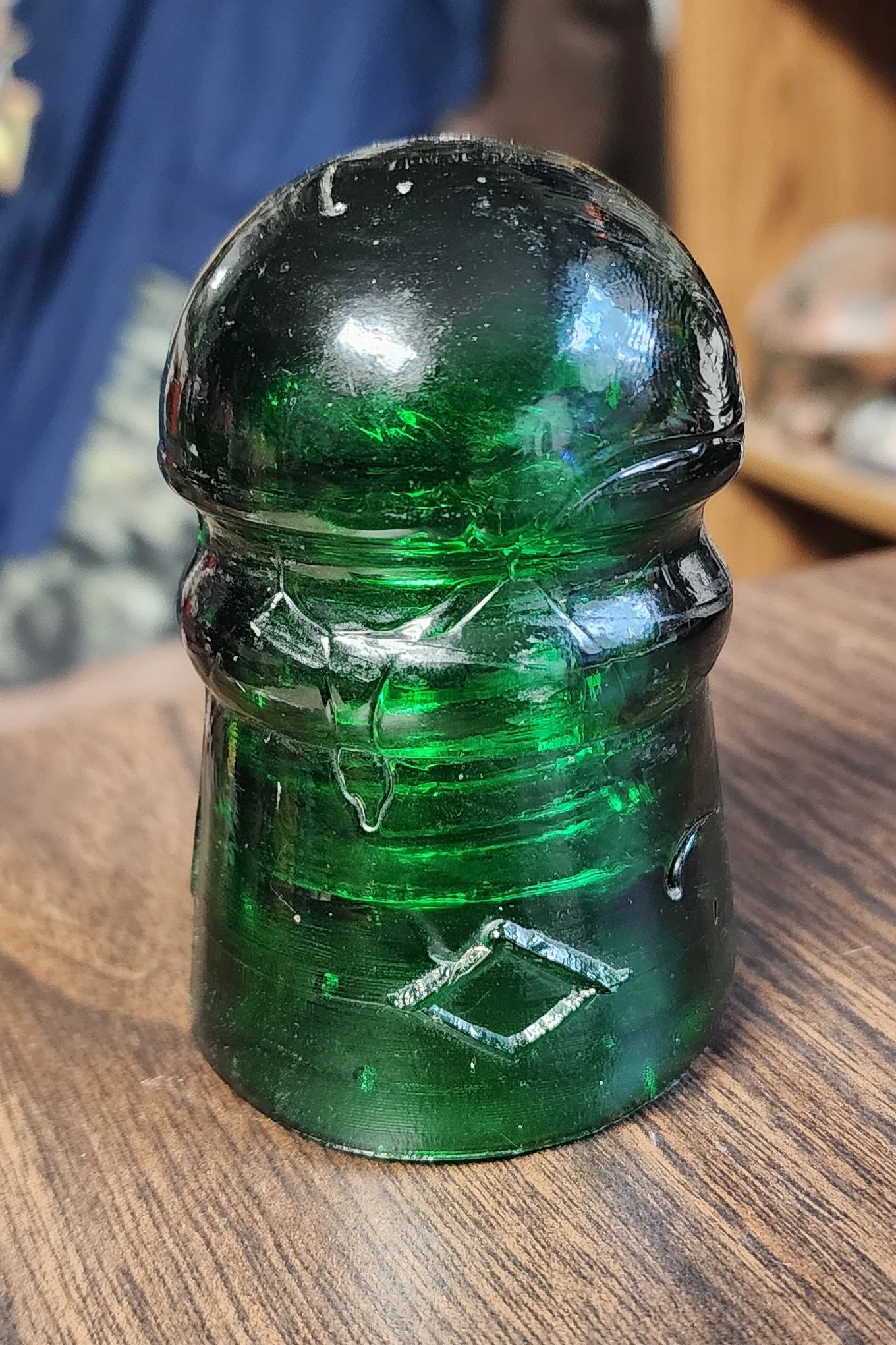
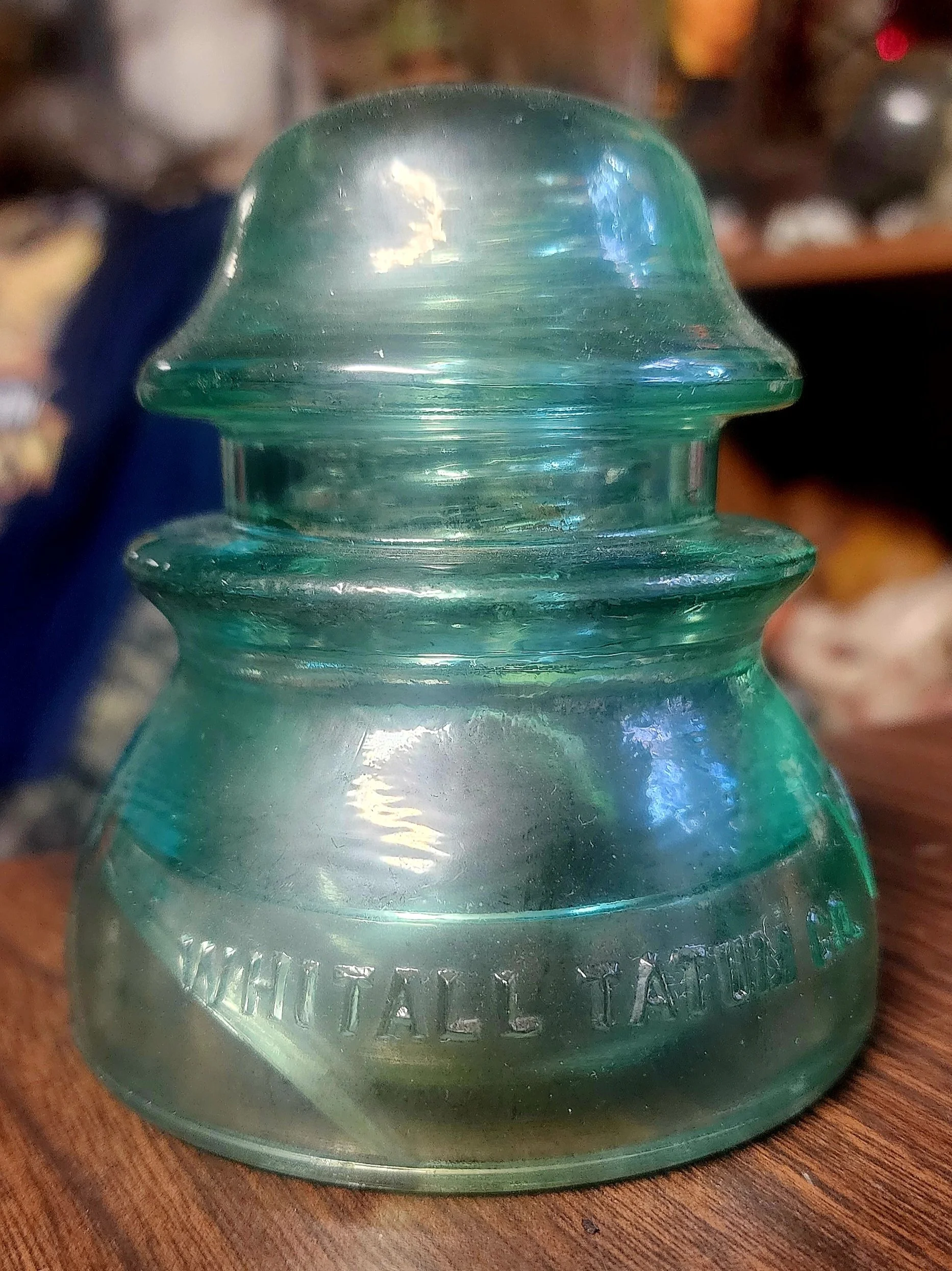
There is something about Tatum colors.
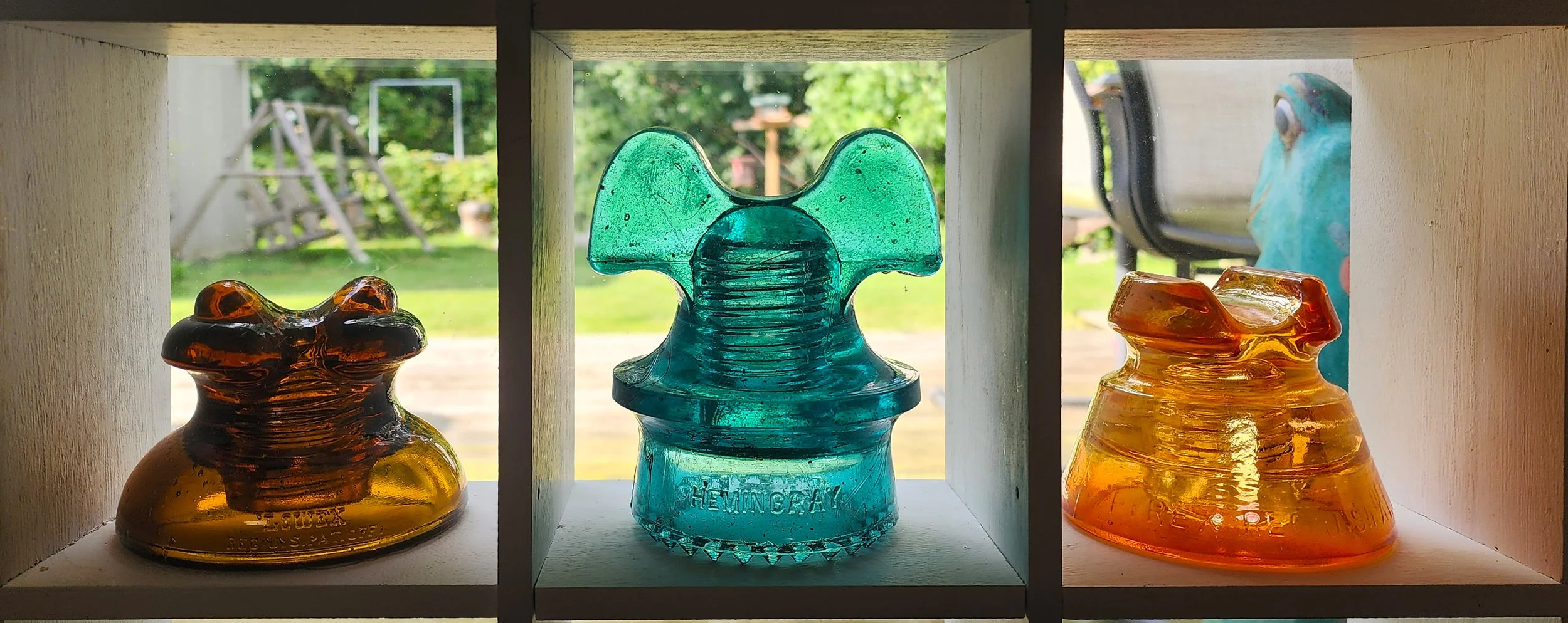
Capturing the light.
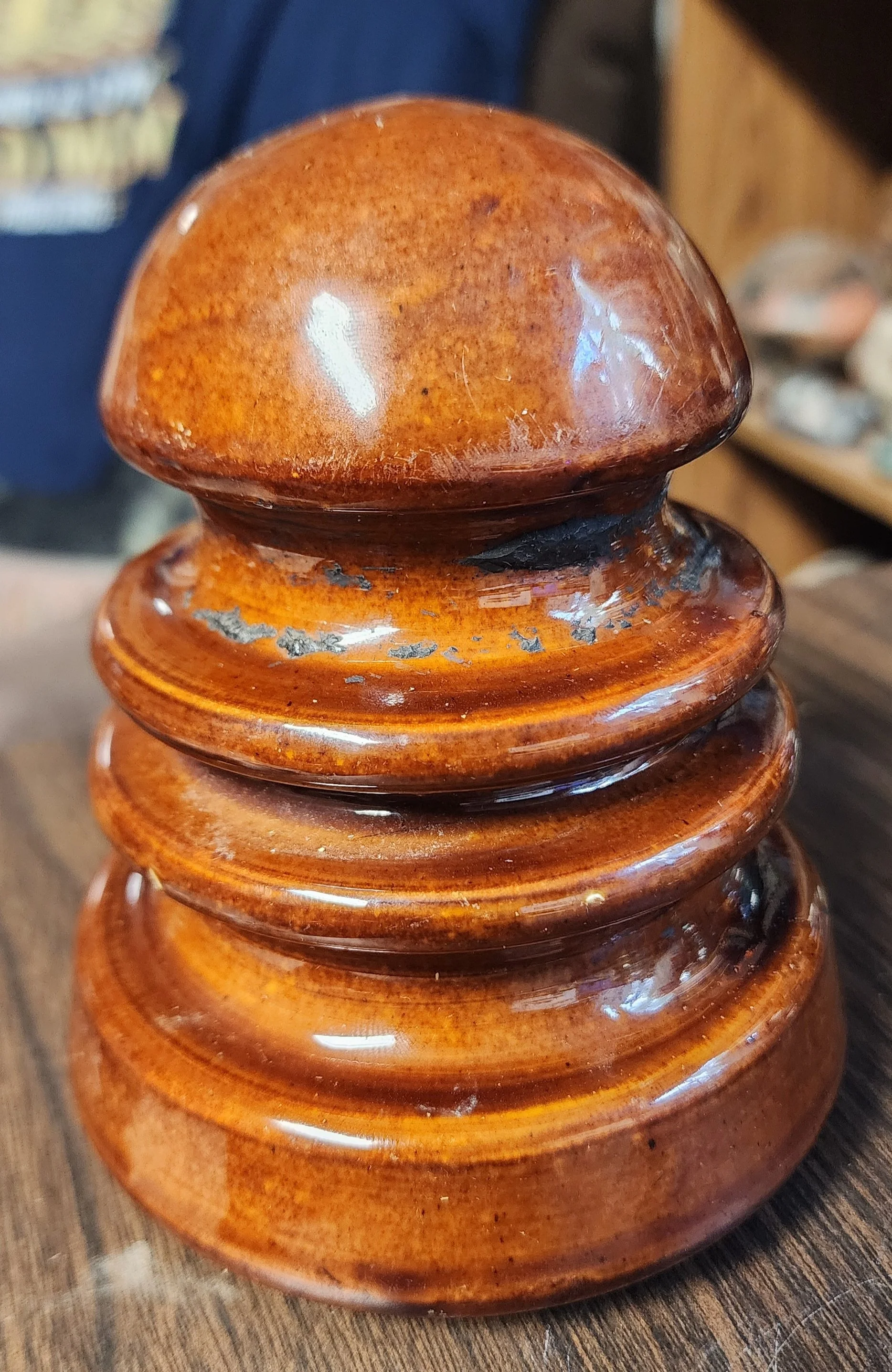
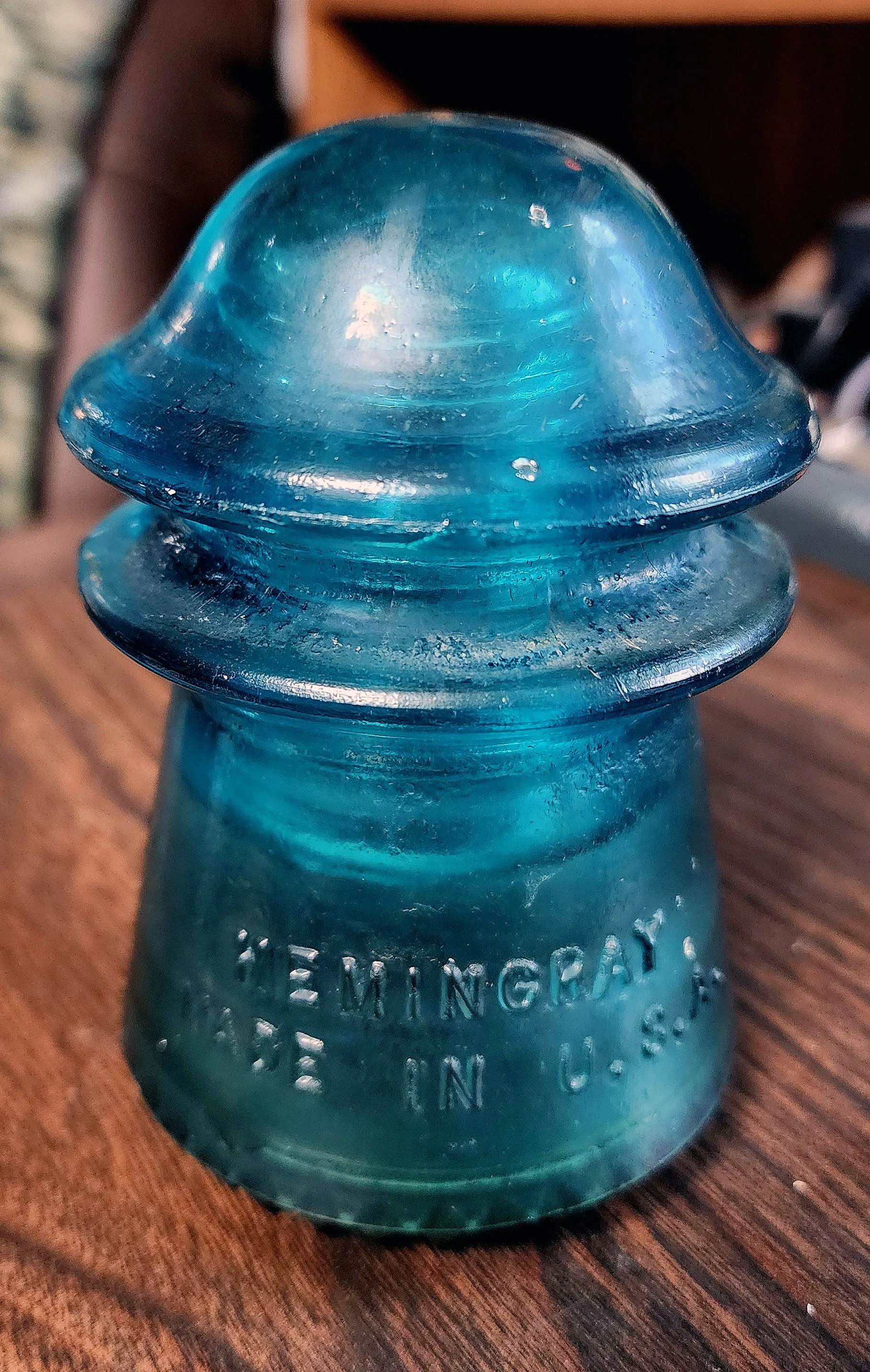
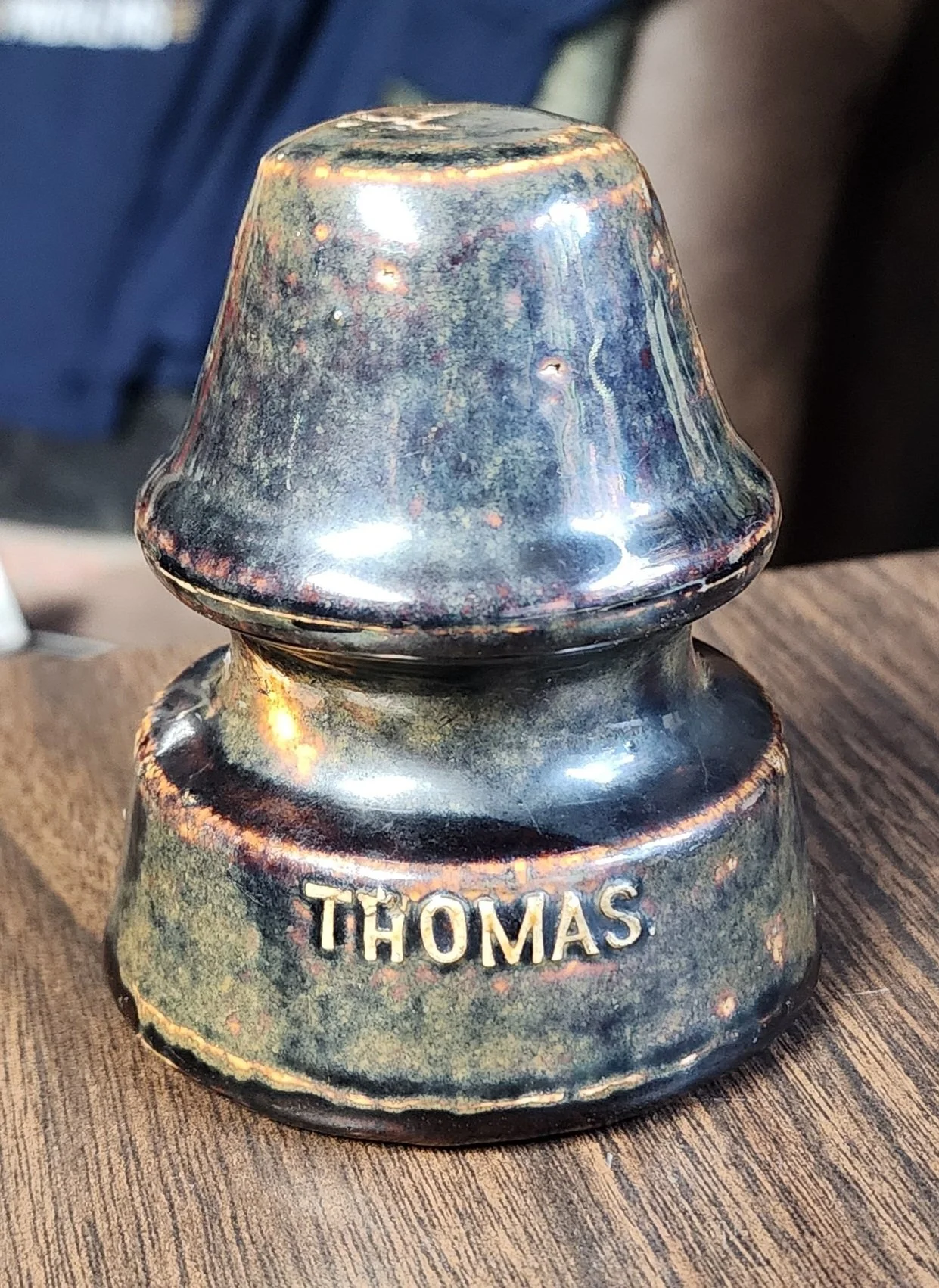
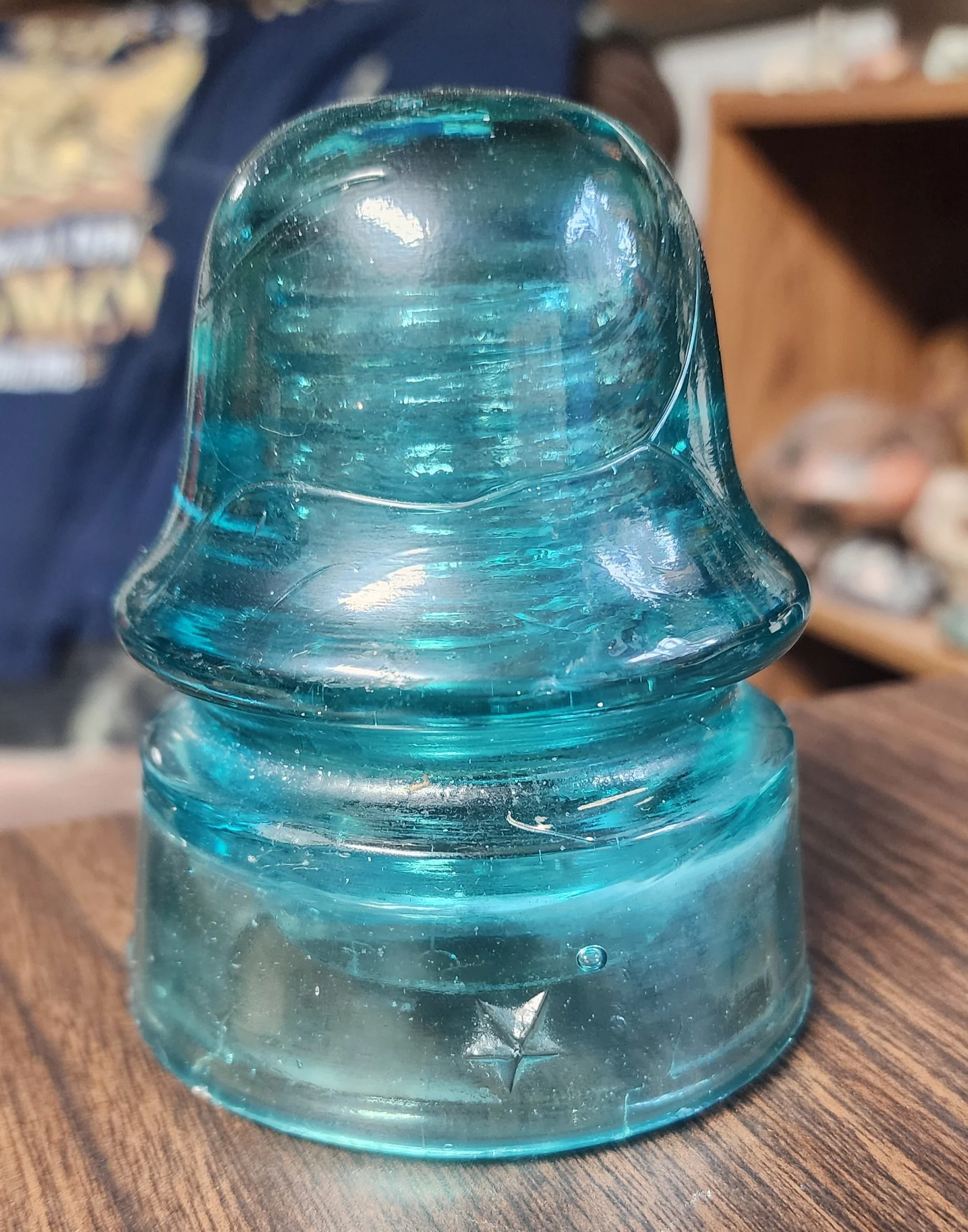
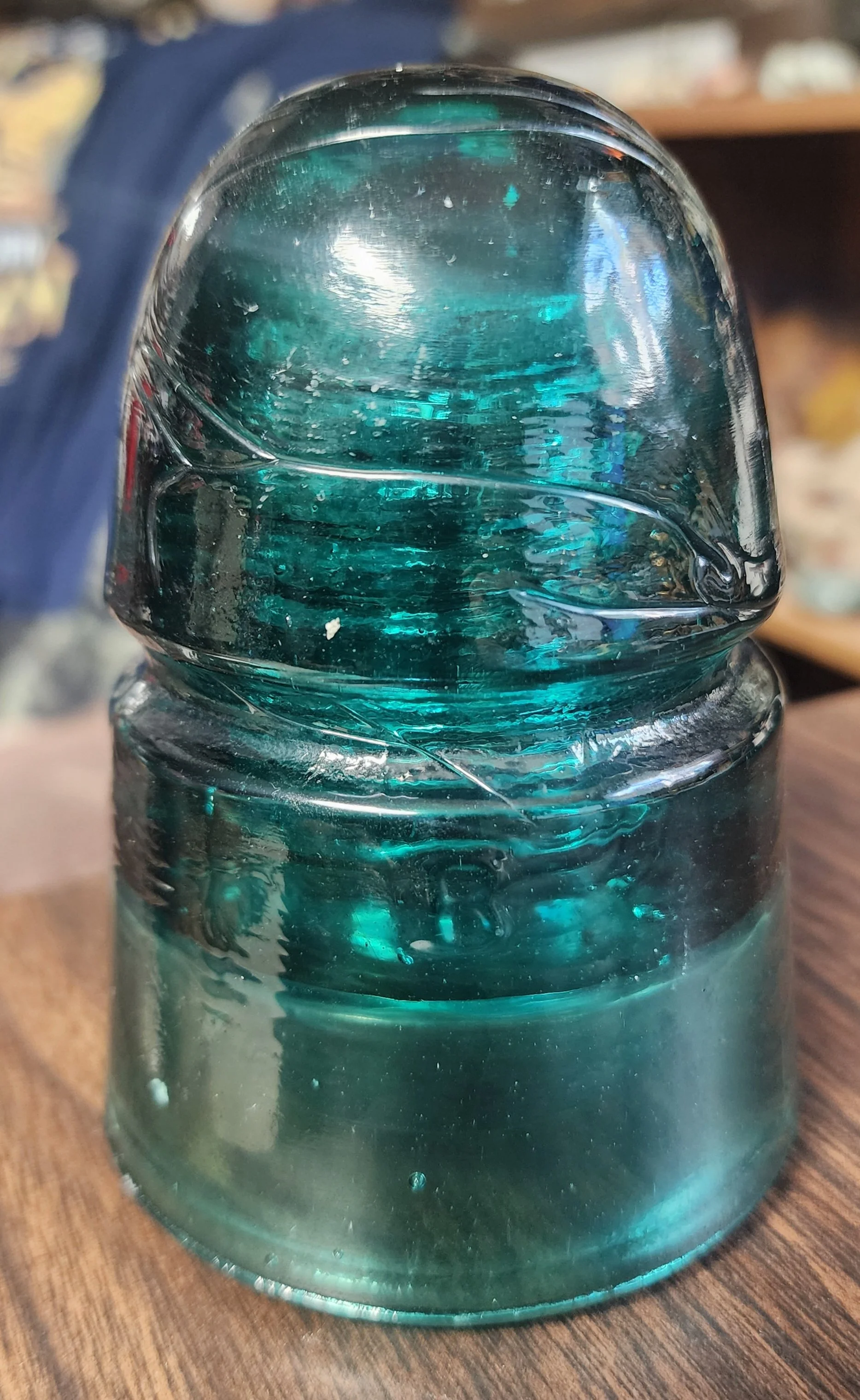
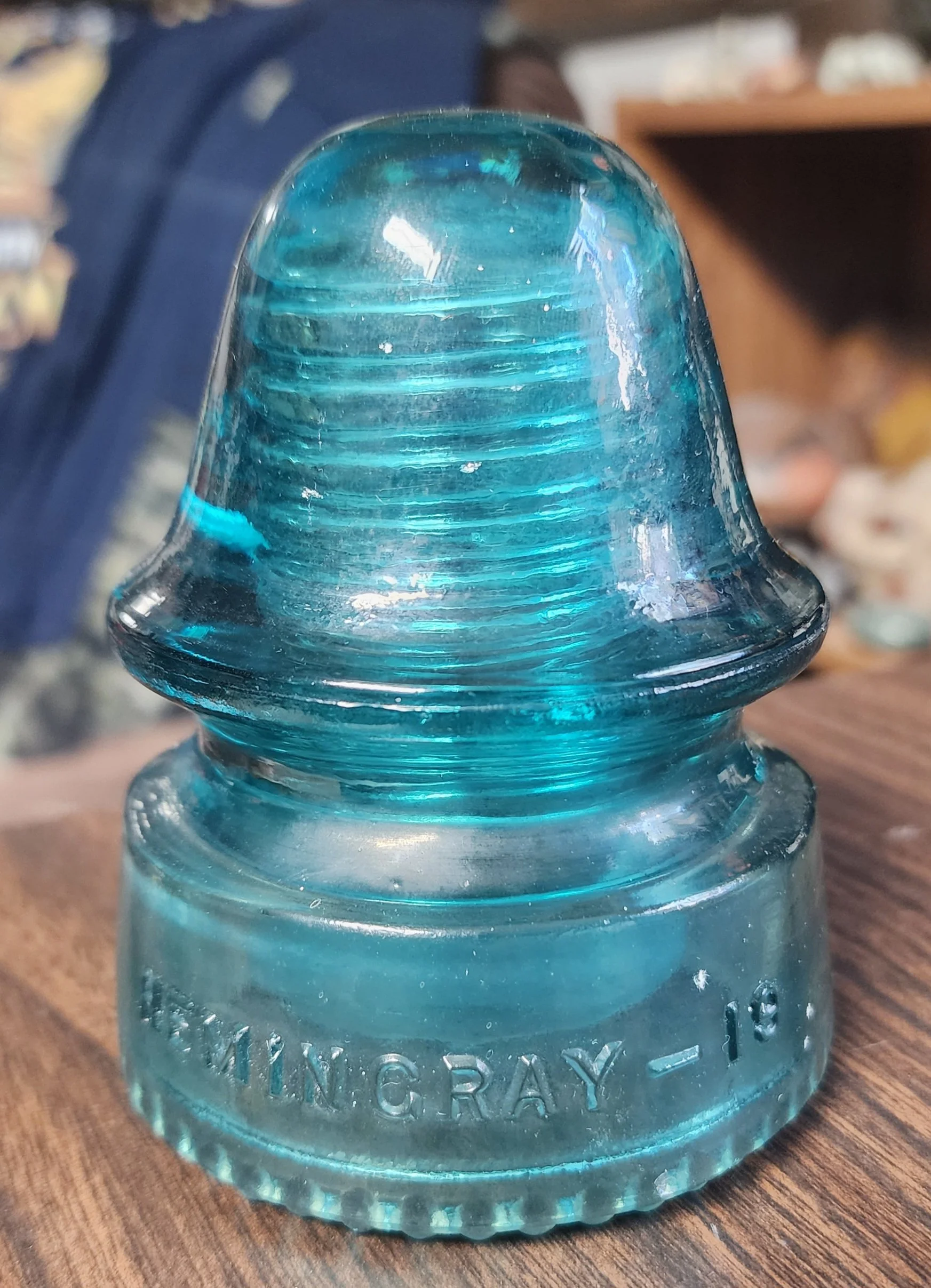
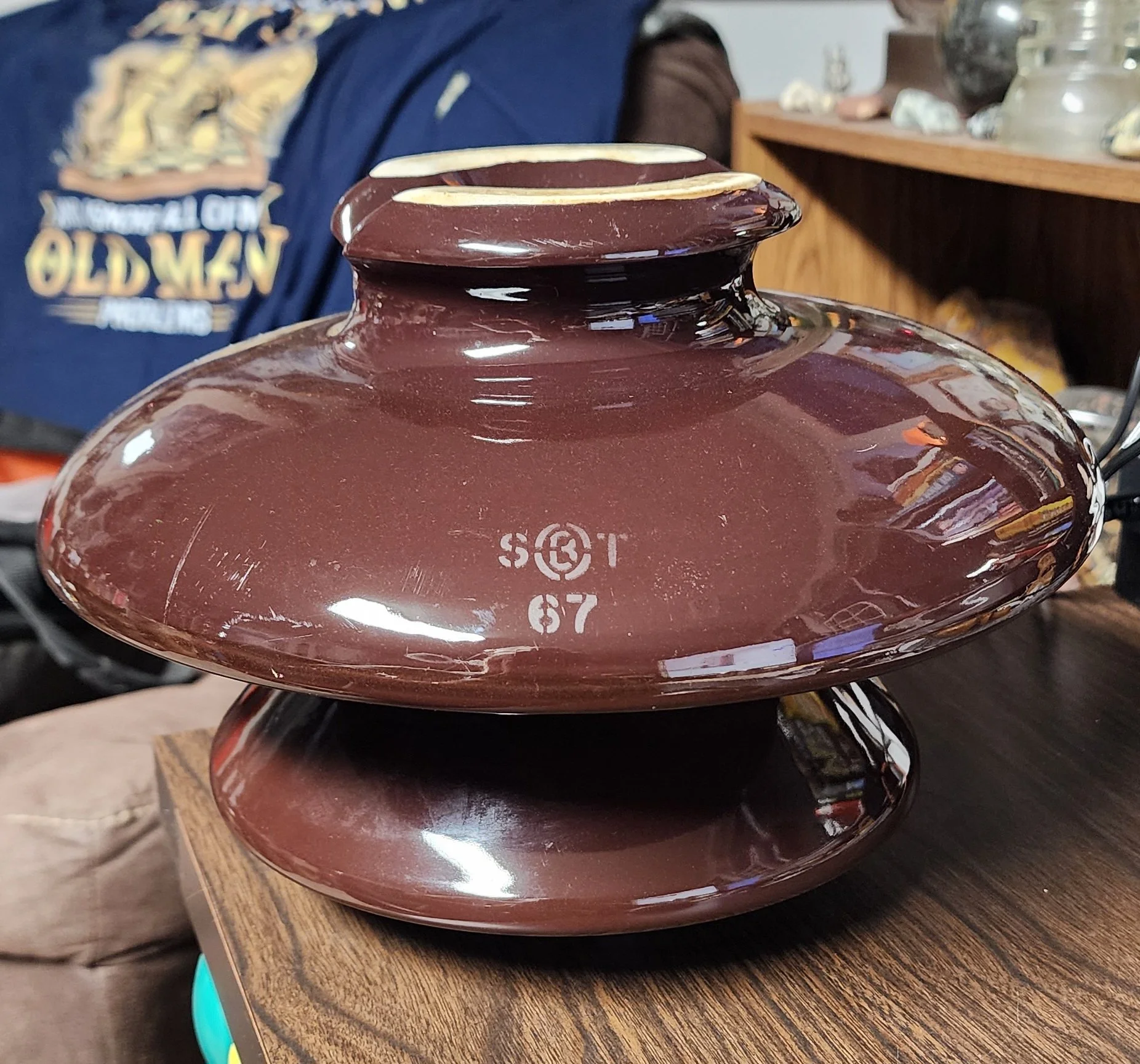
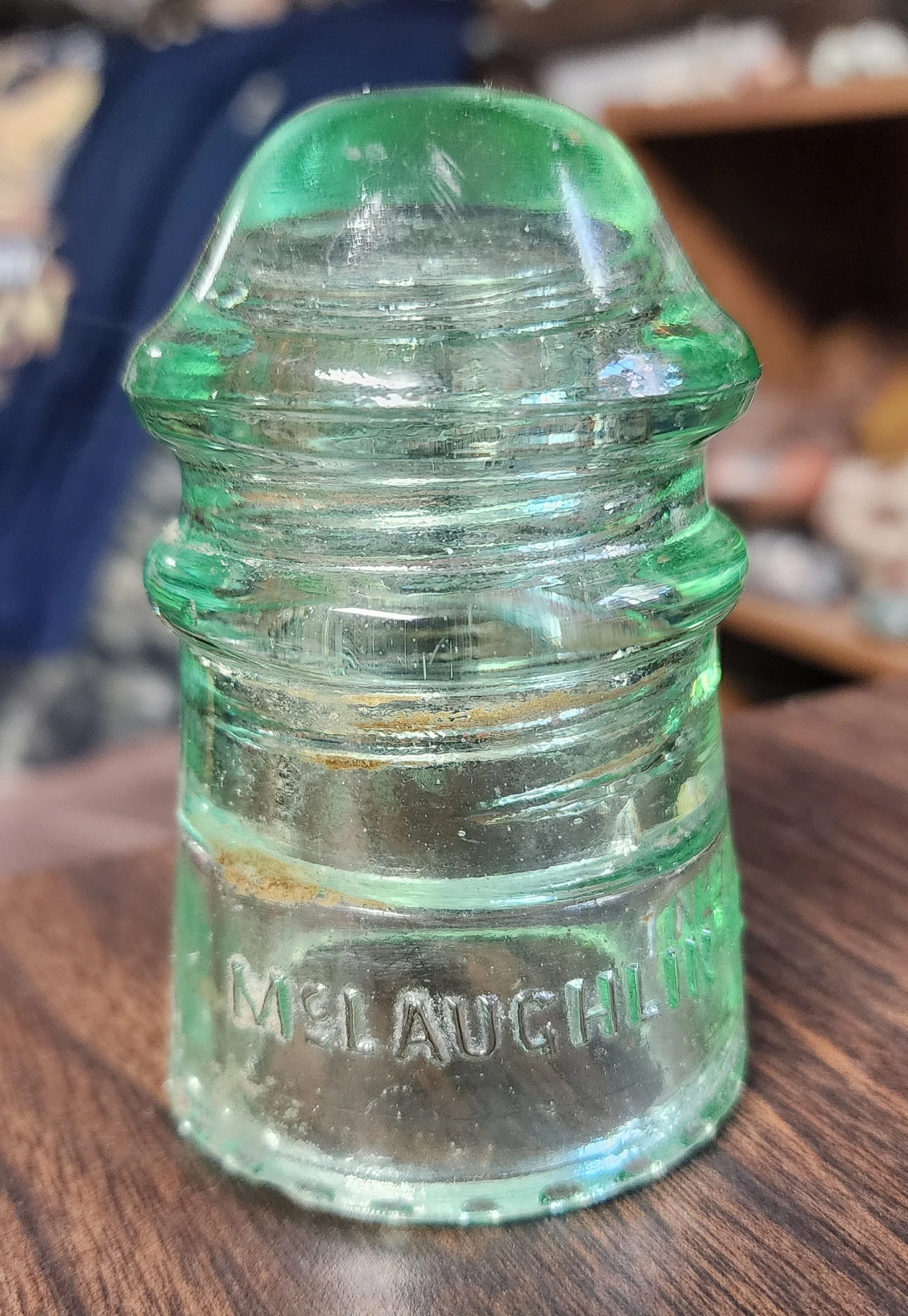
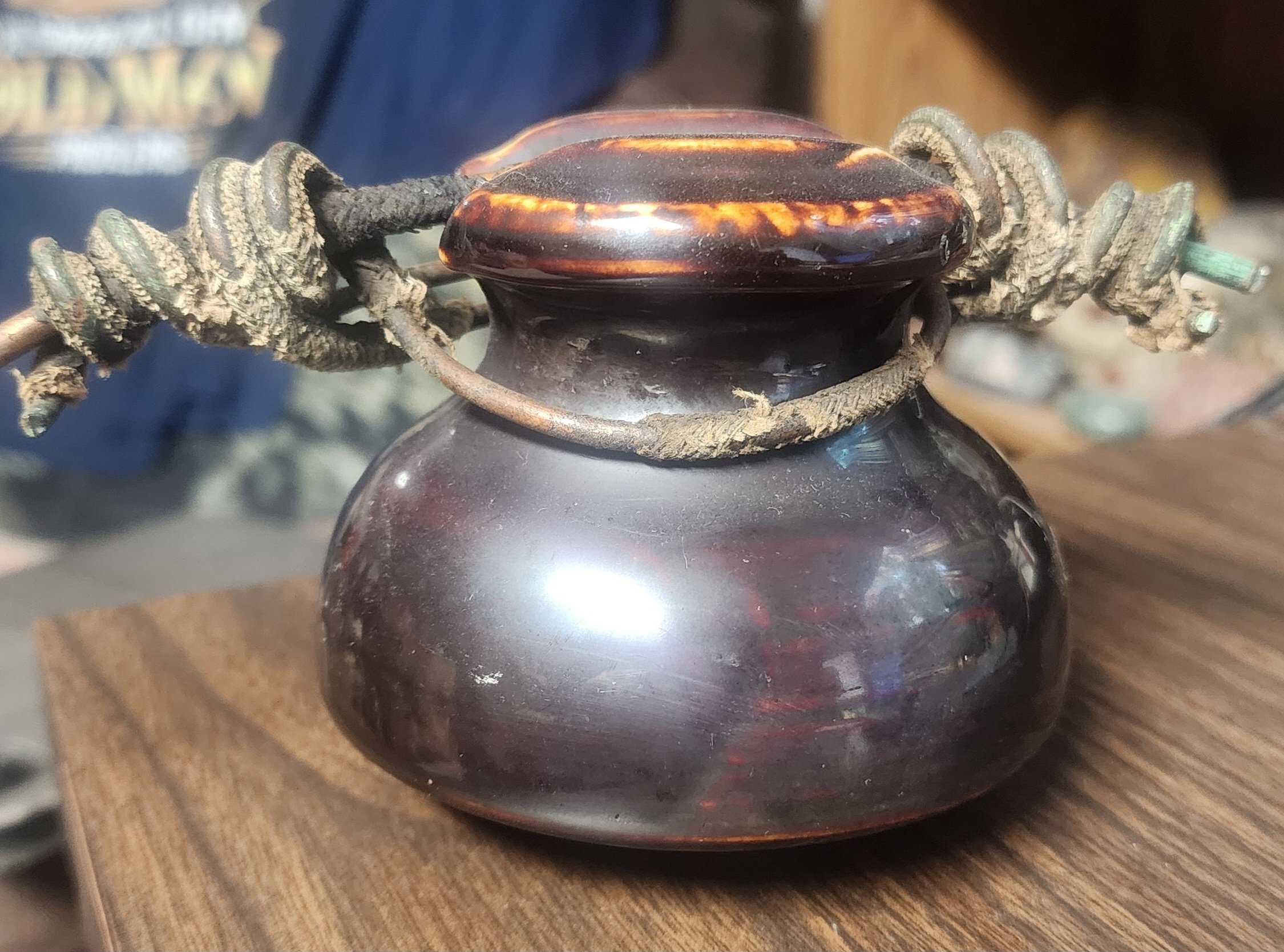
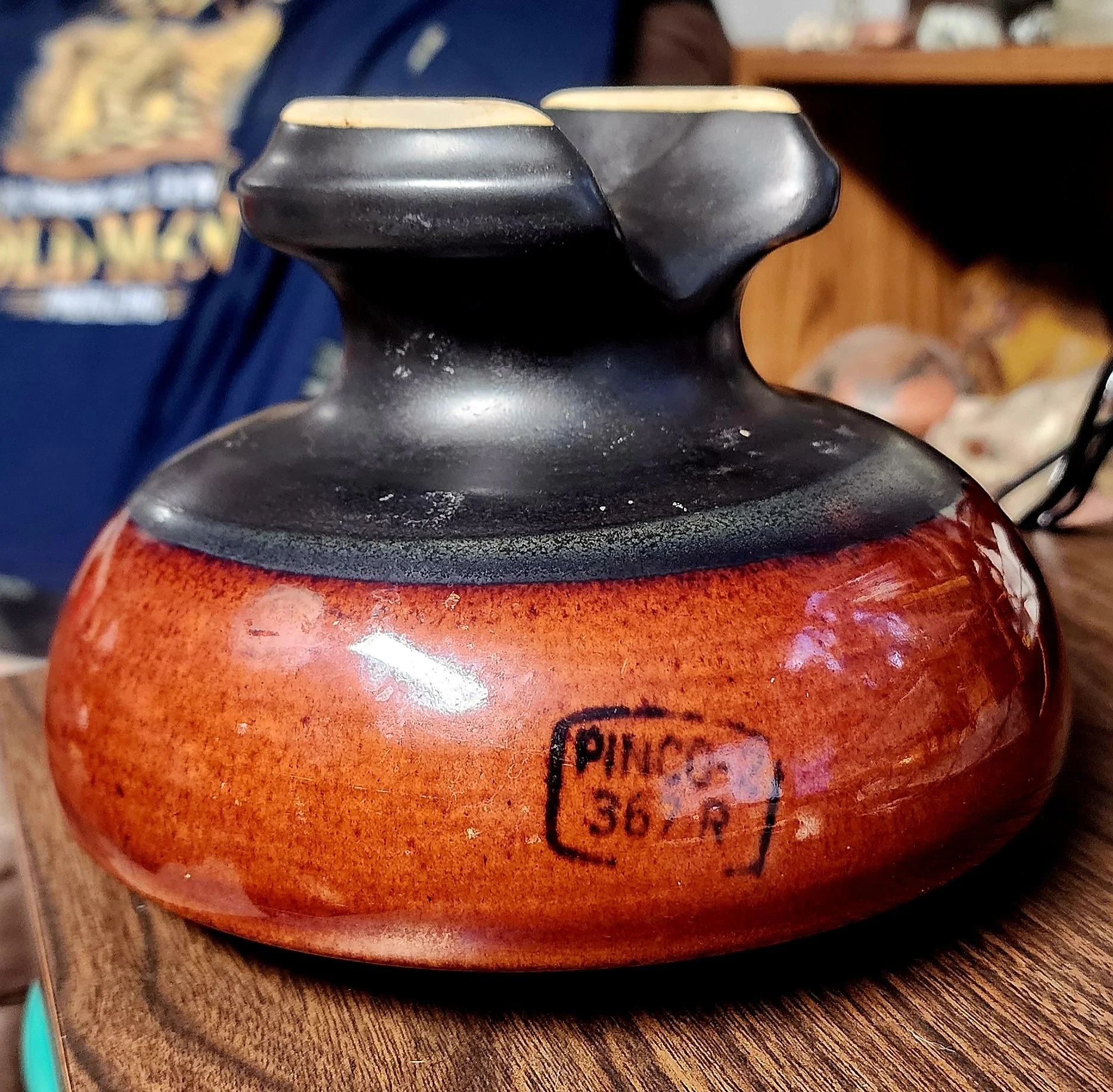
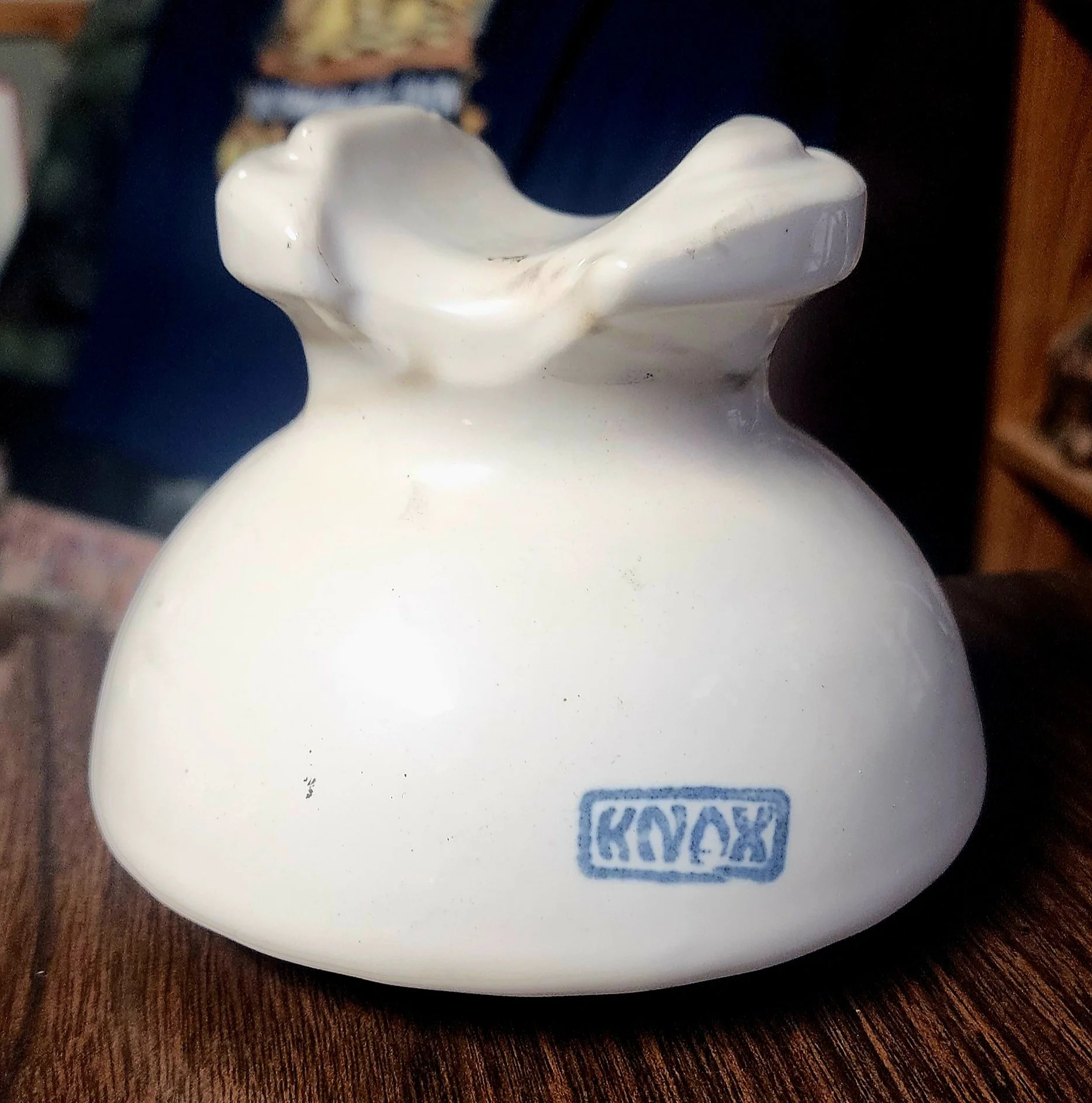
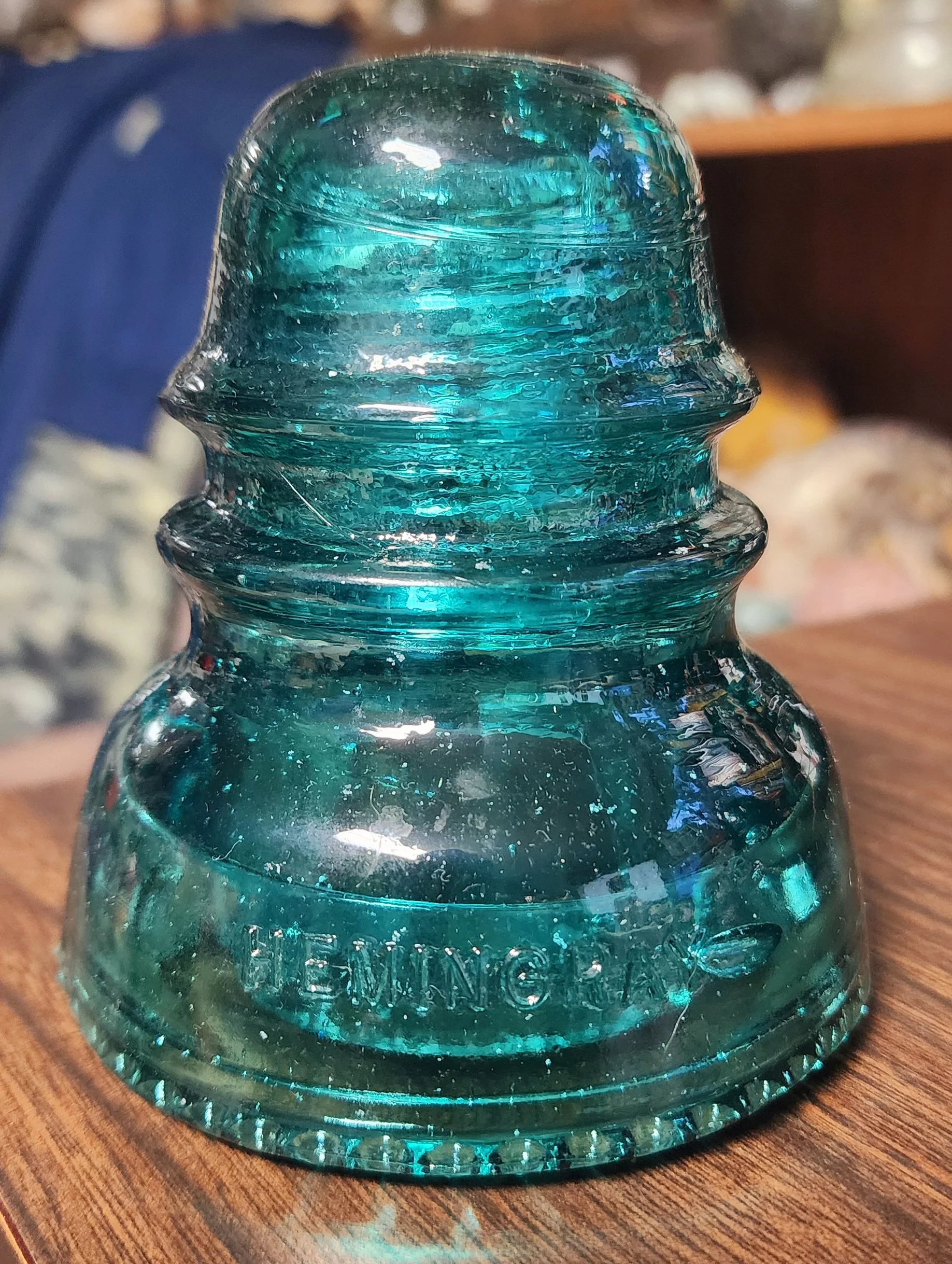
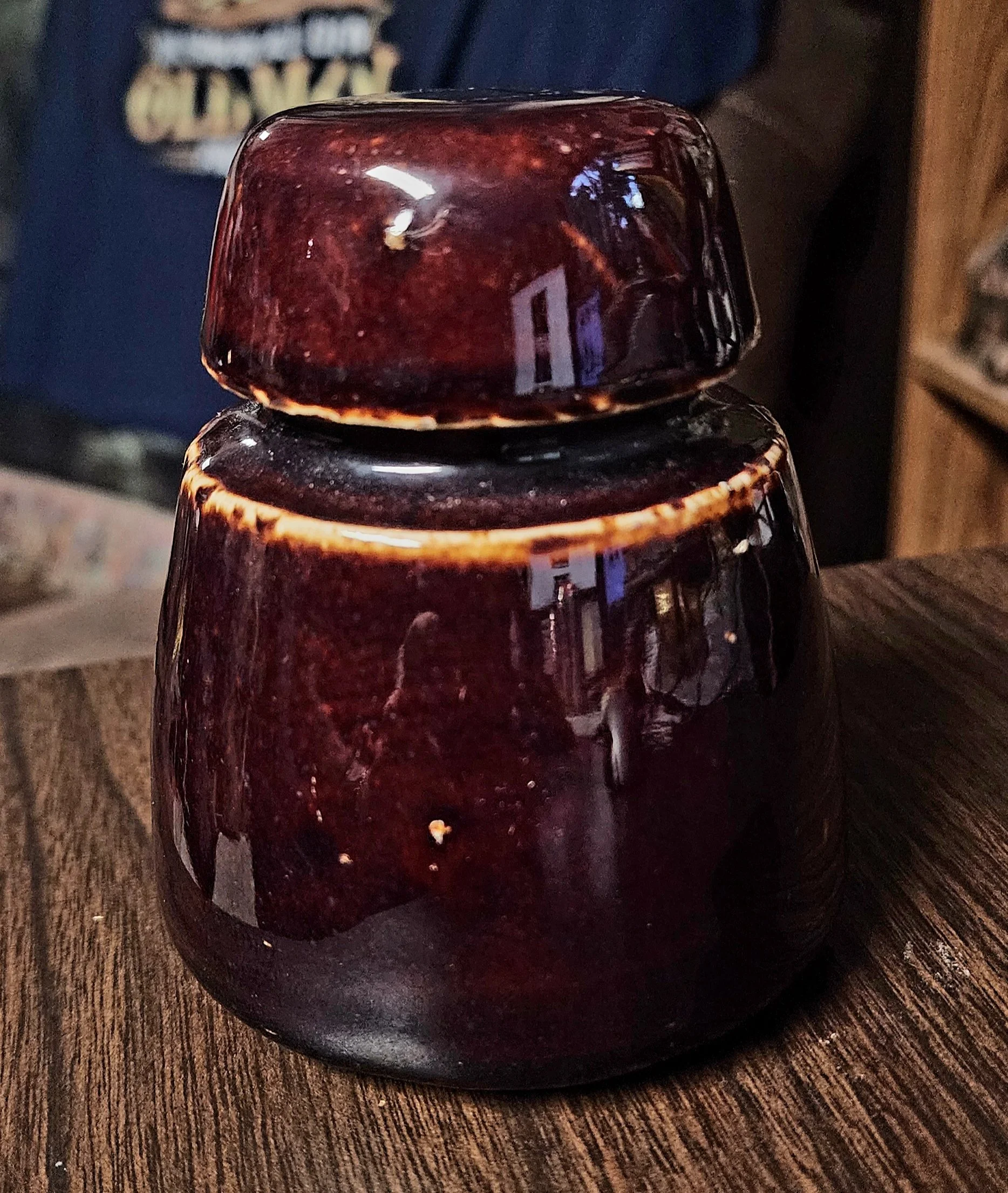
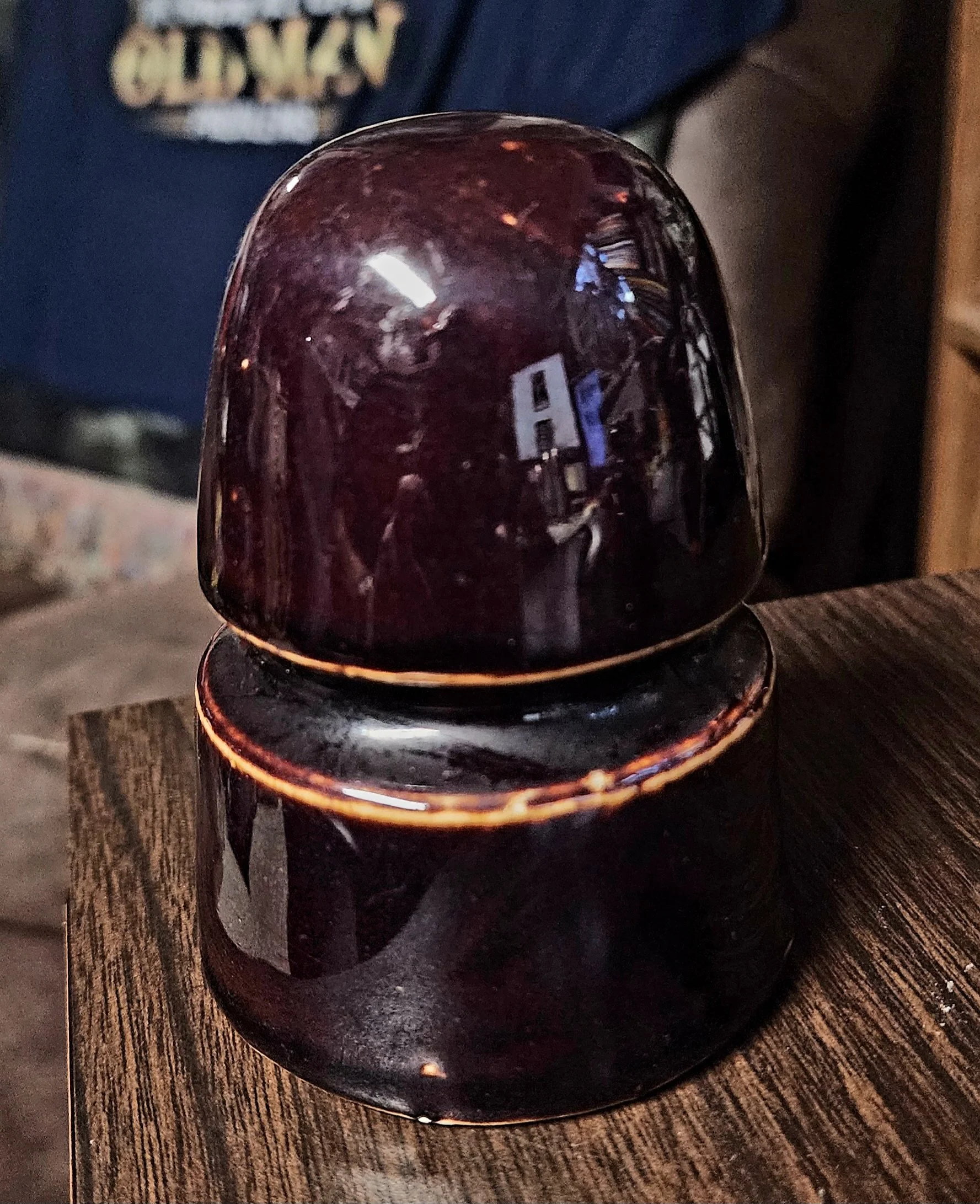
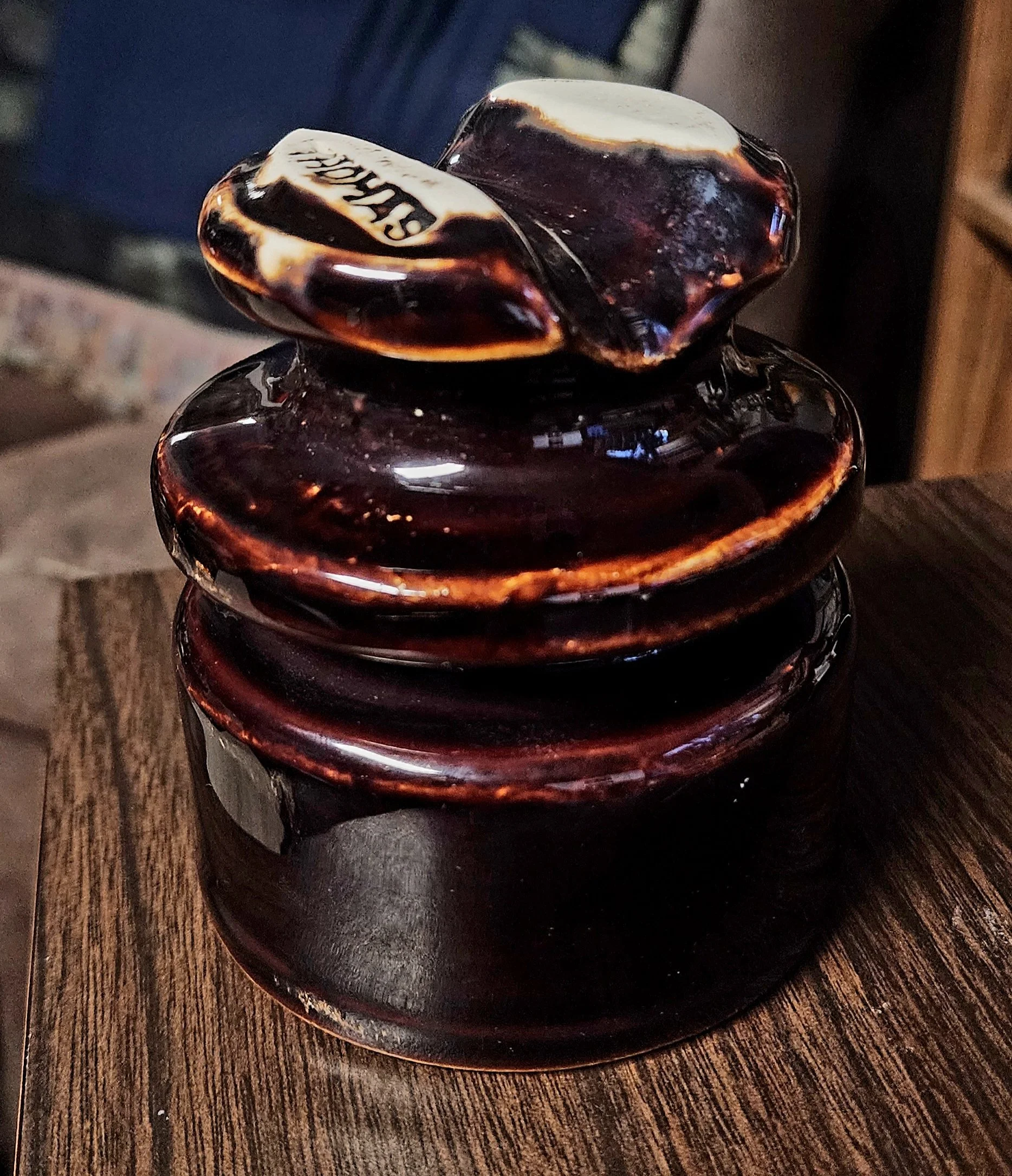
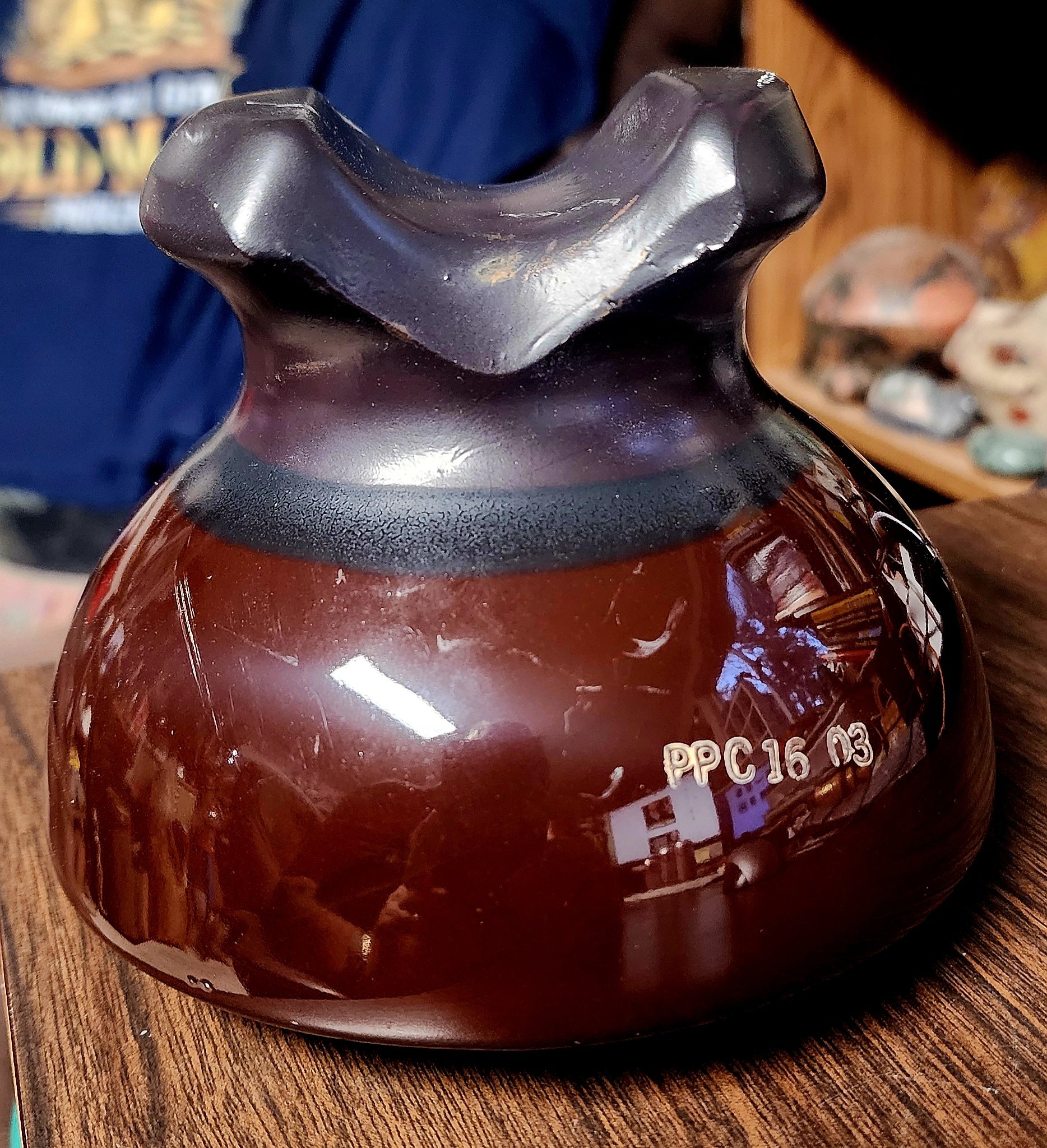
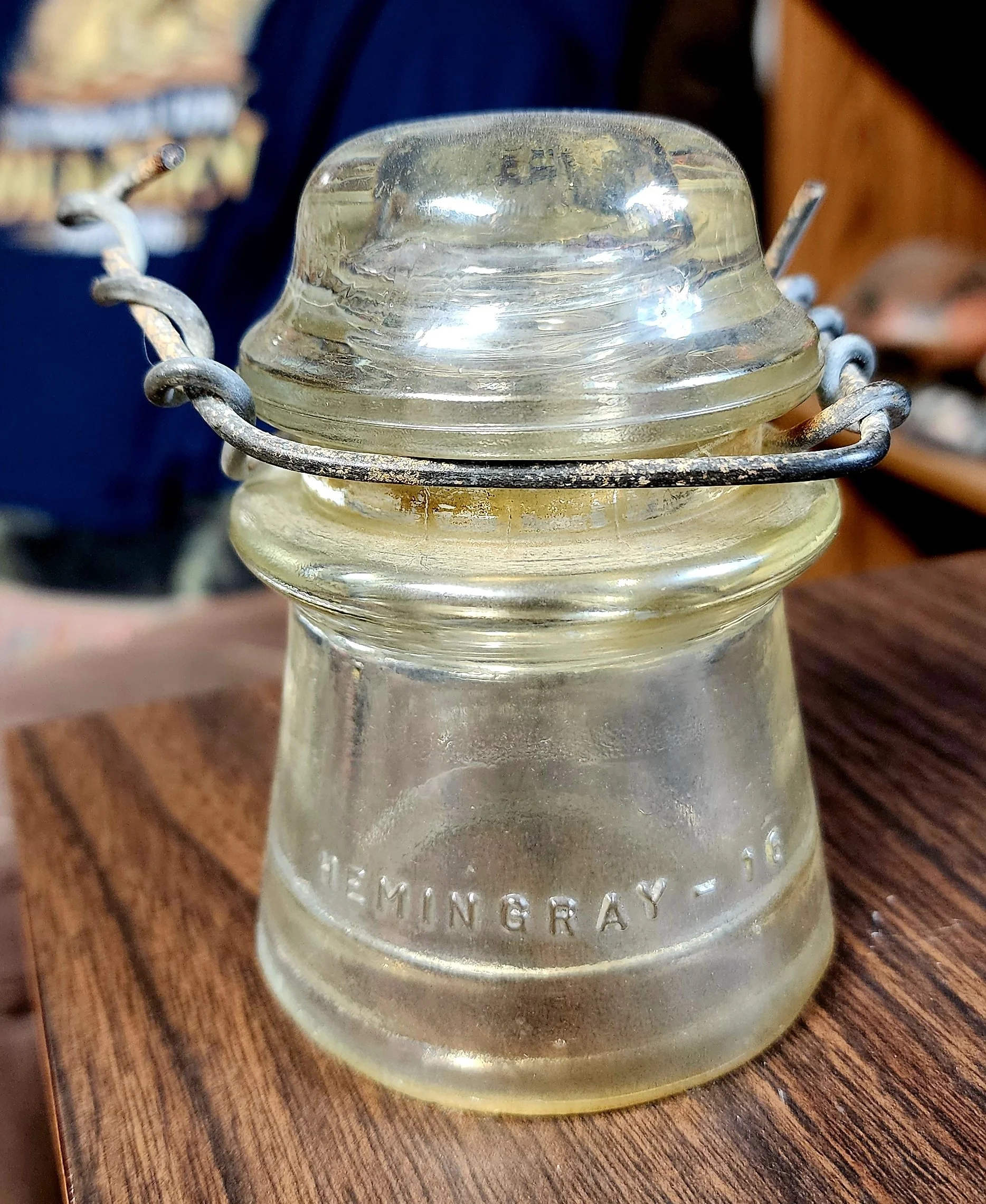
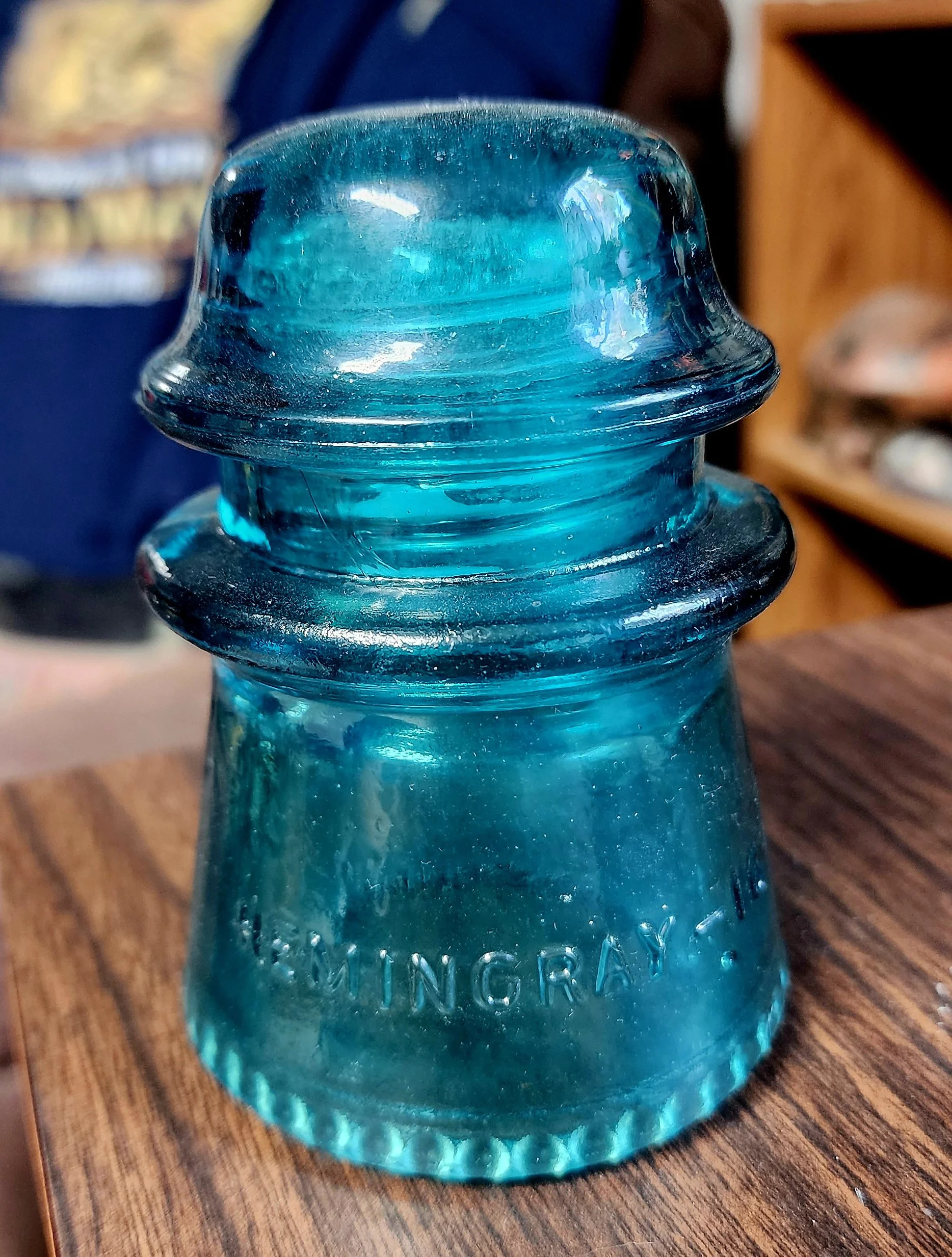
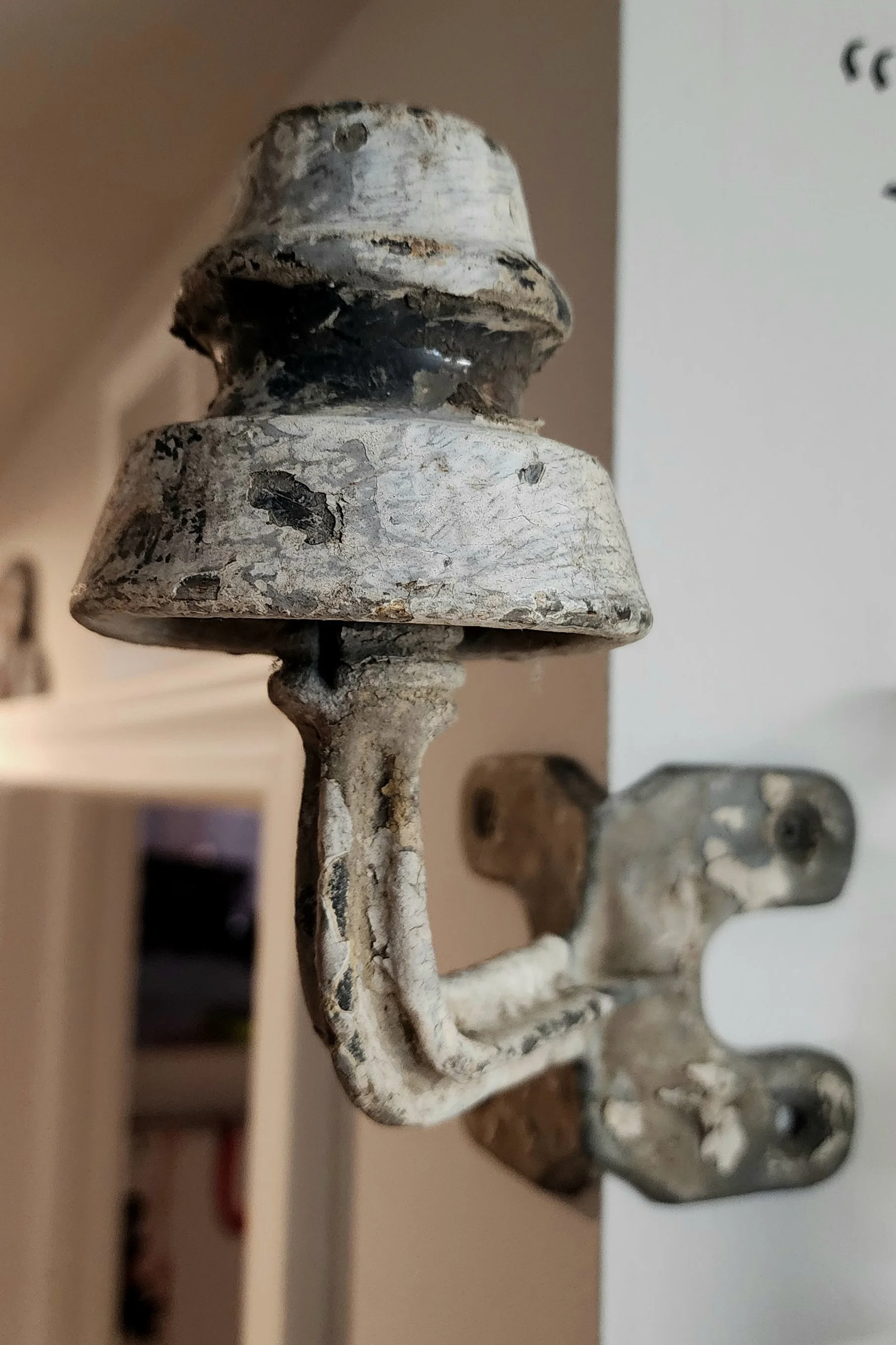
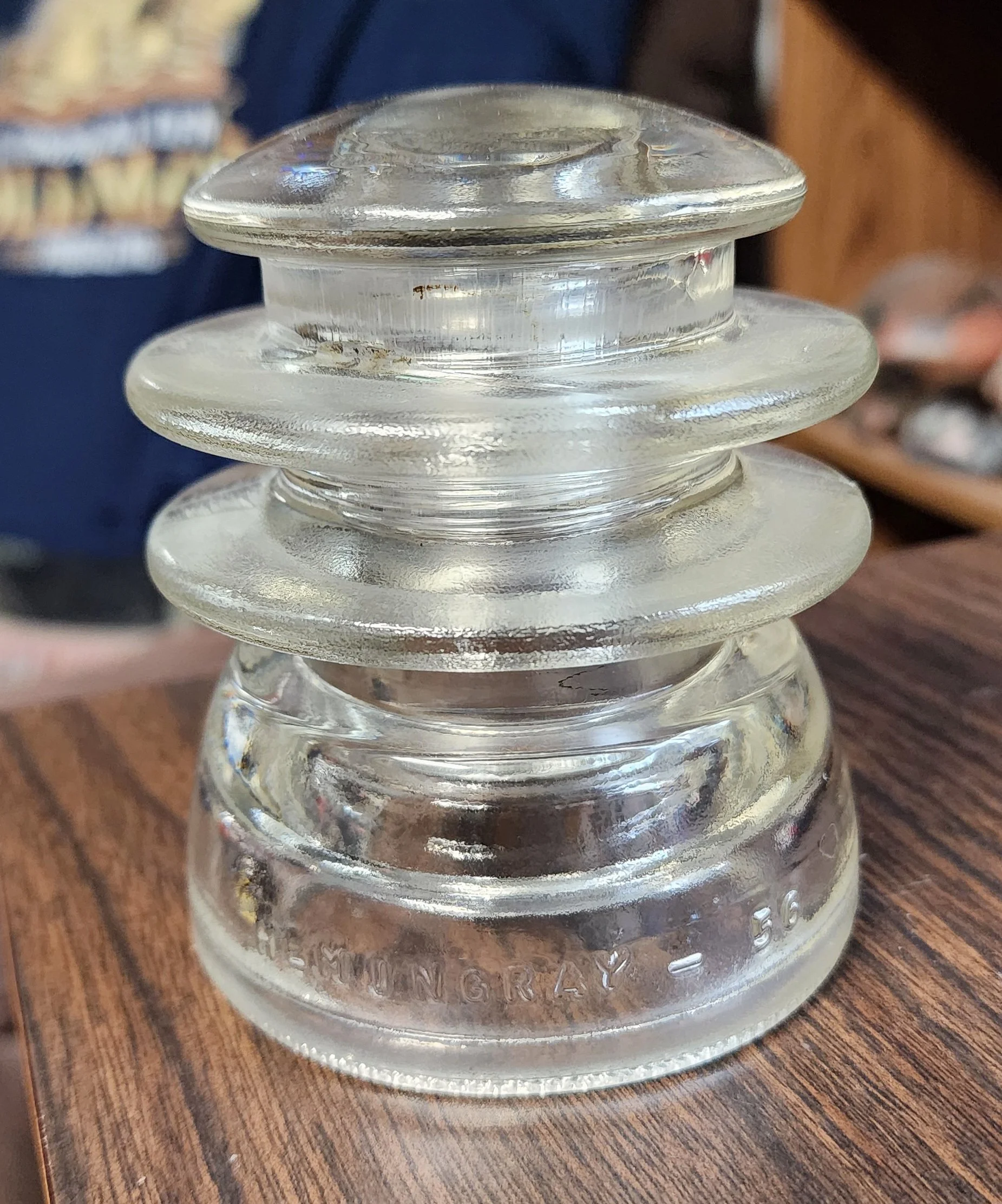
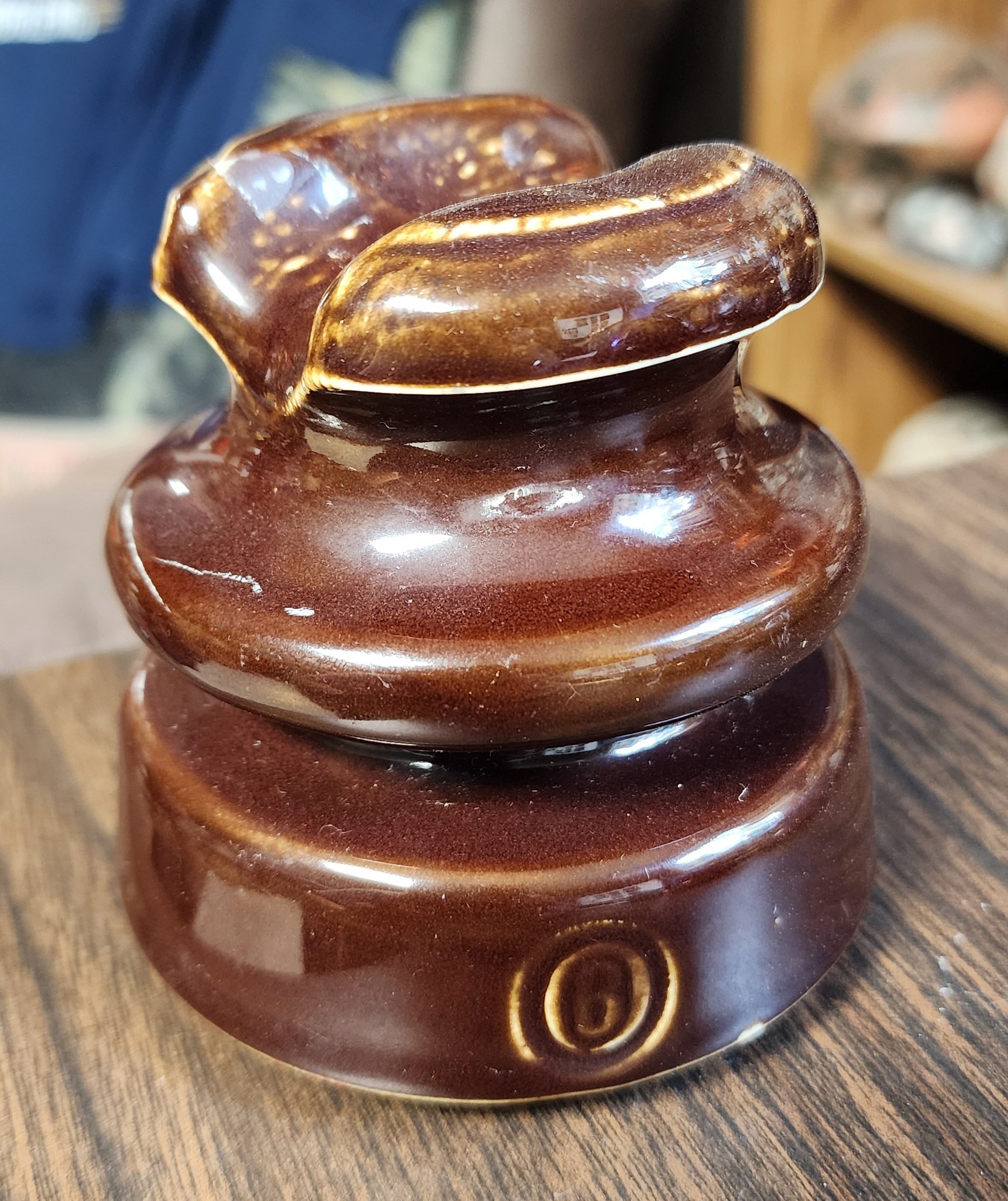
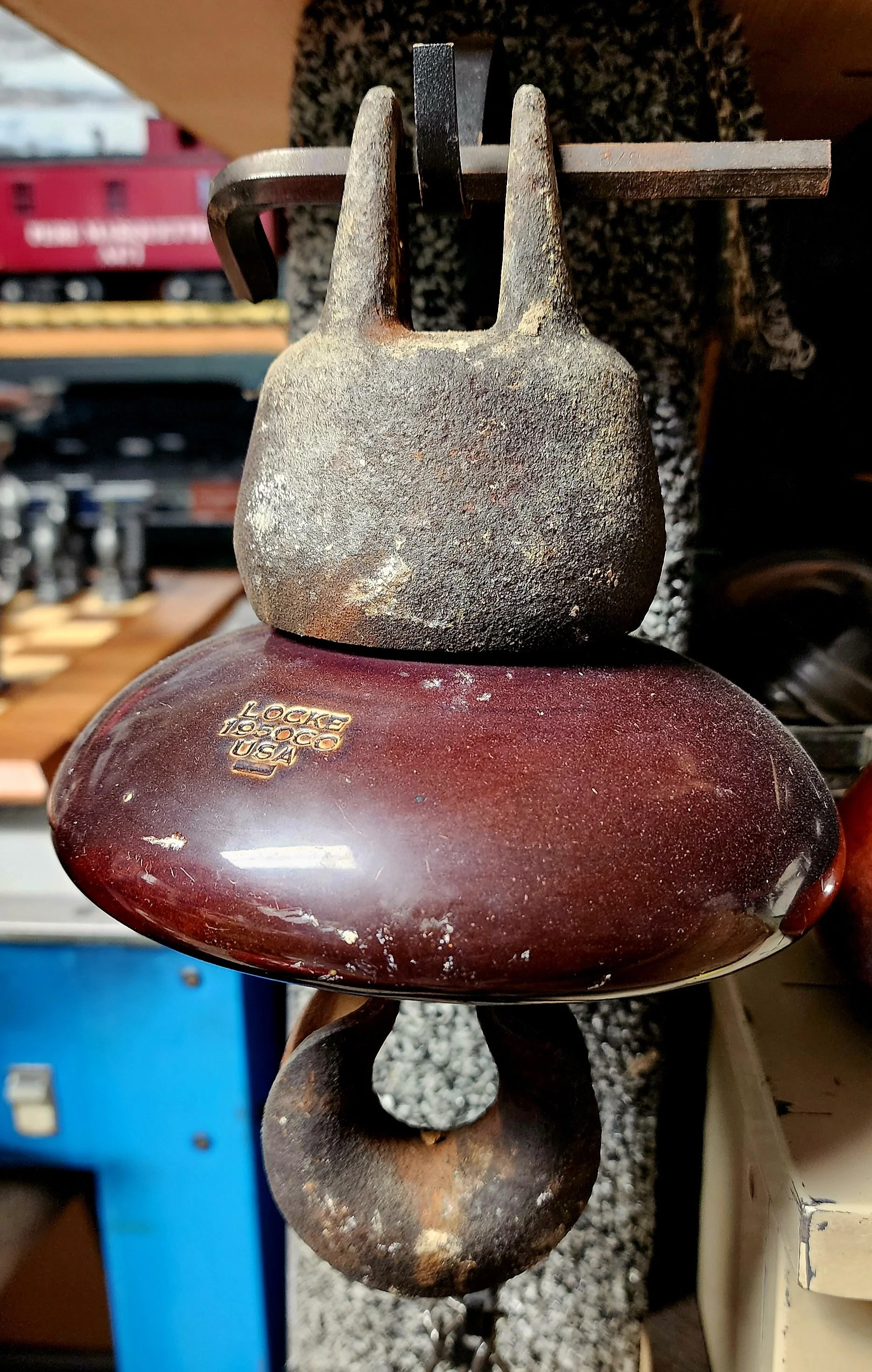
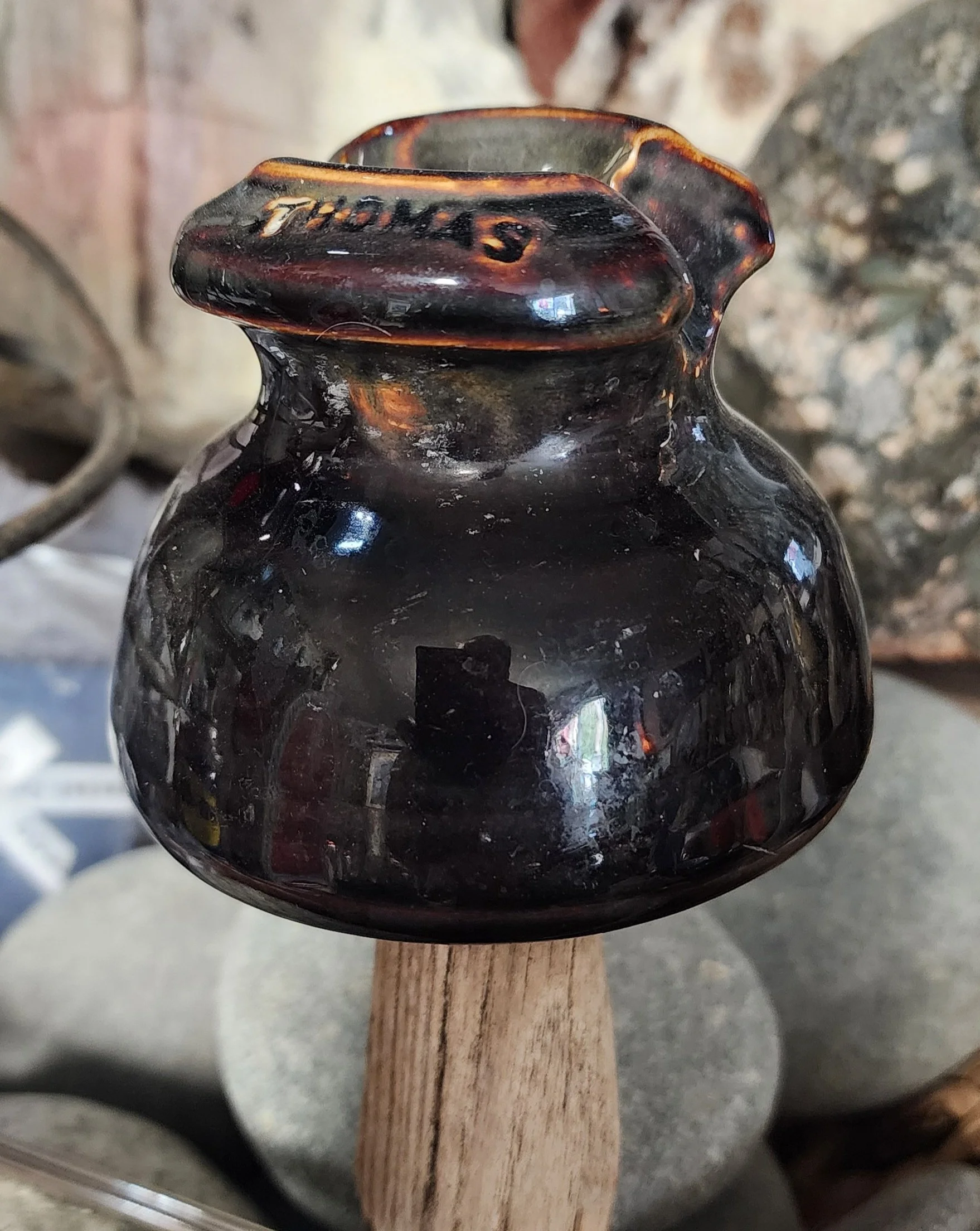
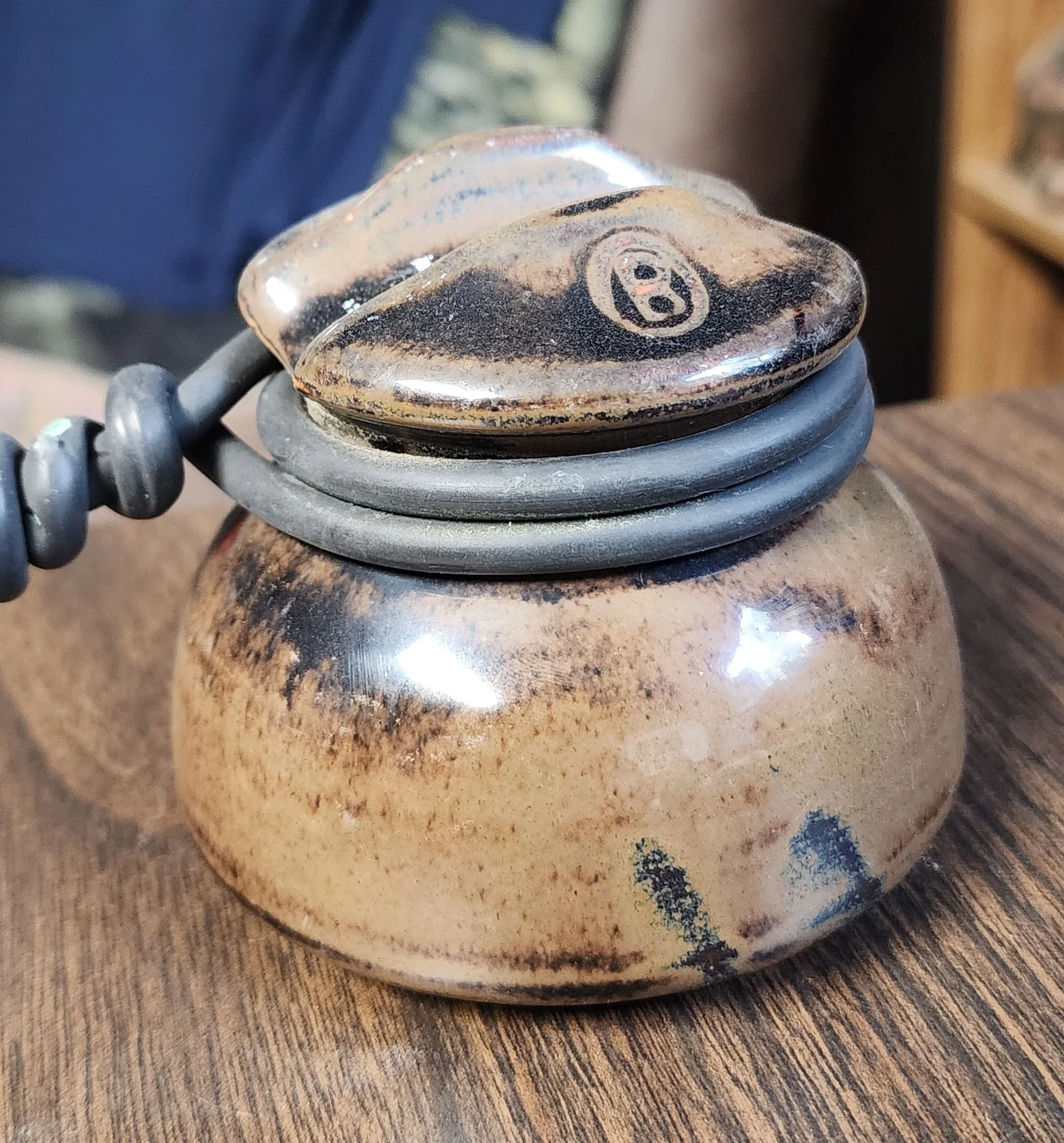
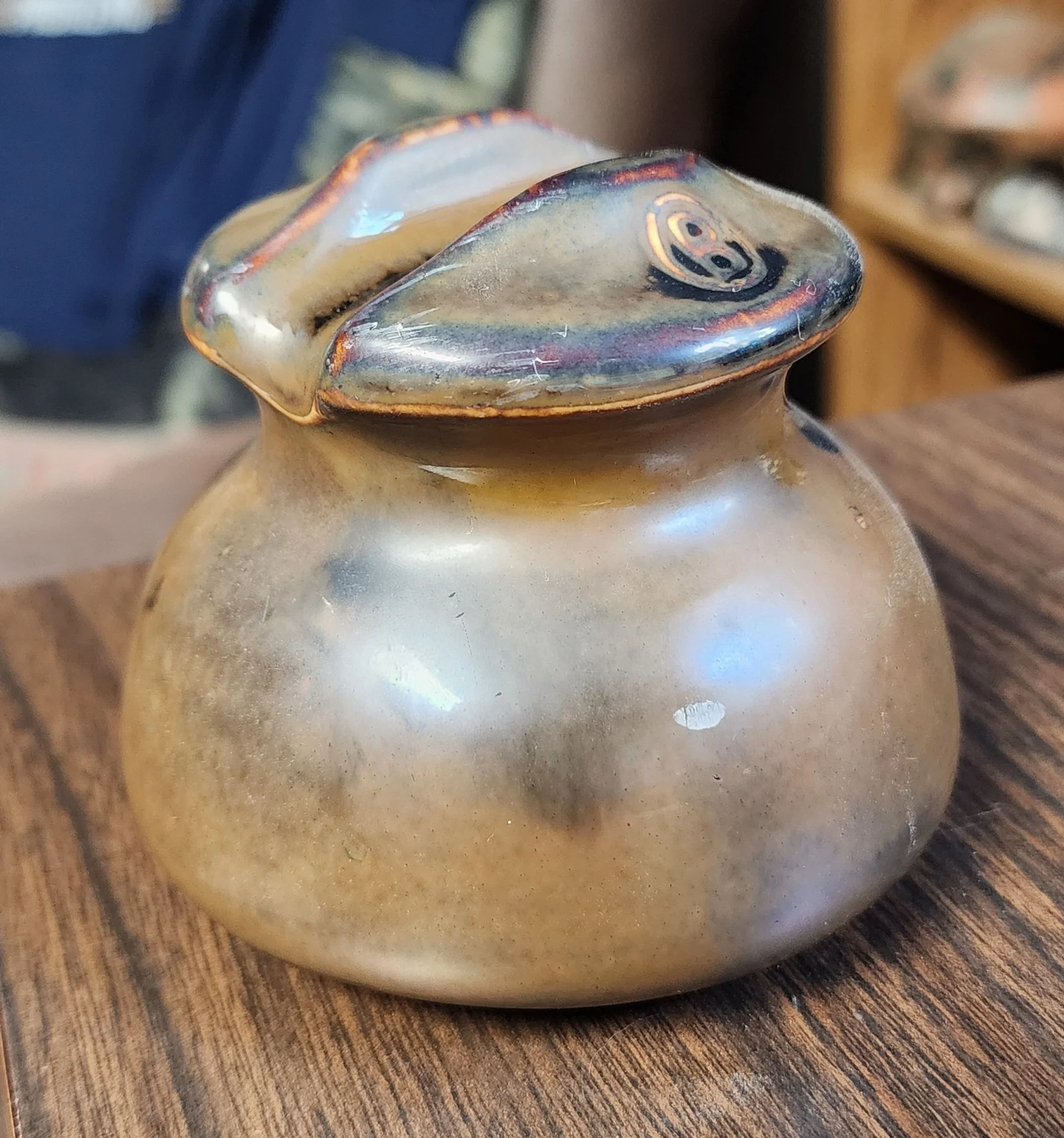
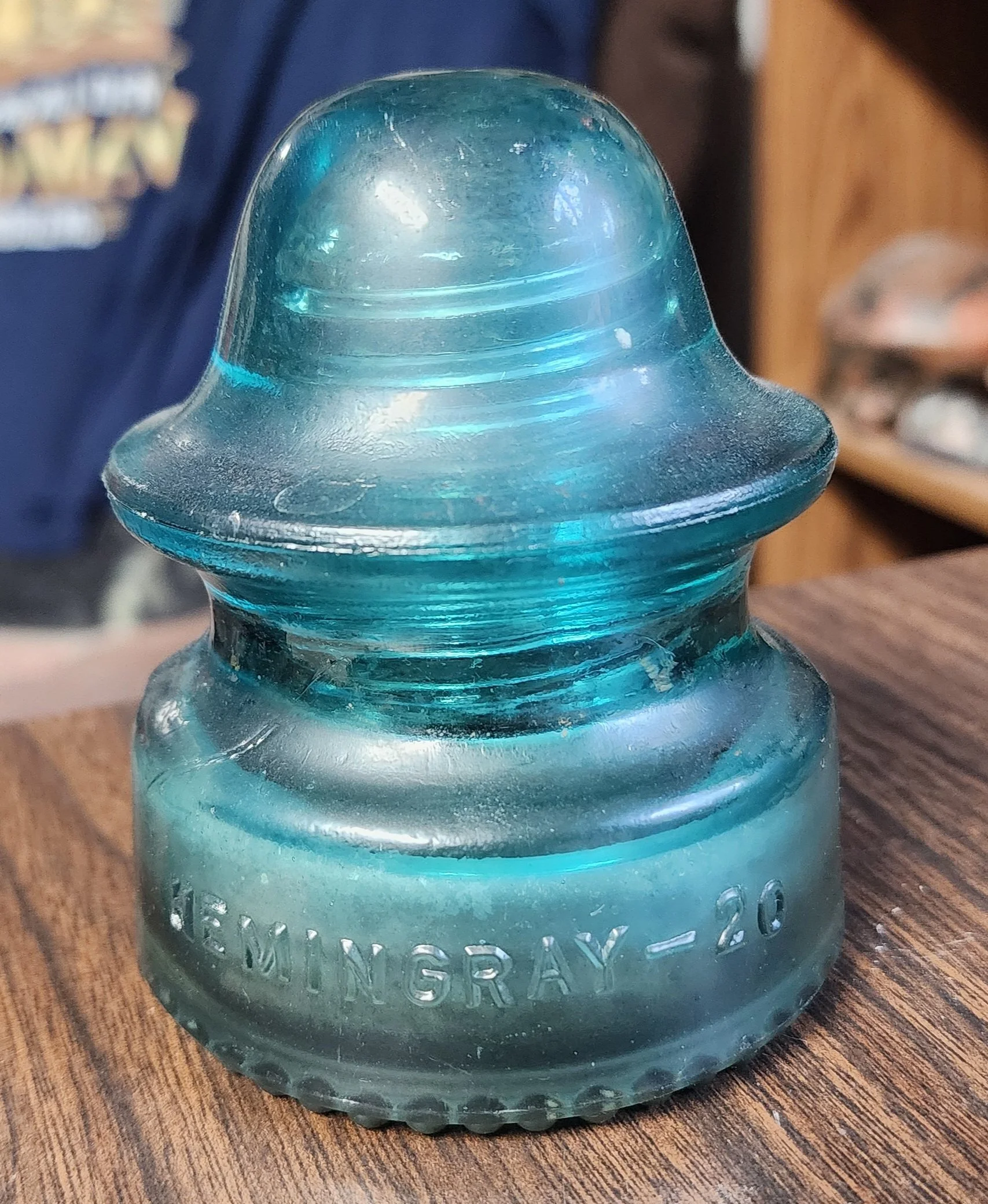
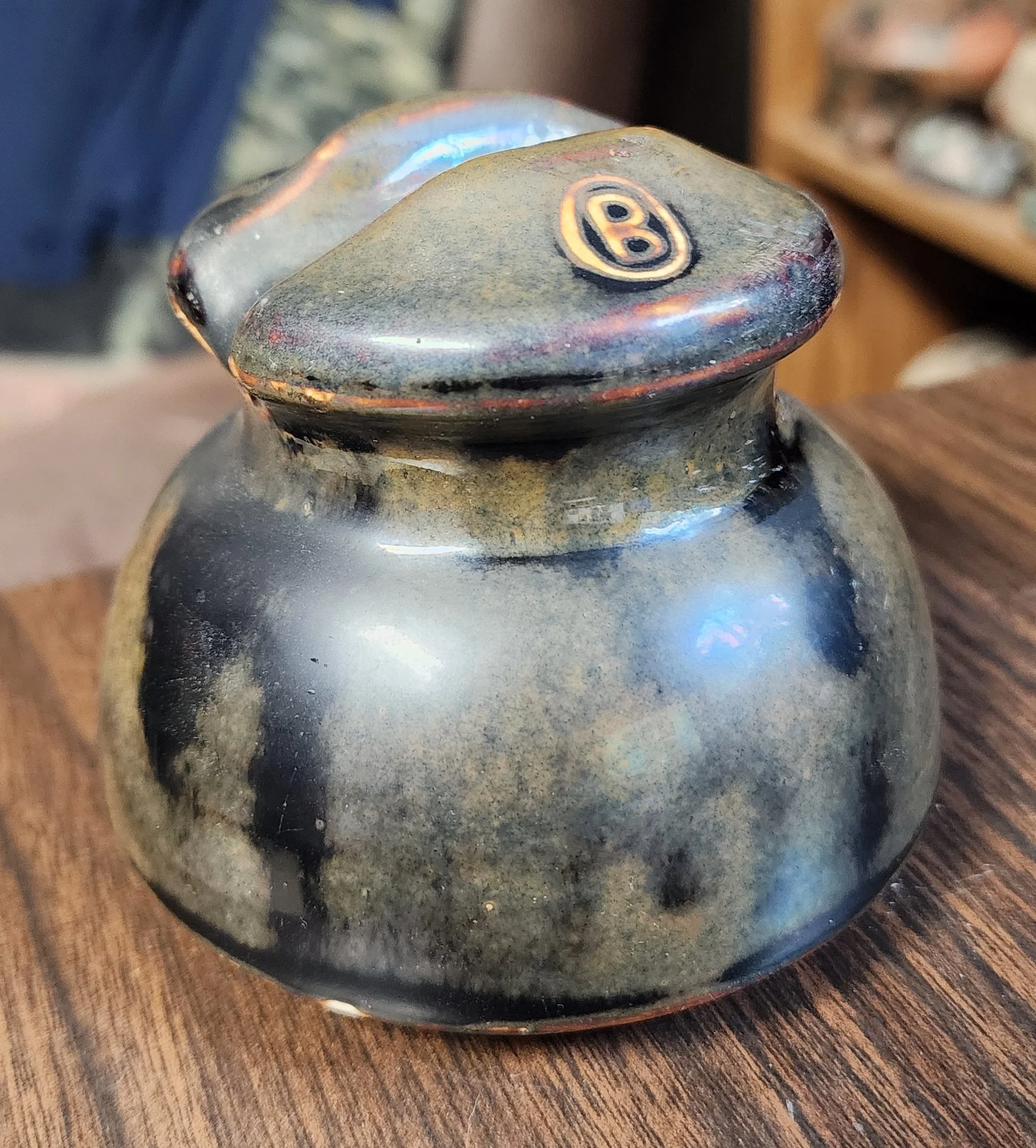
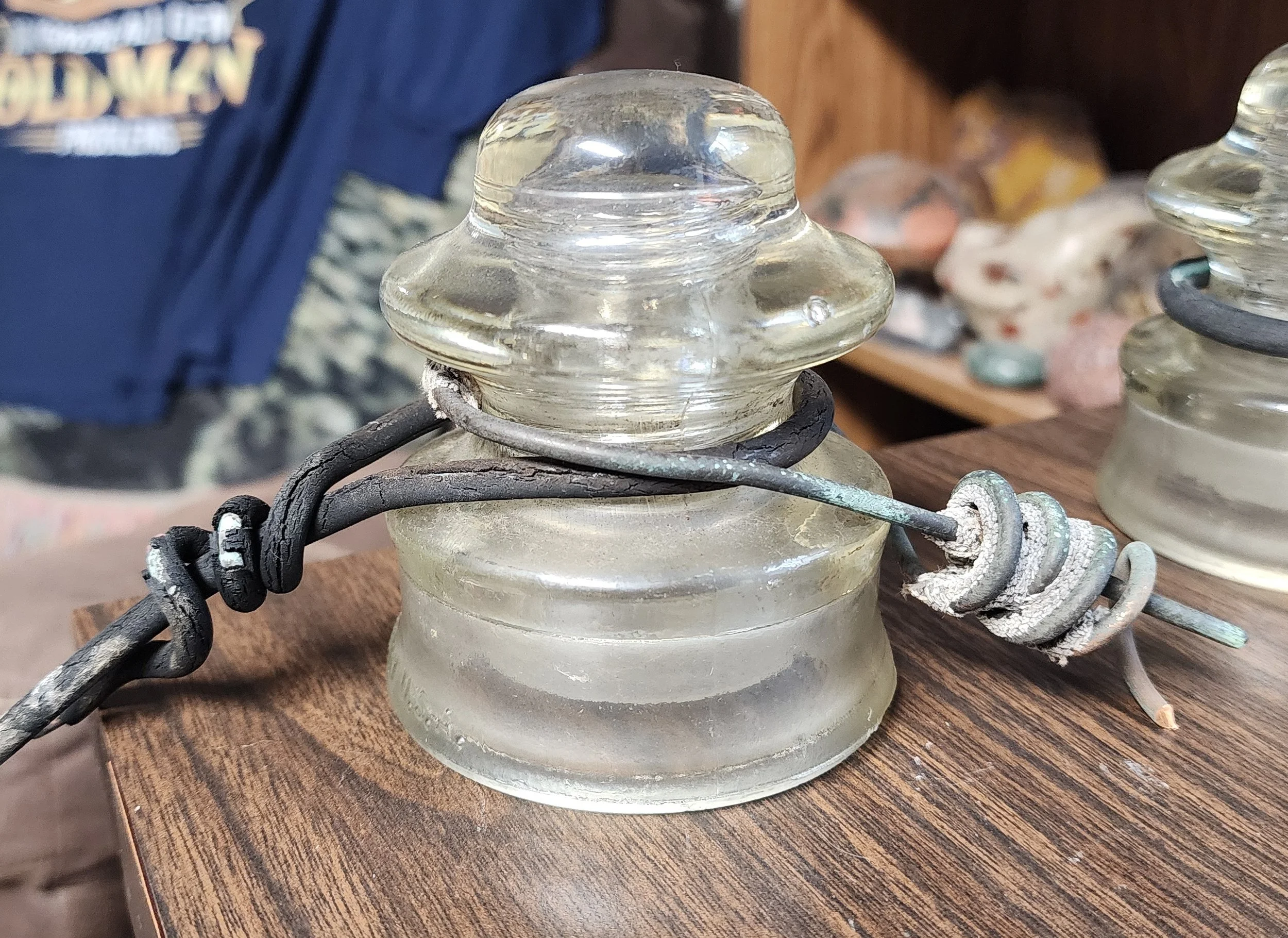
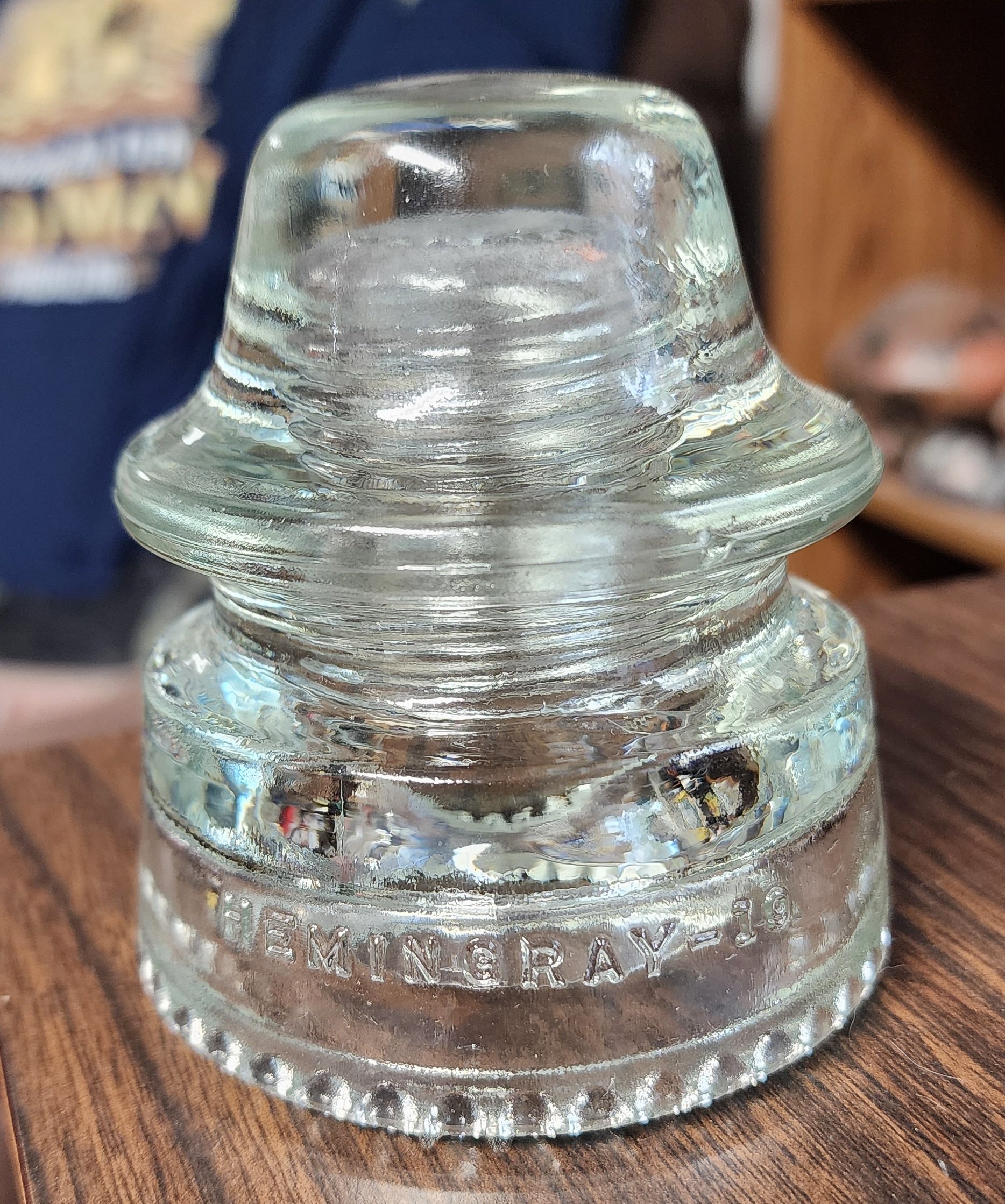
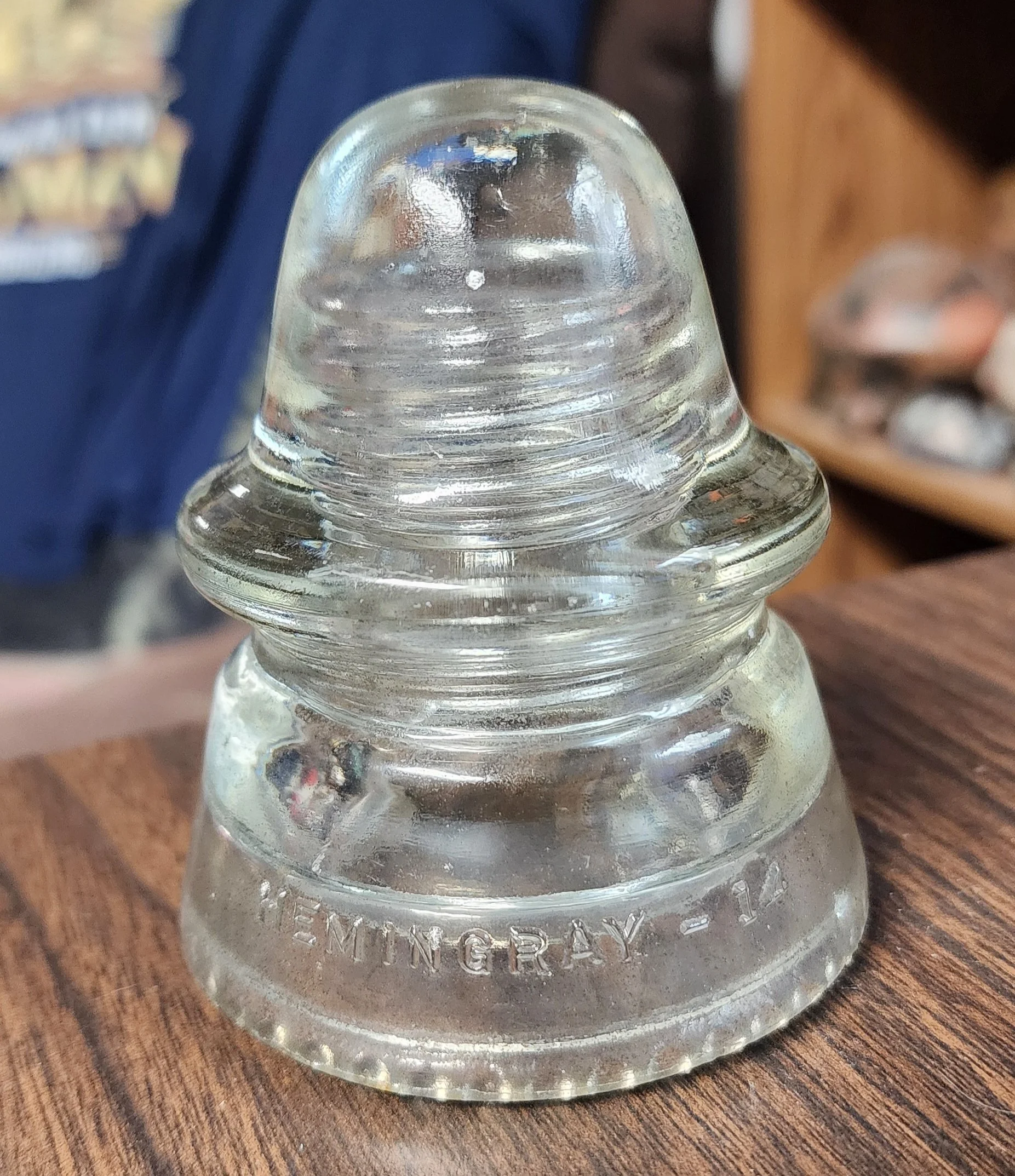
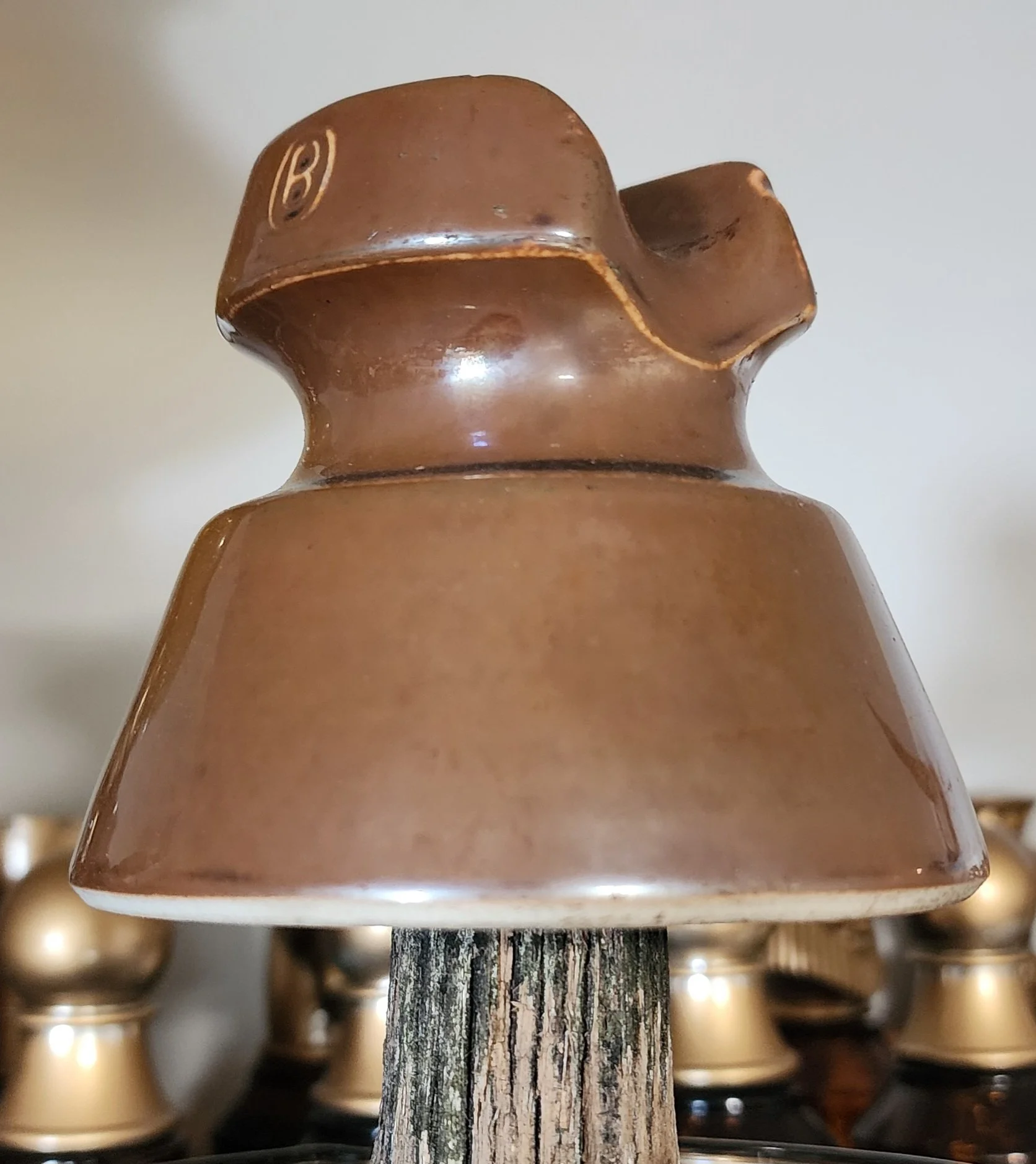
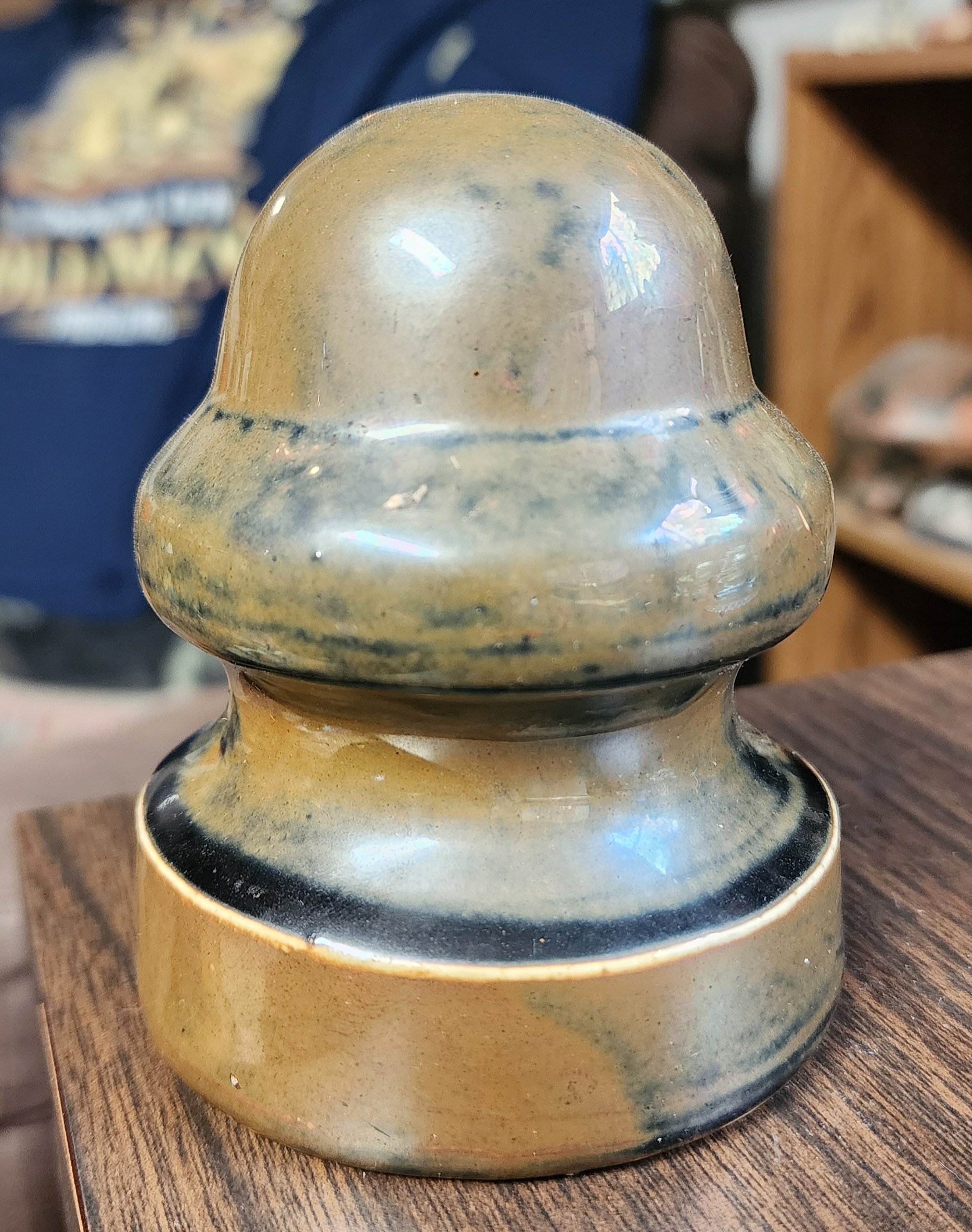
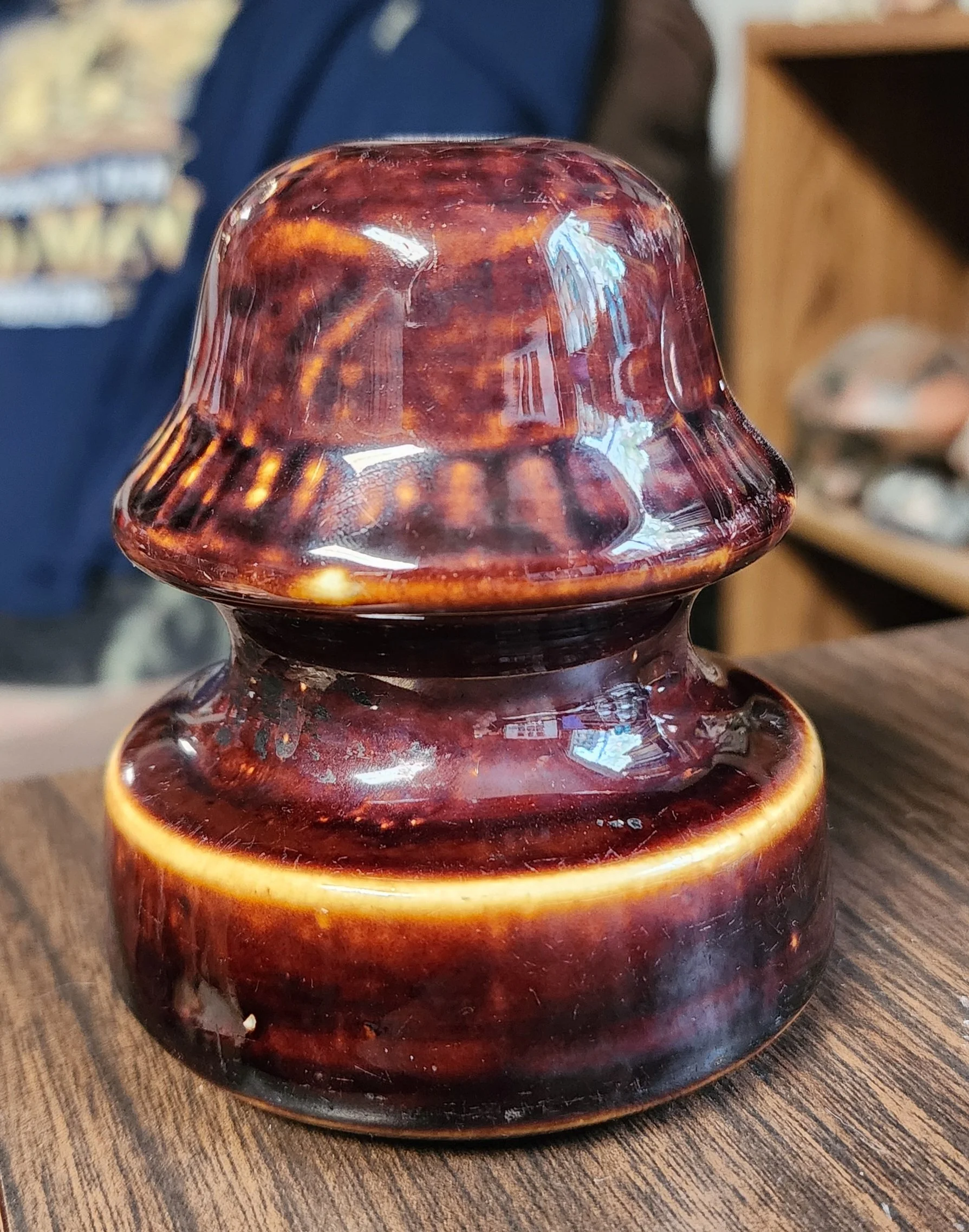
W. Brookfield
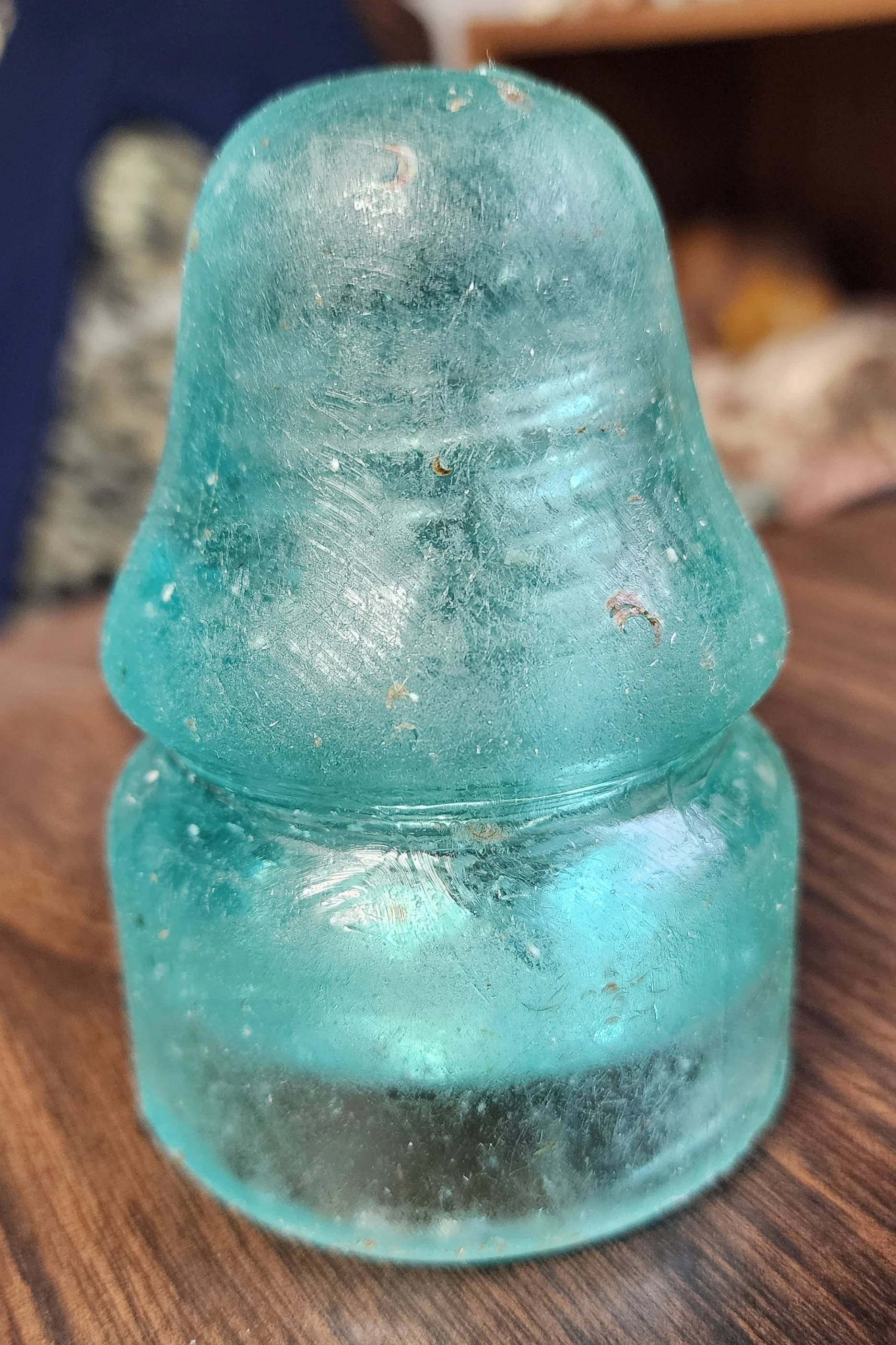
Fleamarket find. Crystalized from being in a river for a very long time. CD121
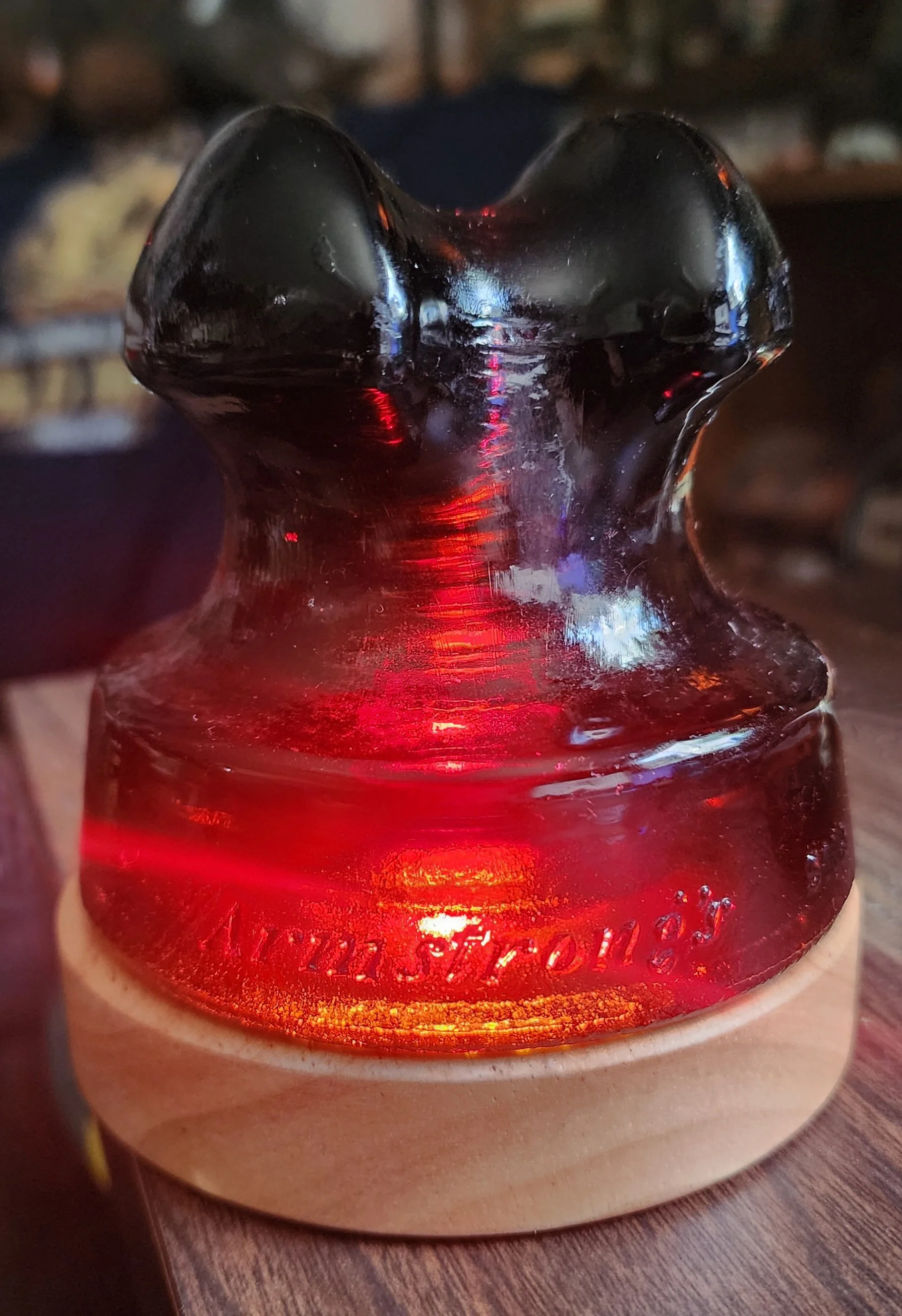
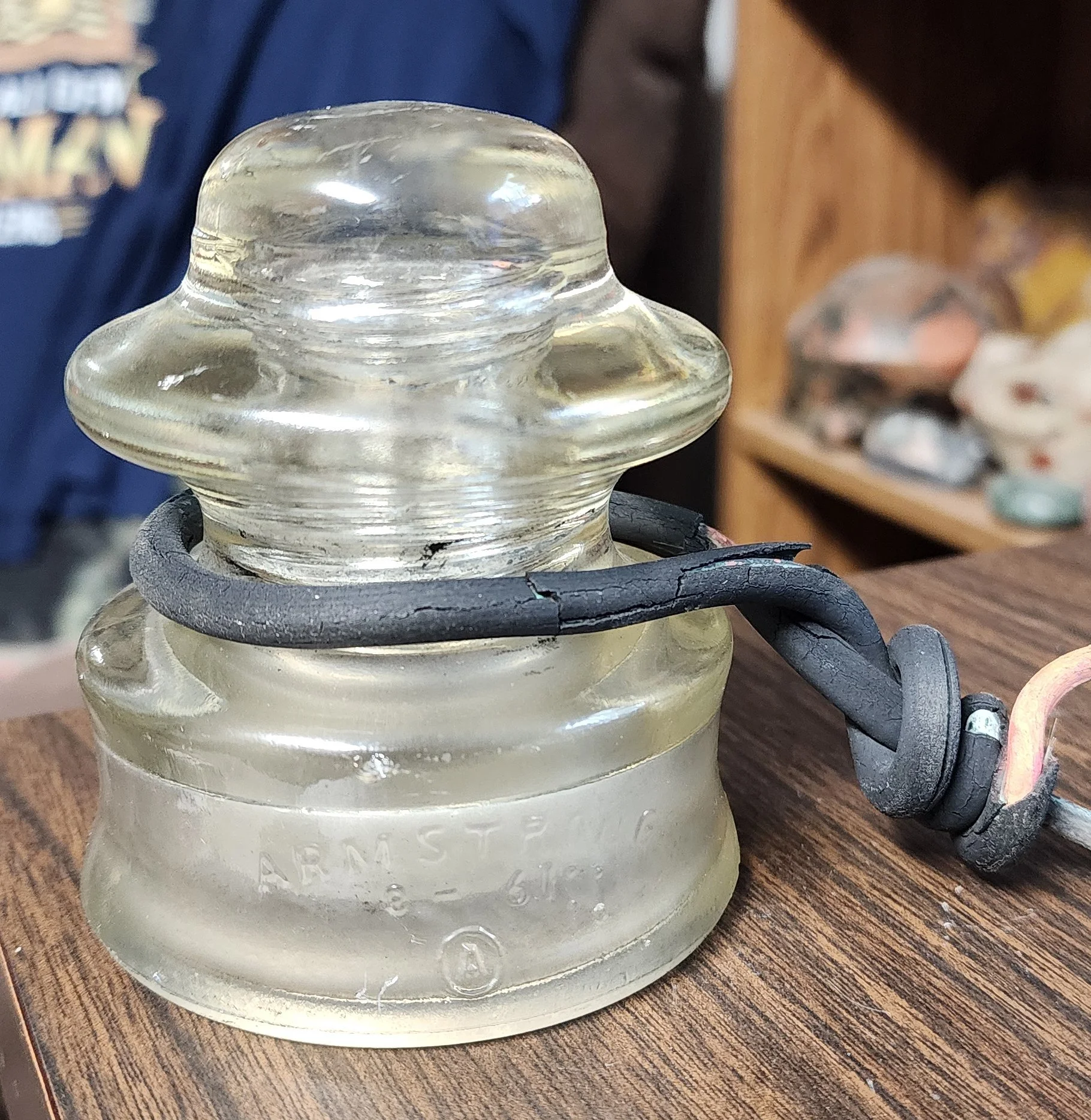
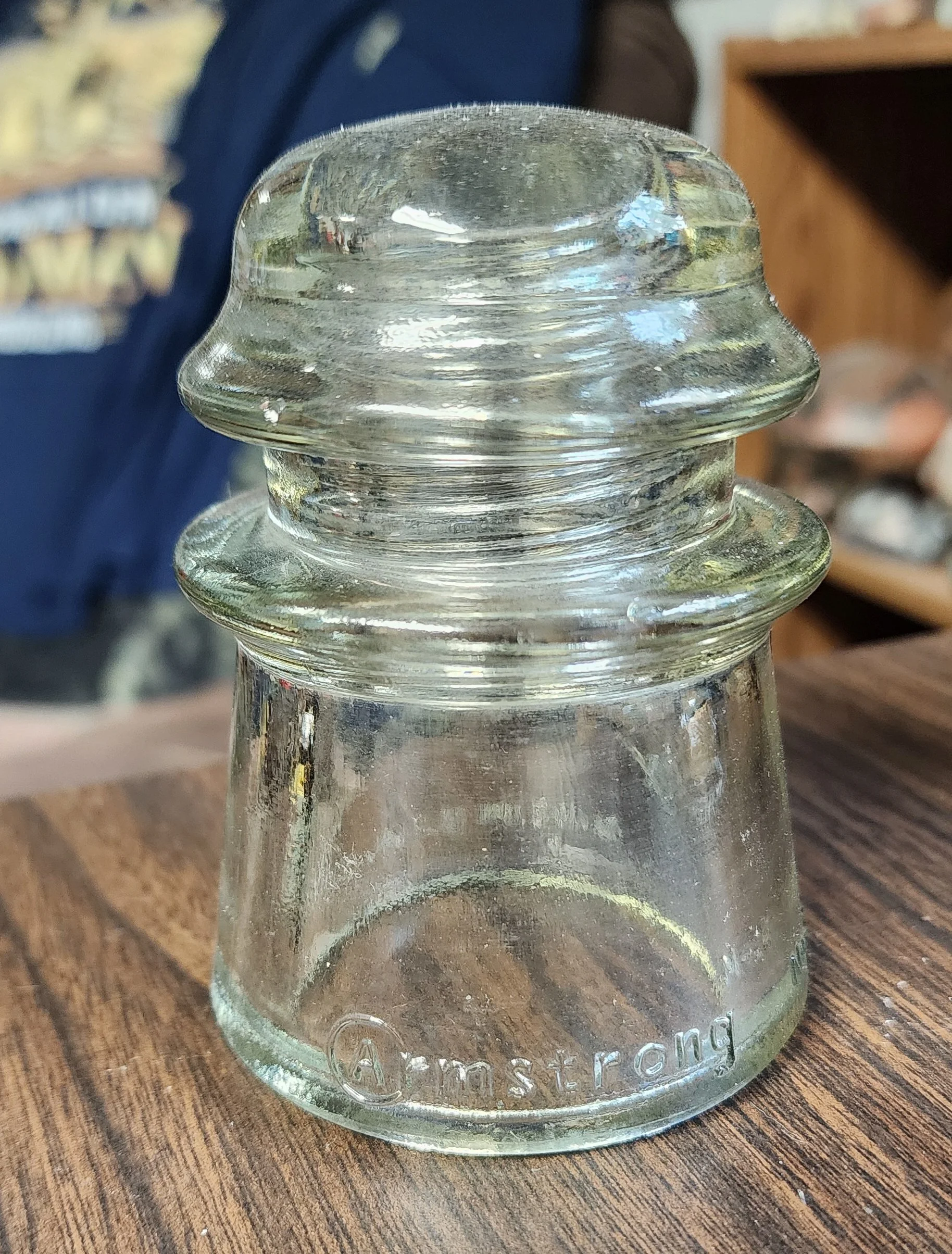
Armstong’s 511A
Nice dark Root Beer Amber. Takes a lot of light to pass thru this thick one. CD272
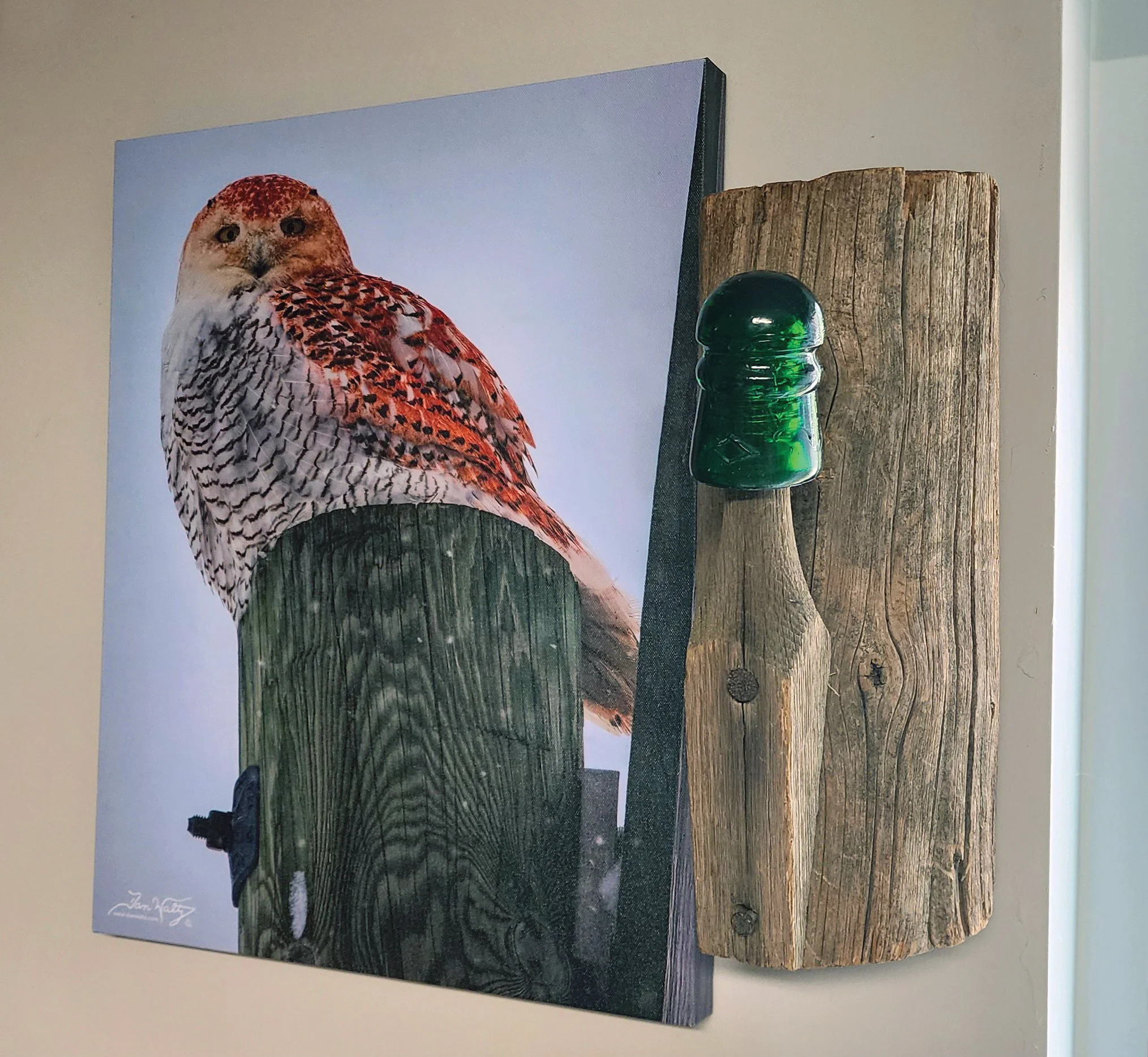
Emerald Green CD 102 “Pony”
by Diamond Glass 1890 - 1902
Telegraph Insulator
still on the pole.
First purchase at my first show in Berkley, Michigan. I couldn’t pass it up. The last thing I thought I’d bring home from my first insulator show was a piece of the pole too, but it sure goes well with a photo I took of the famous “Rusty” Snowy Owl perch high on a pole himself.
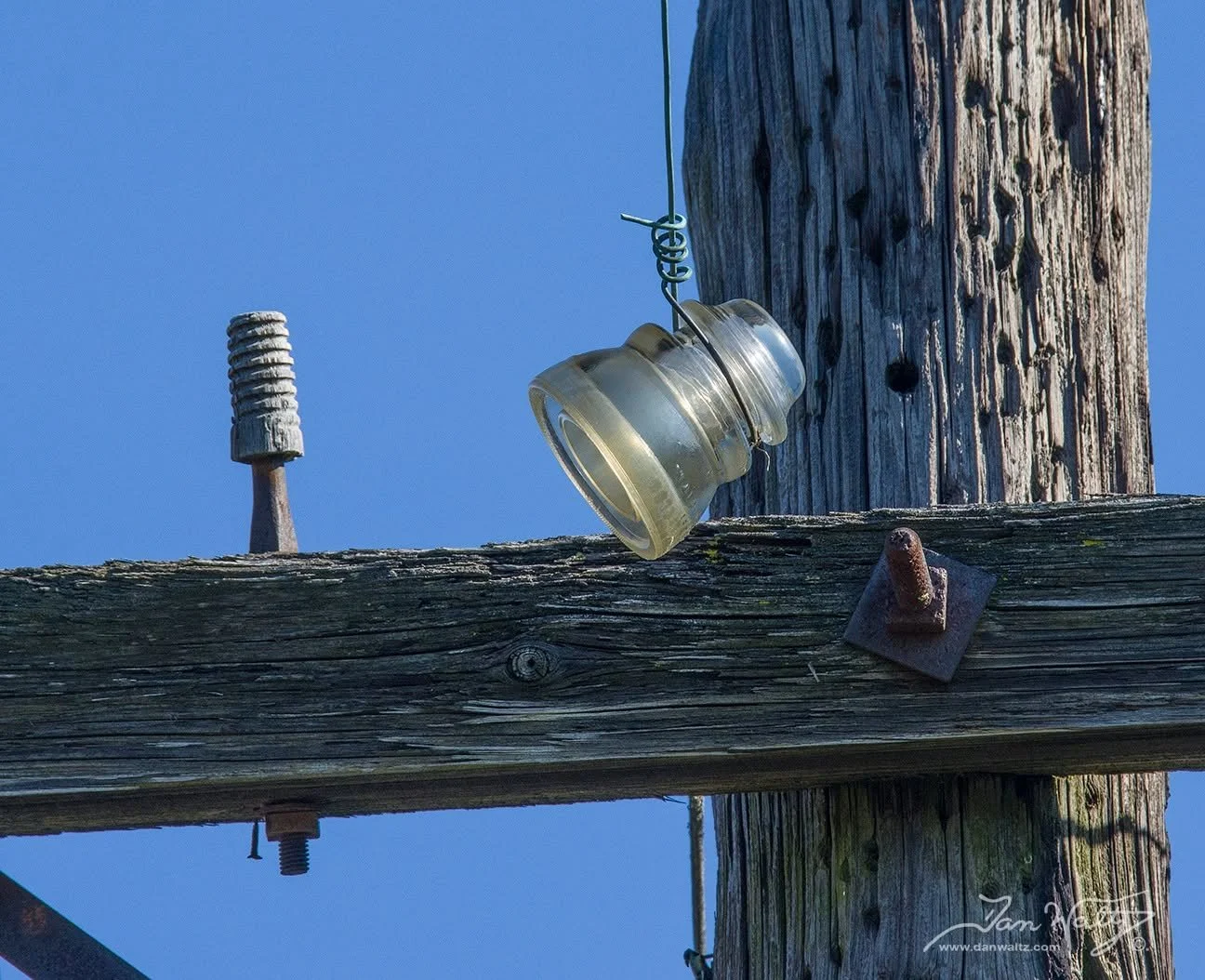
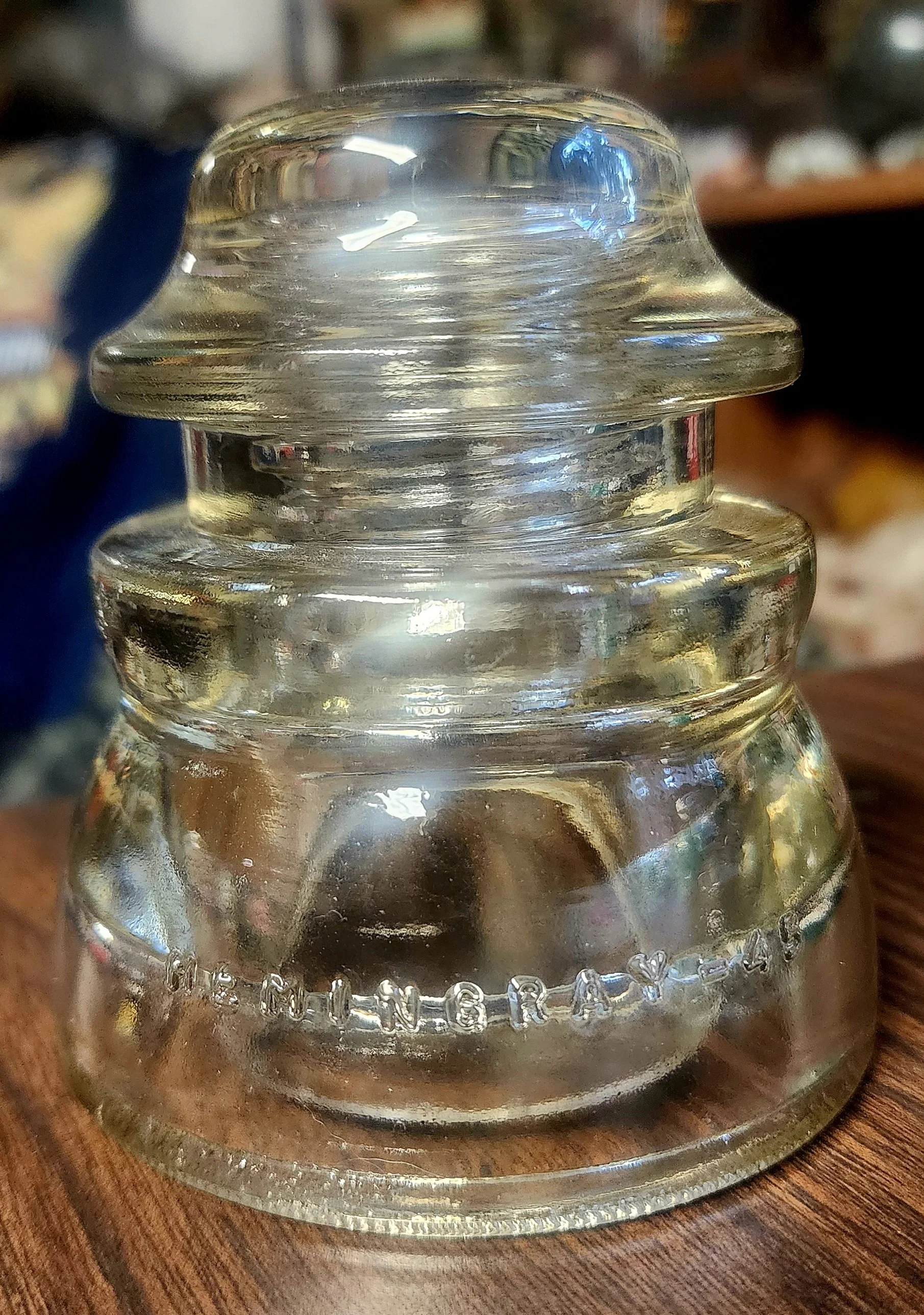
Hemingray 45
Jumped the post over-time only to hangout for a while.
(Grand Blanc, MI, along the old Pere Marquette Rails
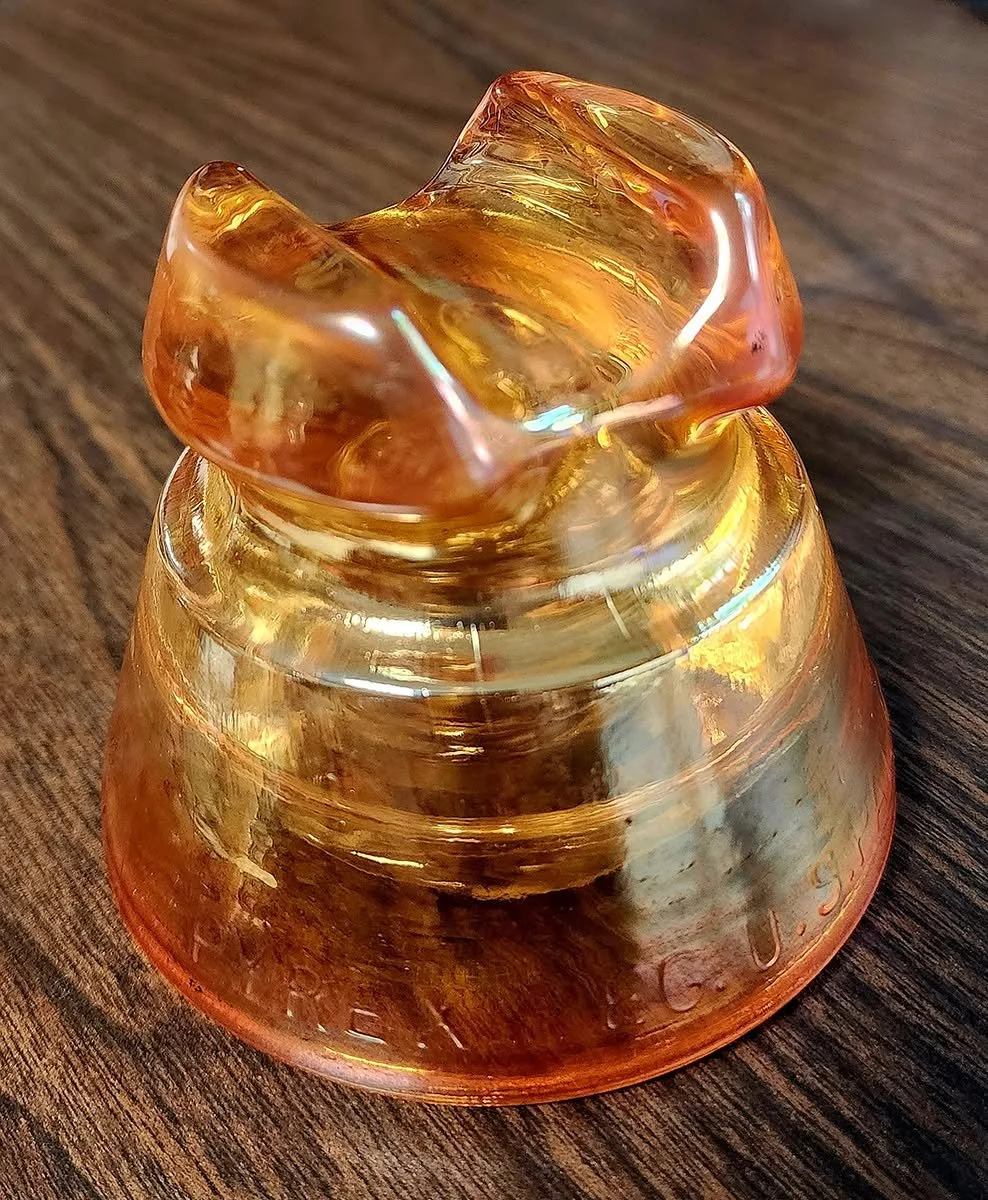
Pirex 661 Carnival Glass
A vintage, high-voltage industrial power line glass insulator manufactured by Corning Glass Works. Carnival glass was really an experimental coating that adhered to the glass at high temperatures to help reduce noise in the line. Well sought after by collectors and absolutely beautiful in color. CD233
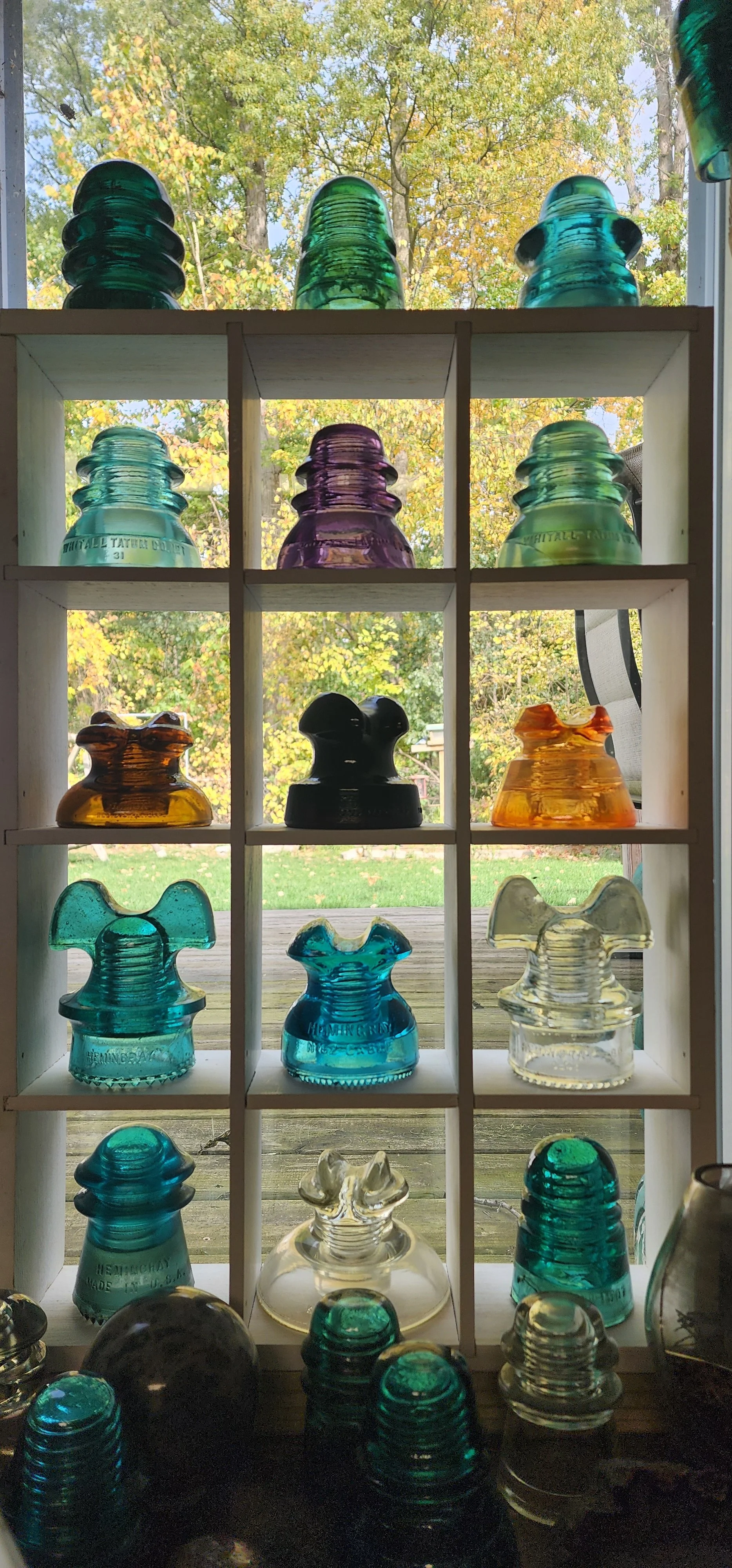
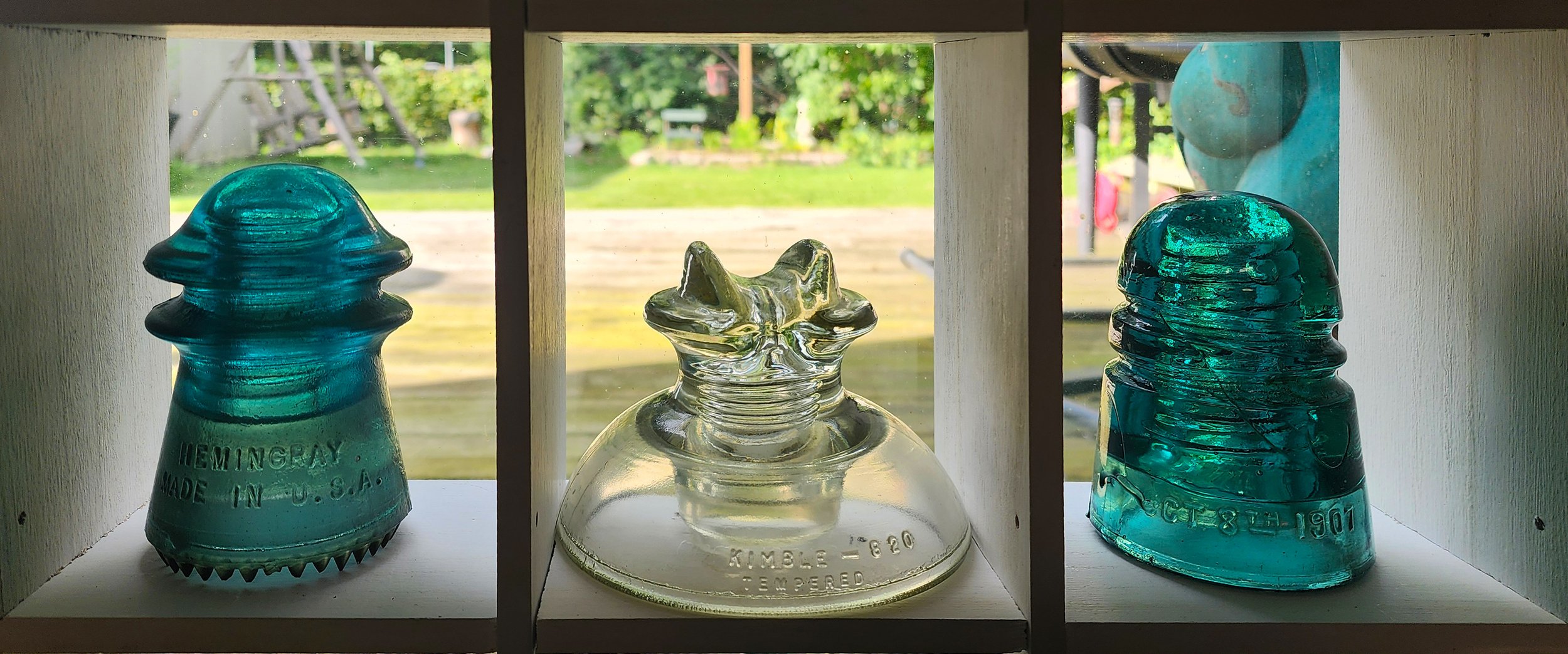
Window Display
A beautiful display of styles and colors to brighten up my studio.
Set them over an LED light and let it shine.
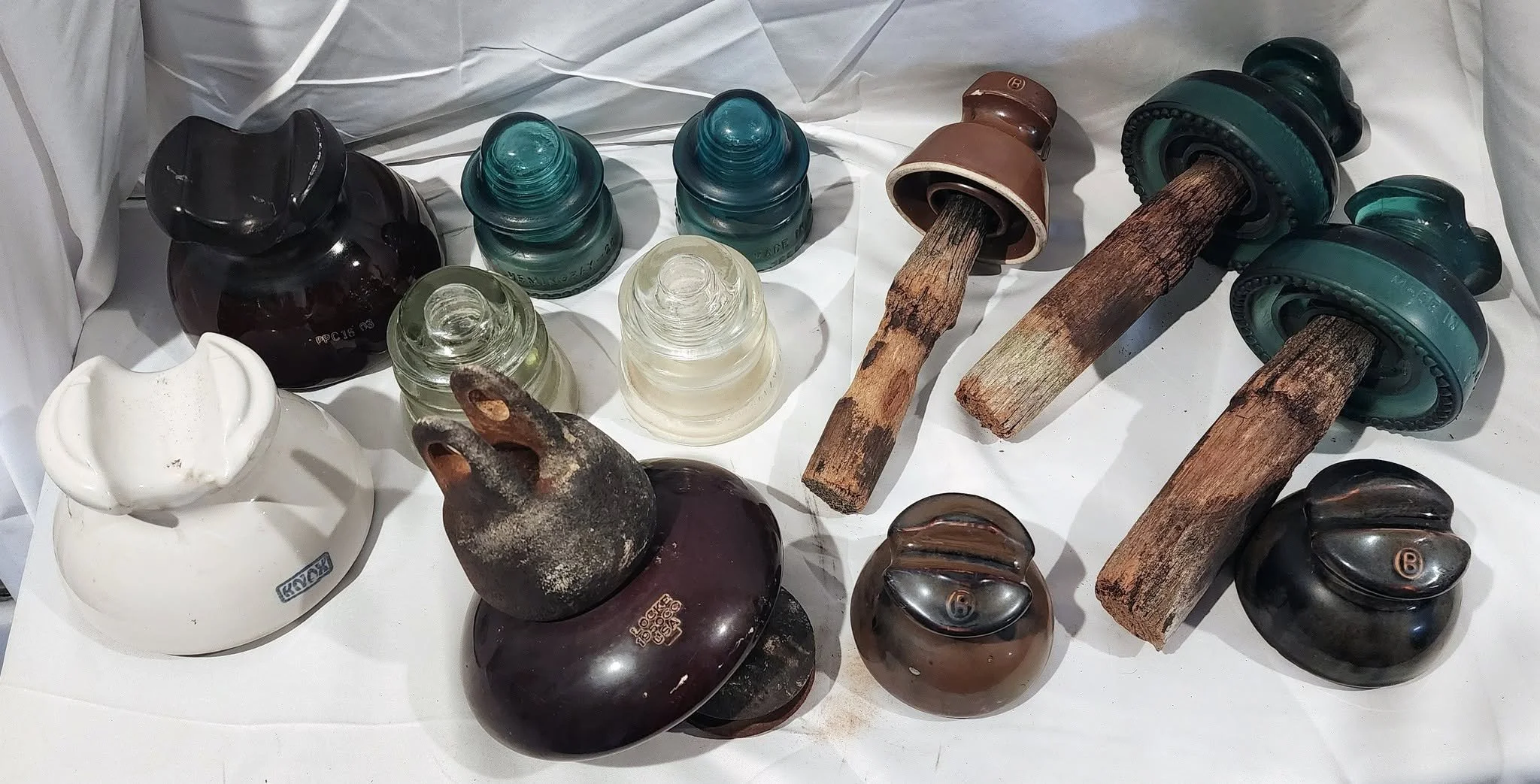
Flea Market Find.
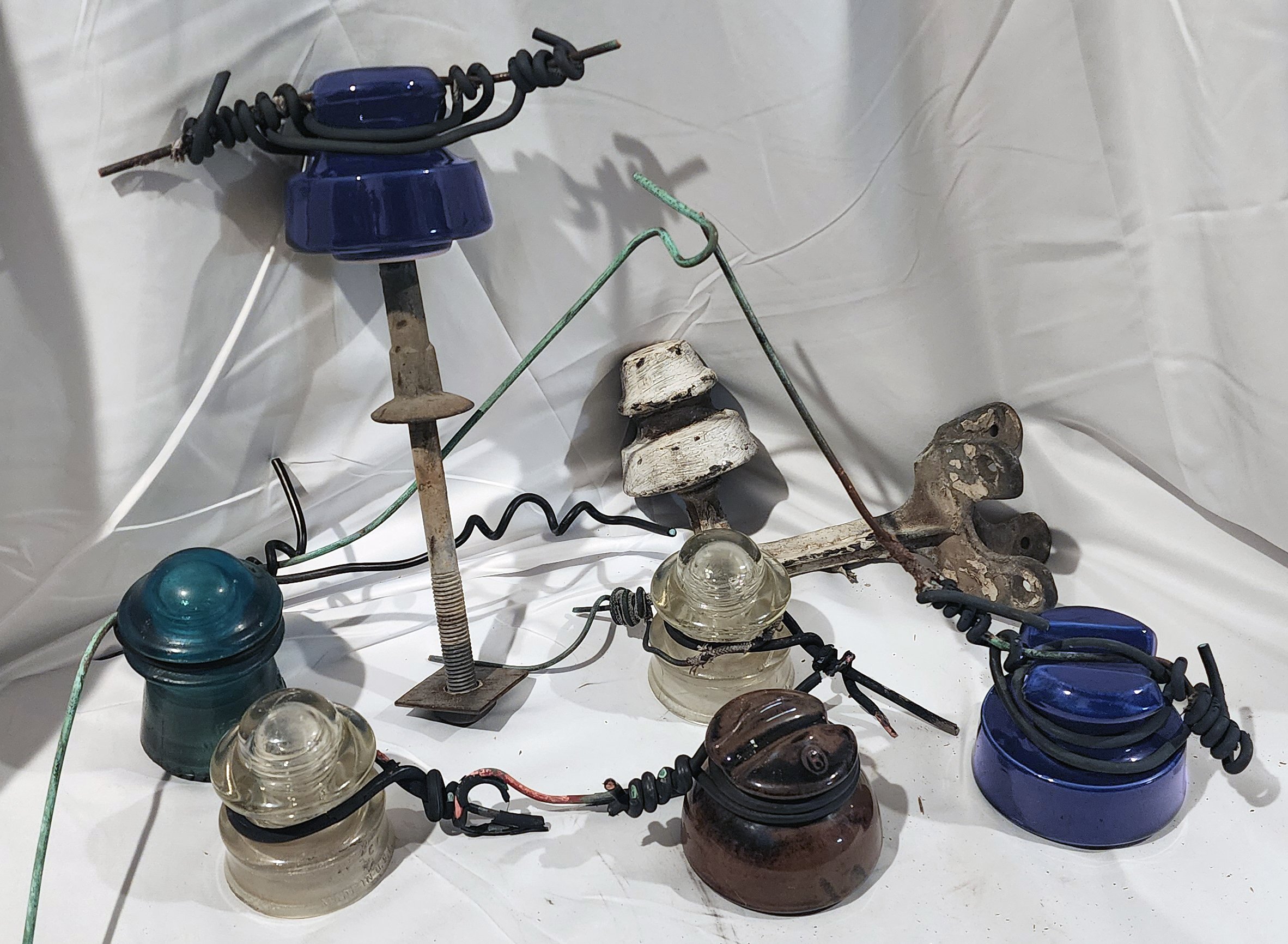
Flea Market Find.
The history of insulators is closely tied to the development of communication and electrical power systems. In the mid-1800s, as telegraph lines spread across North America and around the world, glass and porcelain insulators were developed to prevent electric current from escaping through wooden poles and into the ground. Early telegraph insulators evolved into a wide variety of designs used for telephone lines and, later, electric power transmission.
By the late 19th and early 20th centuries, manufacturers were producing millions of insulators in different shapes, colors, and materials. Glass insulators became common on telegraph and telephone lines, eventually being replaced by stronger porcelain insulators for high-voltage electrical systems. As technology advanced and modern materials replaced many traditional designs, countless insulators were removed from service, thrown away, buried and collected.
Today, antique insulators are highly collectible. Enthusiasts are drawn to their rich history, unique colors, manufacturer markings, and connection to the expansion of communication and electric power networks that helped shape the modern world.
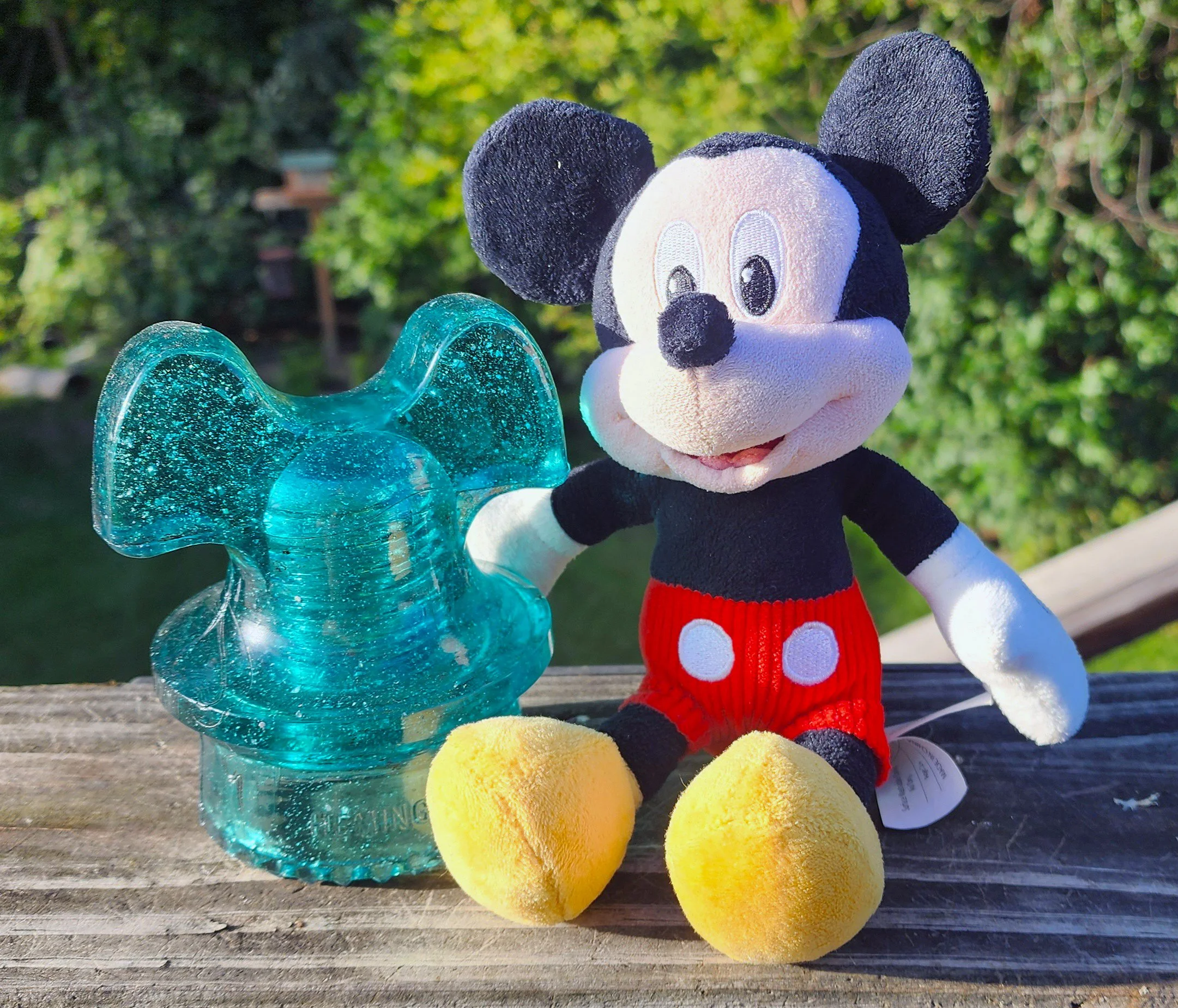
Mickey Monday!
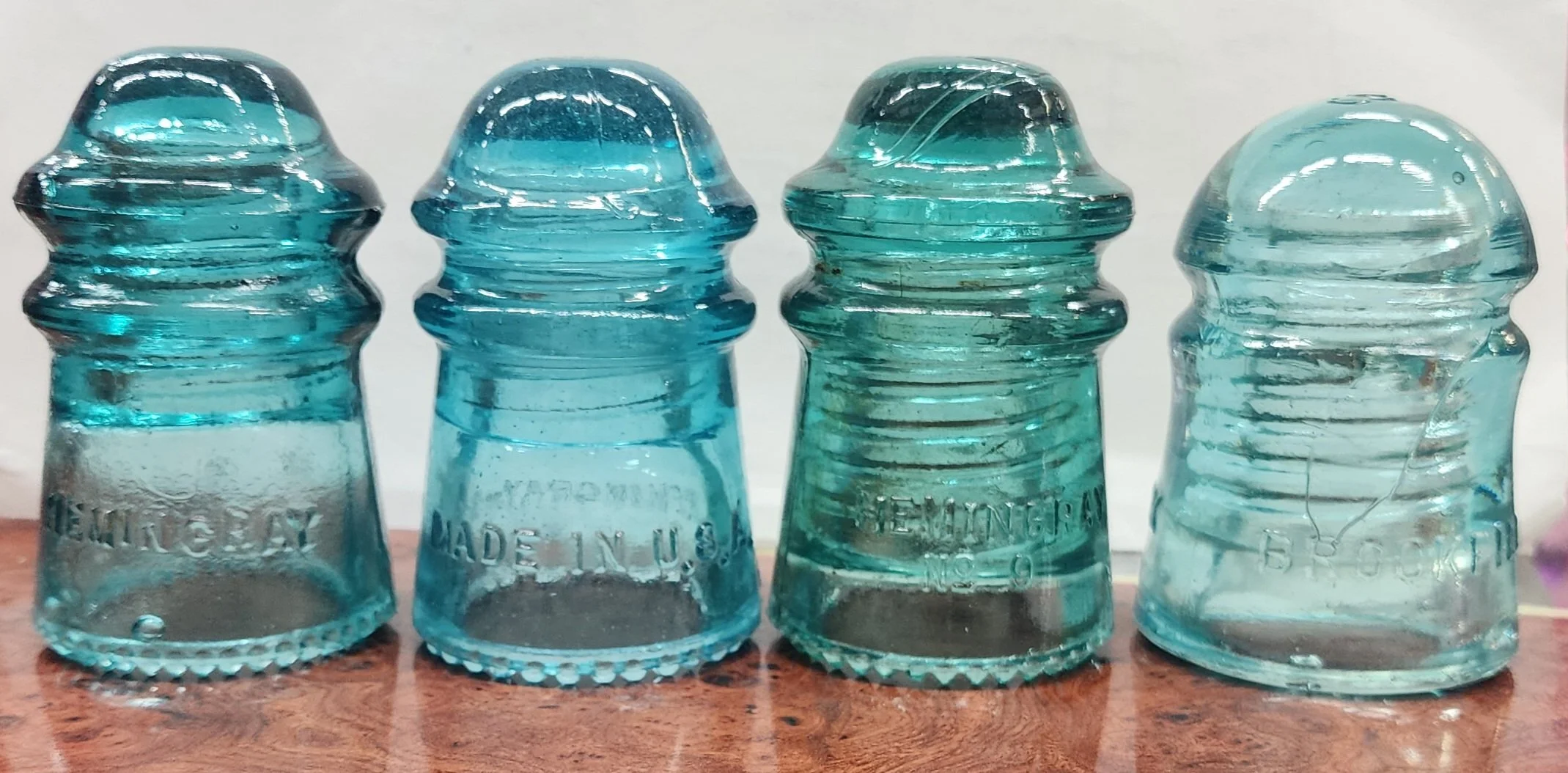
A friend at the flea-market always surprises me with insulators.